

Peptide Therapy: Benefits, Risks, Protocols & What Patients Need to Know in 2026
Peptide therapy benefits risks in 2026: evidence-based guide to BPC-157, TB-500, CJC-1295/Ipamorelin research protocols, safety labs, and sourcing standards.
📋 Table of Contents
In 2026, peptide therapy benefits risks revolve around short chains of amino acids (2–50 residues) used as targeted signaling molecules in laboratory research to influence tissue repair, growth hormone release, inflammation modulation, and healthy aging. Reported benefits from preclinical and clinical observations include accelerated recovery, improved body composition, and enhanced resilience, while documented risks include injection site reactions and contraindications such as active hormone-sensitive cancers. All peptide products discussed here are sold strictly for in vitro laboratory research use only, not for human or veterinary use.
Key takeaways
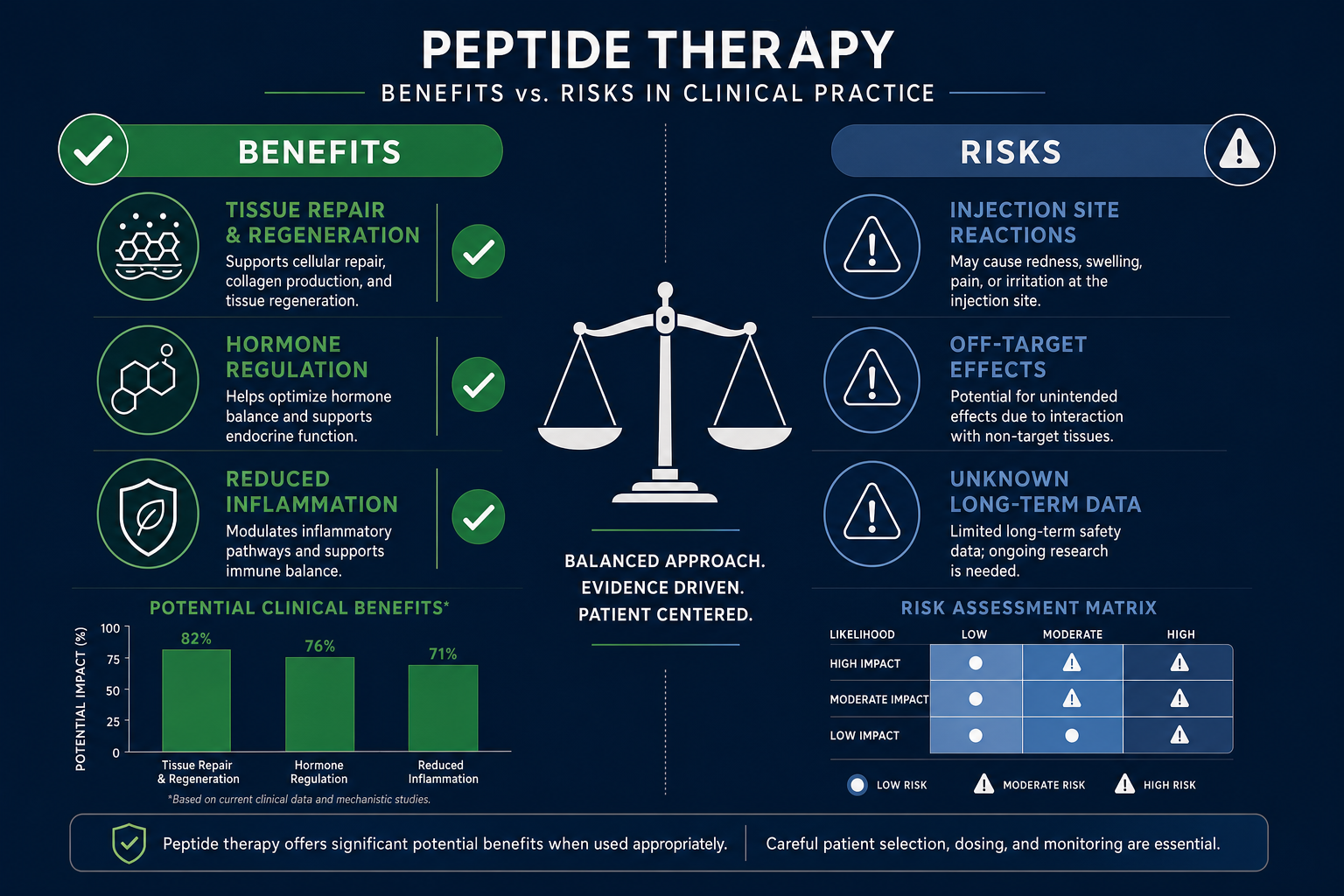
- Peptide therapy benefits risks vary by individual; no peptide guarantees results, and all outcomes depend on baseline health, protocol quality, and concurrent lifestyle factors.
- The most discussed peptides in 2026 are BPC-157, TB-500 (Thymosin Beta-4), and CJC-1295/Ipamorelin combinations, each with distinct mechanisms and limited human RCT data.
- Subcutaneous injection is the gold standard for systemic effects; oral and topical forms exist for localized gut or skin benefits.
- Safety requires baseline and follow-up labs (IGF-1, glucose, HbA1c, CBC, CMP), cycling protocols (e.g., 8–12 weeks on, 4 weeks off), and avoidance in pregnancy, breastfeeding, or active hormone-sensitive cancers.
- Only source peptides through a licensed clinician using 503A/503B compounding pharmacies; unregulated research chemical websites pose sterility, purity, and dosing risks.
⚠️ Research Use Only Notice: The products discussed on this site are sold strictly for *in vitro* laboratory research purposes only. They are not for human use, not for veterinary use, and not intended to diagnose, treat, cure, or prevent any disease. All information presented is for educational purposes in a research context. Must be 21+ to purchase.
What Is Peptide Therapy and How Does It Work?
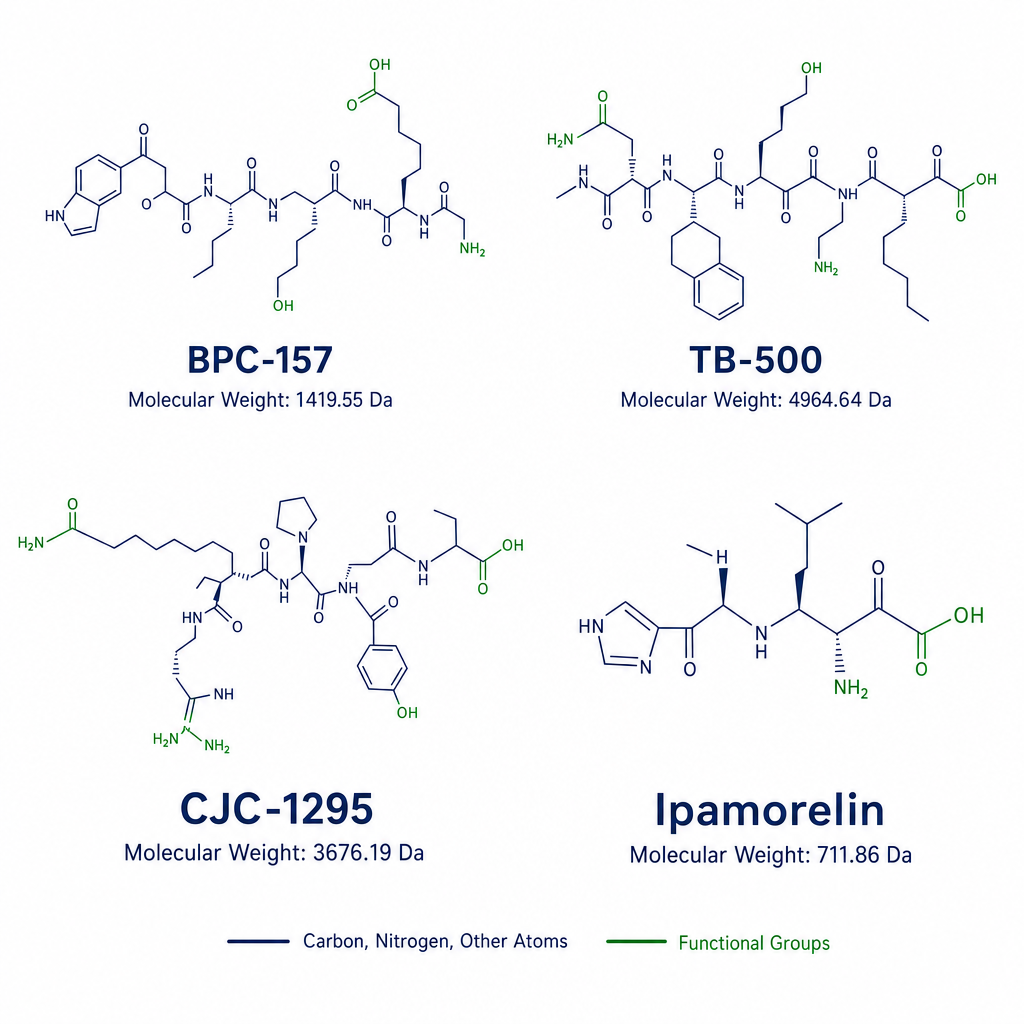
Peptides are short chains of amino acids—typically 2 to 50 residues—unlike longer proteins. Many function as highly specific signaling molecules that bind to cell receptors like a key in a lock, triggering targeted downstream effects. Understanding peptide therapy benefits risks begins with this signaling precision: the same lock-and-key specificity that enables targeted outcomes also limits off-target effects in research models.
In therapeutic and research contexts, peptides are selected to promote angiogenesis and collagen synthesis (e.g., BPC-157), stimulate pulsatile growth hormone release (e.g., CJC-1295, Ipamorelin), modulate inflammation or gut barrier function, and support neuroprotective or immune pathways. Because peptides are rapidly degraded in the digestive tract, most clinically used formulations are administered by subcutaneous injection to achieve optimal bioavailability. Some topical or oral formulations are available for localized effects, but systemic effects generally require injection. This administration discussion applies only to *in vitro* research models; no human use is implied.
Many medical clinicians have noticed their patients frustrated by slower healing, stubborn body composition changes, and declining resilience as they move through their 40s and beyond. An injury that resolved in days during their twenties now lingers for weeks. Recovery from workouts feels sluggish. Sleep quality and overall vitality gradually decline. These changes often trace back to disruptions in cellular signaling and repair pathways.
Peptide therapy has emerged as a targeted tool in clinical practice to support these exact mechanisms—using short chains of amino acids that act as precise signaling molecules, certain peptides can influence tissue repair, growth hormone pathways, inflammation modulation, and more, without the broad systemic effects of traditional pharmaceuticals. In many clinics, peptide therapy is never a standalone “magic shot.” It forms part of a comprehensive plan that includes nutrition, training, sleep optimization, and thorough lab monitoring.
While early research and clinical observations are promising, it is essential to approach this modality with realism, rigorous sourcing, and medical oversight. All information below is provided for educational and research purposes only; it does not constitute medical advice or endorsement of human use. To understand peptide therapy benefits risks in a research context, see How Peptides Work: A Plain-English Explainer.
What Are the peptide therapy benefits risks in Clinical Practice?
The core peptide therapy benefits risks profile depends on which peptide is selected, the dosing and cycling protocol, the quality of the lyophilized powder, and the baseline health of the research subject. No two protocols produce identical results, and the observed outcomes from clinical and preclinical literature vary widely. When reviewing peptide therapy benefits risks, clinicians weigh four primary areas: tissue repair, body composition, sleep and recovery, and healthy aging.
Tissue Repair & Injury Recovery
Animal data supporting peptide therapy benefits risks for tissue repair show accelerated healing via angiogenesis, collagen deposition, and anti-inflammatory pathways. BPC-157 and TB-500 are frequently discussed for tendon, ligament, muscle, and gut support. Human anecdotal reports in athletes and post-surgical patients are encouraging, though large-scale RCTs remain limited. PubMed offers peer-reviewed abstracts on these mechanisms.
Body Composition & Metabolic Support
Peptide therapy benefits risks for body composition center on growth hormone secretagogues like CJC-1295/Ipamorelin combinations. These compounds help many research subjects increase lean mass, reduce visceral fat, and enhance recovery when paired with resistance training and adequate protein intake. They stimulate the body’s own GH pulses rather than providing exogenous hormone, which reduces some risks associated with direct hormone replacement.
Sleep, Recovery & Well-Being
Subjective peptide therapy benefits risks related to sleep often include reports of deeper sleep and faster recovery from workouts. These benefits likely stem from improved GH/IGF-1 signaling and reduced systemic inflammation. Because sleep quality directly affects recovery, any peptide protocol that improves sleep architecture can compound the benefits of training and nutrition.
Healthy Aging & Resilience
Long-term peptide therapy benefits risks in healthy aging are still being mapped. As part of a broader longevity protocol, selected peptides may support mitochondrial function, tissue maintenance, and immune modulation—helping research subjects maintain performance and vitality longer. However, the evidence base remains preclinical for most of these claims.
Important Clinical Note: These are observed outcomes in carefully selected patients. No peptide guarantees results, and benefits are maximized only within a foundation of sleep, nutrition, and stress management. All such uses remain outside FDA approval and are strictly research-only in the context of this site.
💡 Key Takeaway: What Are the peptide therapy benefits risks in Clinical Practice?
Which Peptides Are Commonly Used in Clinical Practice in 2026?
The peptide therapy benefits risks profile for each compound below differs by mechanism, half-life, and available data. All dosing information is individualized and determined by a licensed clinician based on laboratory results and clinical response; no standardized human dosing is established. This information is cited from clinical literature and is not a recommendation for any human use.
BPC-157
Pentadecapeptide derived from gastric juice. Extensively studied in animal models for tendon-to-bone healing, IBD, and neuroprotection. The peptide therapy benefits risks profile for BPC-157 includes strong preclinical signals for angiogenesis and collagen synthesis, but limited human data. Researchers should review Peptide Therapy Contraindications: A Research Overview before designing protocols.
CJC-1295 + Ipamorelin
Popular GH-releasing combination. CJC-1295 (with or without DAC) extends half-life; Ipamorelin is highly selective with minimal hunger side effects compared to GHRP-2/6. Reported protocols use subcutaneous injections on a cyclical schedule, often cycled 8–12 weeks on, 4 weeks off. Evaluating peptide therapy benefits risks for CJC-1295/Ipamorelin requires baseline IGF-1, glucose, and HbA1c monitoring because of GH-axis effects.
TB-500 (Thymosin Beta-4)
An actin-sequestering peptide that promotes cell migration and wound healing. Often stacked with BPC-157 for synergistic effects on soft tissue. TB-500’s peptide therapy benefits risks data come primarily from animal wound models; human RCTs are sparse.
Other Notable Mentions
Semaglutide/Tirzepatide analogs (GLP-1/GIP) for metabolic health; Epitalon, Pinealon, and other nootropic peptides (emerging research); GHK-Cu for skin and anti-inflammatory effects (topical or injectable). Each carries a distinct peptide therapy benefits risks profile that researchers must evaluate independently.
How Is Peptide Therapy Administered in Research Protocols?
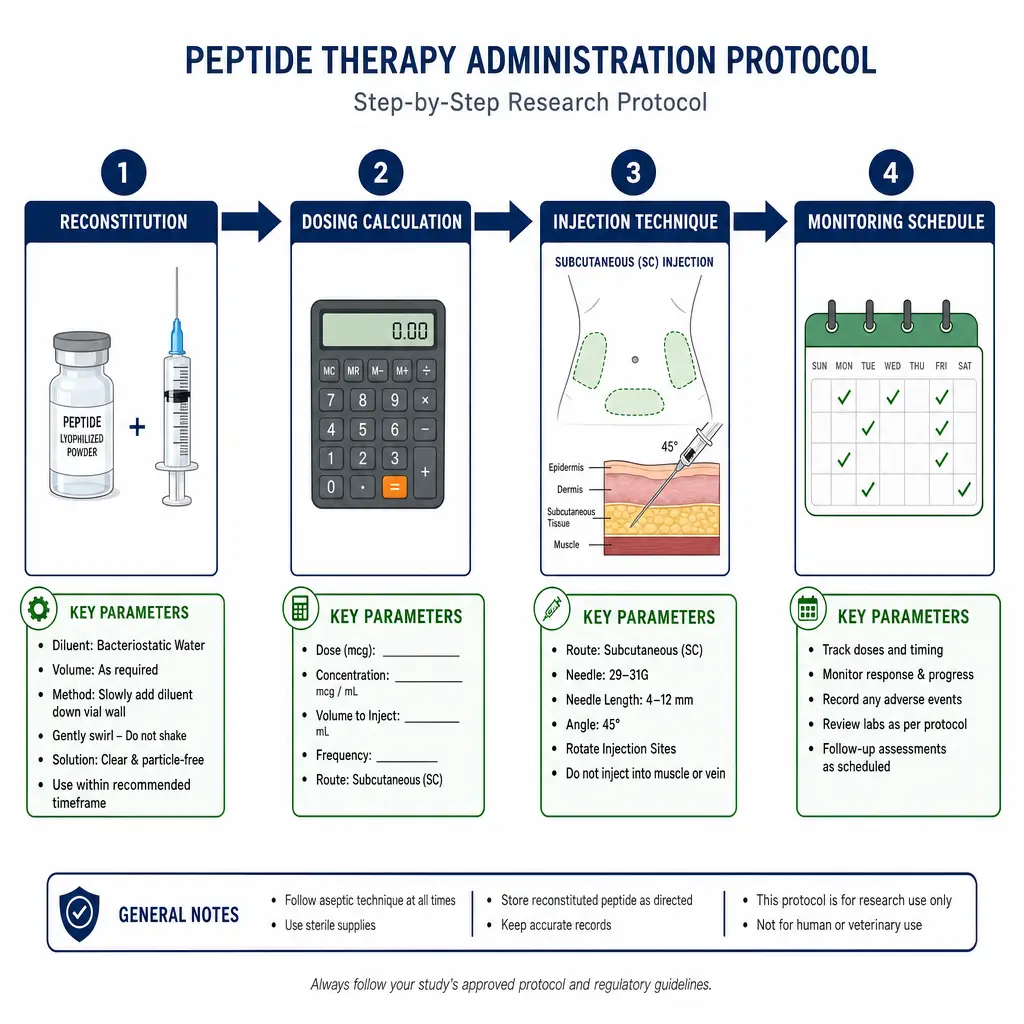
Subcutaneous injections using insulin syringes remain the gold standard for systemic peptides in research protocols. Proper sterile technique, site rotation (abdomen, thighs), and reconstitution from lyophilized powder are essential. These techniques are described for laboratory handling only; no human administration is endorsed. Injection technique directly influences peptide therapy benefits risks by affecting bioavailability, sterility, and local tissue response.
Oral BPC-157 capsules show promise for gastrointestinal benefits due to local action. Topical creams or serums containing GHK-Cu or other small peptides are effective for skin rejuvenation. For systemic effects, injection remains necessary because peptides degrade rapidly in the digestive tract. Researchers comparing peptide therapy benefits risks across routes should consult How Do Peptides Work in the Body? Mechanisms, Benefits & Safety Guide.
Reconstitution and Storage
Lyophilized peptide powder must be reconstituted with bacteriostatic water or an appropriate solvent immediately before use. Storage conditions directly affect peptide therapy benefits risks: unreconstituted vials should be kept refrigerated or frozen per manufacturer guidance, while reconstituted peptides typically require refrigeration and use within a defined window. Improper storage can degrade the peptide, reducing potency and potentially increasing immunogenicity risk.
Route Comparison
This table summarizes peptide therapy benefits risks by administration route.
| Route | Systemic Bioavailability | Primary Use Case | Key Risks in Research |
|——-|————————–|——————|————————|
| Subcutaneous injection | High | Systemic GH-axis, tissue repair | Injection site reactions, contamination if unsterile |
| Oral | Low to moderate | Local gut barrier support | Degradation in GI tract, variable absorption |
| Topical | Low systemic | Skin rejuvenation | Local irritation, limited depth of penetration |
What Are the Safety Considerations and Side Effects of Peptide Therapy?
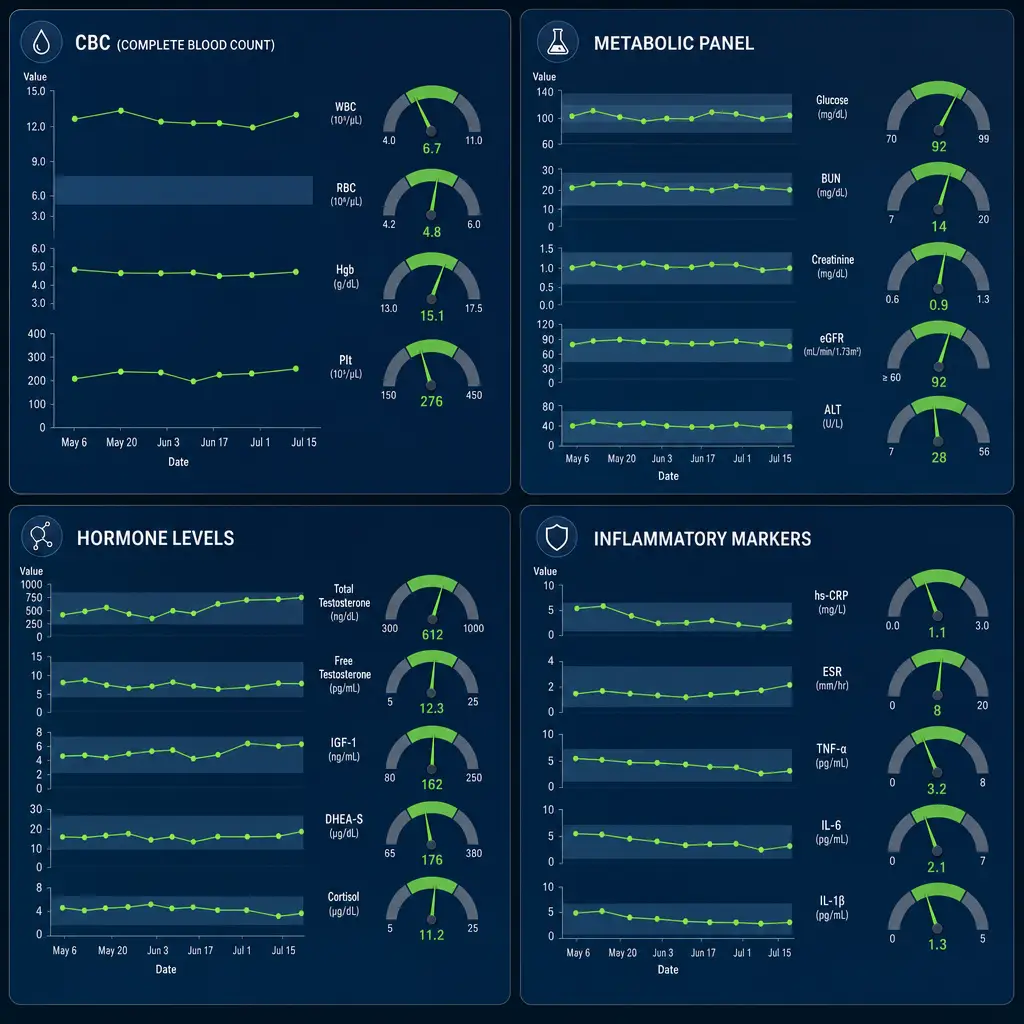
Safety monitoring reduces peptide therapy benefits risks in any research protocol. Baseline and follow-up labs should include IGF-1, glucose, HbA1c, CBC, and CMP. Cycling protocols, such as 8–12 weeks on followed by 4 weeks off, help prevent receptor desensitization and maintain responsiveness. Contraindications are a critical peptide therapy benefits risks filter: pregnancy, breastfeeding, and active hormone-sensitive cancers are absolute exclusions in all clinical and research settings.
Common side effects reported in peptide research include injection site reactions (redness, swelling, itching), transient flushing, headache, and water retention. More serious risks, such as hypoglycemia or allergic reactions, are rare but possible. Because peptides influence growth hormone and insulin pathways, glucose monitoring is essential. For a deeper review, see Peptide Therapy Contraindications: A Research Overview.
Unregulated sources amplify peptide therapy benefits risks through unknown purity, incorrect peptide sequences, and non-sterile manufacturing. Researchers should only obtain peptides through a licensed clinician using 503A/503B compounding pharmacies. Unregulated research chemical websites pose sterility, purity, and dosing risks that can invalidate study results and create safety hazards.
💡 Key Takeaway: What Are the Safety Considerations and Side Effects of Peptide Therapy?
Which peptide therapy benefits risks Should Researchers Prioritize?
Prioritizing peptide therapy benefits risks starts with peptide selection, sourcing, and baseline lab status. A key peptide therapy benefits risks consideration is whether the peptide’s mechanism matches the research question. For tissue repair, BPC-157 and TB-500 target angiogenesis and cell migration; for GH-axis outcomes, CJC-1295/Ipamorelin are more appropriate. Using the wrong peptide for the endpoint wastes resources and confounds results.
Another peptide therapy benefits risks priority is purity and documentation. Reputable 503A/503B compounding pharmacies provide certificates of analysis (COA) for identity, purity (typically ≥98% by HPLC), and sterility. Without a COA, researchers cannot verify the peptide sequence or exclude contaminants such as endotoxins. For background on cell signaling, see How Peptides Work: The Science Behind Cell Signaling.
What Lab Monitoring Supports peptide therapy benefits risks Assessment?
Lab monitoring anchors peptide therapy benefits risks evaluation before, during, and after any protocol. A complete peptide therapy benefits risks panel includes IGF-1, glucose, HbA1c, CBC, CMP, and often lipid profile and inflammatory markers like hs-CRP. These markers reveal whether the peptide is producing the intended pathway effect and whether metabolic or hematologic changes require protocol adjustment.
Follow-up labs should be drawn at regular intervals—commonly every 4–6 weeks during an active cycle and again after the washout period. Persistent elevations in glucose or HbA1c, for example, may indicate that a GH secretagogue protocol is not appropriate for that research subject. Monitoring also validates that the peptide therapy benefits risks ratio remains acceptable throughout the study.
Where Can Researchers Source High-Quality Peptides?
Sourcing directly shapes peptide therapy benefits risks. Only source peptides through a licensed clinician using 503A/503B compounding pharmacies. These pharmacies operate under FDA oversight and must meet sterility, purity, and potency standards. Unregulated research chemical websites pose sterility, purity, and dosing risks; many sell mislabeled or degraded products that cannot be verified.
Always request a certificate of analysis for every lot. The COA should list peptide identity, purity percentage (≥98% by HPLC), residual solvents, and endotoxin levels. Without this documentation, researchers cannot establish baseline peptide therapy benefits risks for their protocol. National Center for Biotechnology Information hosts primary literature for peptide characterization methods.
💡 Key Takeaway: Where Can Researchers Source High-Quality Peptides?
FAQ
What are the primary peptide therapy benefits risks?
The primary peptide therapy benefits risks are tissue repair acceleration, improved body composition, deeper sleep, and healthy aging support on the benefits side, versus injection site reactions, metabolic shifts, and contraindications such as active hormone-sensitive cancers on the risks side. All outcomes depend on peptide quality, protocol design, and baseline health.
Do peptide therapy benefits risks differ by peptide type?
Yes. Peptide therapy benefits risks for BPC-157 center on angiogenesis and gut barrier support with limited human data. CJC-1295/Ipamorelin affects GH/IGF-1 pathways and requires glucose monitoring. TB-500 promotes cell migration and wound healing but lacks large human RCTs. Each peptide has a distinct safety and efficacy profile.
How can researchers minimize peptide therapy benefits risks?
Researchers minimize peptide therapy benefits risks by sourcing from 503A/503B compounding pharmacies with COAs, using sterile reconstitution and injection technique, running baseline and follow-up labs (IGF-1, glucose, HbA1c, CBC, CMP), and cycling protocols 8–12 weeks on with 4 weeks off. Avoiding pregnancy, breastfeeding, and active hormone-sensitive cancers is non-negotiable.
What does the FDA say about peptide therapy benefits risks?
The FDA has not approved most peptides discussed here for human use. Peptide therapy benefits risks remain under investigation, and all products on this site are for in vitro laboratory research only. No peptide should be used for diagnosis, treatment, cure, or prevention of any disease in humans.
Are oral or topical peptides safer than injections for peptide therapy benefits risks?
Oral and topical routes reduce injection site risks but also reduce systemic bioavailability. The risk-benefit profile shifts toward local effects: oral BPC-157 targets gut tissue, while topical GHK-Cu targets skin. Systemic benefits generally require subcutaneous injection, which carries higher sterility and technique demands but delivers the peptide intact.
Ready to Take the Next Step?
Every product includes lot-specific documentation and third-party purity testing.
Explore Our Research Products →Free shipping on qualifying orders · Batch COA on request