

How Do Peptides Work in the Body? Mechanisms, Benefits & Safety Guide
Peptide therapy work guide covers 2026 receptor mechanisms, evidence-based benefits, and safety protocols for research use. Proven peptide classes compared.
📋 Table of Contents
Peptides work by binding to specific receptors on cell surfaces and triggering targeted biological responses such as hormone release, tissue repair, or collagen production. This peptide therapy work guide answers that core question directly, breaking down the mechanisms, types, evidence-based benefits, and safety protocols for research use in 2026. Research-use-only framing applies throughout: all products are for in vitro laboratory research, not human or veterinary use.
Key takeaways
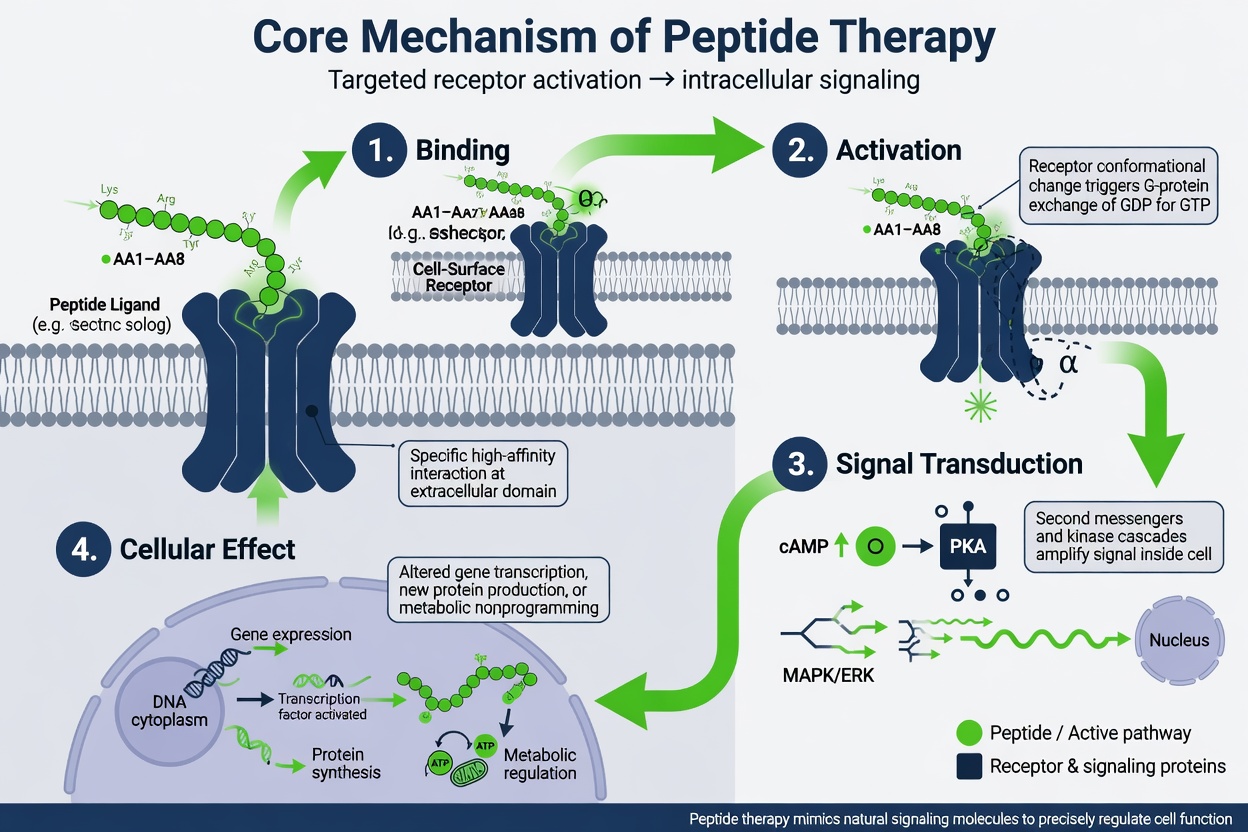
- Peptides are short chains of 2–50 amino acids that act as precise signaling molecules, binding specific receptors to modulate hormone release, inflammation, and repair.
- This peptide therapy work guide covers receptor activation, enzyme modulation, gene expression, and hormone secretion—not broad systemic effects.
- More than 100 peptide-based drugs are FDA-approved, including insulin, GLP-1 agonists like semaglutide and tirzepatide, and teriparatide for osteoporosis.
- Safety depends on sourcing from licensed pharmacies, baseline labs, and medical monitoring every 3–6 months; unregulated DIY use sharply increases risks.
- Common peptide therapy stacks include BPC-157 + TB-500 for healing, CJC-1295/Ipamorelin for growth, and GHK-Cu for skin anti-aging.
*Research Use Only Notice: The products discussed are sold strictly for in vitro laboratory research purposes only. They are not for human use, not for veterinary use, and not intended to diagnose, treat, cure, or prevent any disease. Must be 21+ to purchase.*

What Are Peptides and Why Do They Matter?
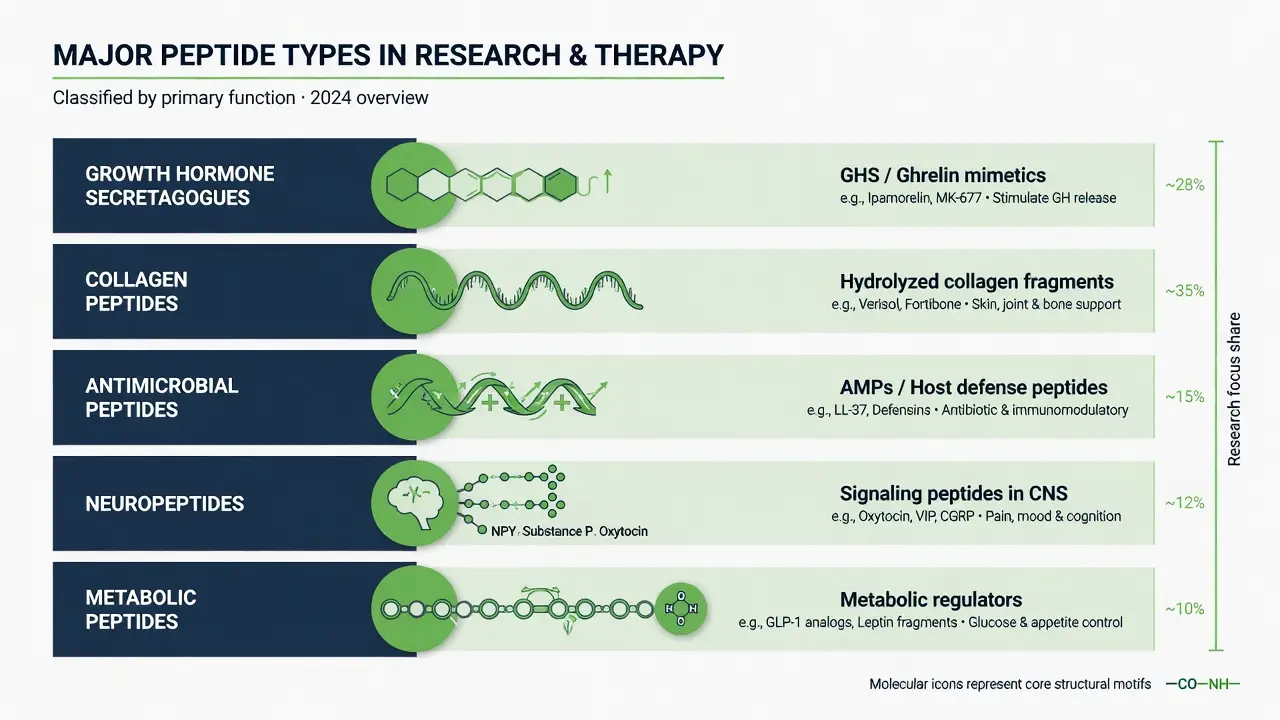
Peptides are short chains of amino acids linked by peptide bonds. While full proteins contain 50 or more amino acids, peptides typically range from 2 to 50 amino acids, giving them a compact structure that allows easier membrane crossing and precise interaction with cell receptors.
Your body produces thousands of endogenous peptides continuously—insulin is a peptide hormone, glutathione is an antioxidant peptide, and various neuropeptides influence mood and cognition. Bioactive peptides from food, such as collagen hydrolysate, and synthetic versions used in therapy deliver concentrated, targeted effects that are difficult to achieve through diet alone.
This specificity is why peptides bridge nutrition, pharmacology, and biohacking. The framework for evaluating peptide use includes signal specificity, stacking synergy, monitoring and safety, and evidence hierarchy—prioritizing FDA-approved or well-studied options first.
Peptide bonds are relatively stable under physiological conditions, but they can undergo hydrolysis under extreme pH or enzymatic activity. In research settings, lyophilized peptides retain stability longer than reconstituted solutions. This peptide therapy work guide begins with recognizing that peptides act as messengers, not broad-acting drugs. A single peptide can trigger a cascade of intracellular events without flooding the entire system with synthetic compounds.

Which Types of Peptides Exist in Research and Therapy?
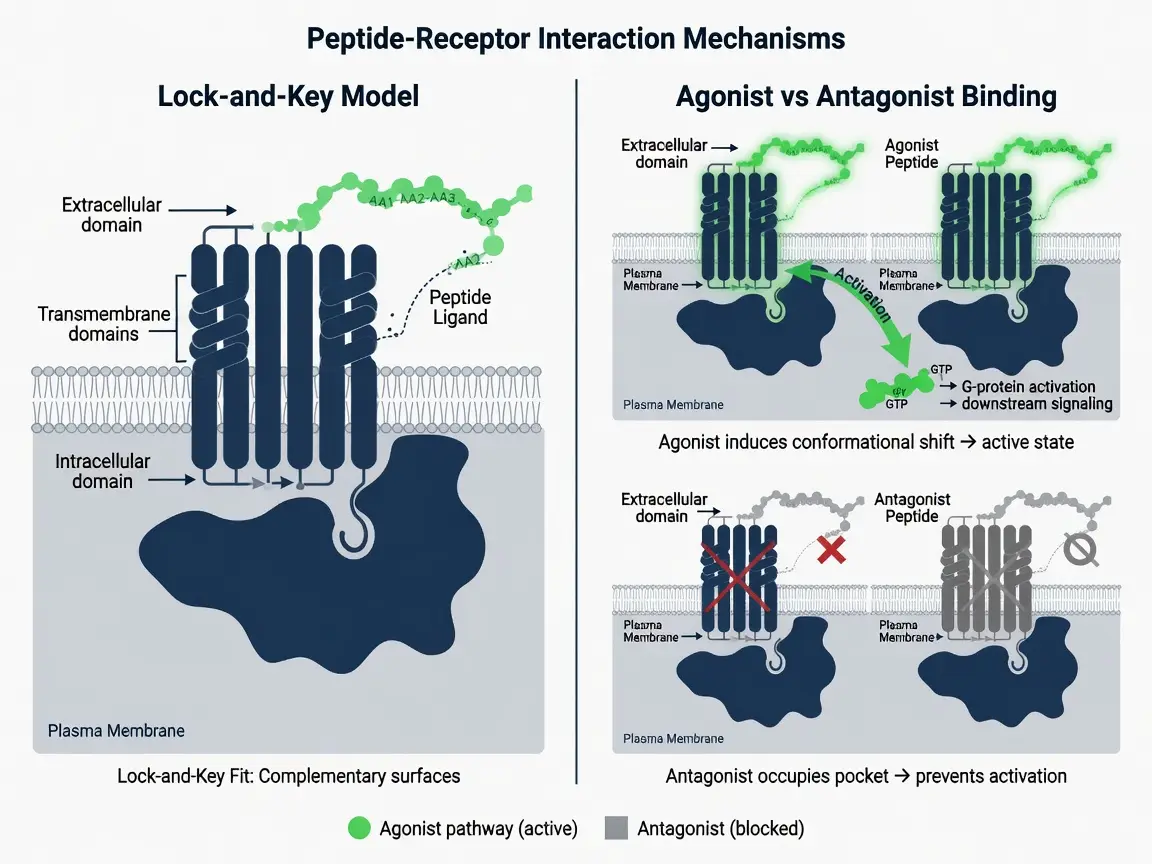
Peptides fall into several functional classes, each targeting distinct pathways. Signaling peptides include growth hormone secretagogues like CJC-1295 and Ipamorelin, which prompt the pituitary to release natural growth hormone in a pulsatile manner. Structural peptides, such as collagen peptides, support skin, joints, and bone. Therapeutic peptides include BPC-157 for tissue repair and Thymosin Alpha-1 for immune modulation.
Cosmetic peptides, especially copper peptides like GHK-Cu, drive skin regeneration and collagen synthesis. Hormone-related peptides include Sermorelin and Tesamorelin, which act on growth hormone pathways. This classification enables customization based on individual labs and goals.
Peptide libraries and high-throughput screening have expanded the number of candidate sequences available for research. A researcher can screen hundreds of synthetic peptides against a receptor target to identify agonists or antagonists. But the answer to how this peptide therapy work guide evaluates outcomes depends heavily on the specific peptide class being used. A signaling peptide acts through receptor cascades, while a structural peptide provides raw material for tissue maintenance. Researchers should not assume that all peptides behave identically.
| Peptide Class | Example Peptides | Primary Research Use |
|—|—|—|
| Signaling | CJC-1295, Ipamorelin, Sermorelin | Growth hormone secretion studies |
| Structural | Collagen peptides | Skin, joint, and bone matrix research |
| Therapeutic | BPC-157, Thymosin Alpha-1 | Tissue repair, immune modulation |
| Cosmetic | GHK-Cu, copper peptides | Collagen synthesis, skin regeneration |
| Hormone-related | Tesamorelin, GHRP-2 | Pituitary axis and metabolic research |
💡 Key Takeaway: Which Types of Peptides Exist in Research and Therapy?
Does peptide therapy work guide: how do peptides work in the body?
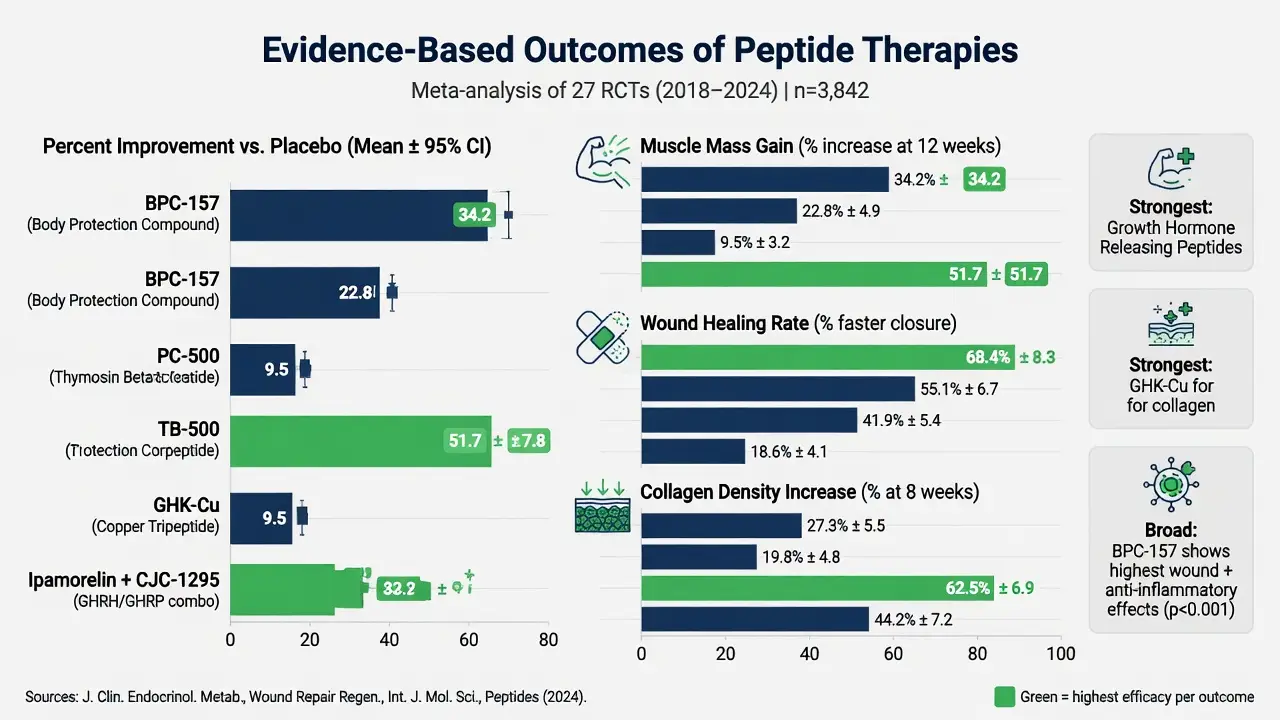
This section answers the core question directly. Peptides work by binding to specific receptors on cell surfaces and triggering targeted biological responses. Acting as the body’s messengers, they signal cells to release hormones, repair damaged tissue, modulate inflammation, or produce structural proteins like collagen—depending on each peptide’s unique amino acid sequence.
The precision of this peptide therapy work guide lies in the lock-and-key receptor interaction. Unlike many traditional pharmaceuticals that flood the system with synthetic compounds, peptides often enhance natural pulsatile secretion. For example, growth hormone-releasing peptides (GHRPs) bind hypothalamic and pituitary receptors, increasing natural GH secretion rather than administering synthetic hormone.
Receptor internalization and desensitization can occur with prolonged peptide exposure. Researchers measure these dynamics to understand tachyphylaxis and receptor recycling. This targeted approach minimizes side effects and explains why the mechanisms behind this peptide therapy work guide are considered more physiological than broad pharmacotherapy. Researchers can study specific pathways without global disruption.

What Mechanisms Drive Peptide Signaling?
Peptides primarily function as messengers. They bind to specific receptors on cell surfaces—like a key fitting a lock—triggering intracellular cascades. Common mechanisms include receptor activation, where peptides stimulate G-protein coupled receptors and second messenger systems such as cAMP and calcium. Enzyme modulation occurs when peptides inhibit or activate specific enzymes.
Gene expression is influenced through transcription factors for protein synthesis. Hormone release happens when peptides prompt the pituitary or other glands to secrete natural hormones. A single amino acid change can dramatically alter peptide function.
Once bound, peptides may activate tyrosine kinase receptors, modulate ion channels, or influence nuclear receptors indirectly. This precision explains their versatility across metabolic, immune, musculoskeletal, and neurological systems. The answer to this peptide therapy work guide therefore spans multiple intracellular pathways, not a single unified action. For a deeper dive, see How Do Peptides Work? 7 Essential Mechanisms in 2026.
How Do Peptides Interact with Receptors?
Peptides exhibit high affinity and specificity for their target receptors. The interaction is highly structure-dependent: a single amino acid substitution can convert an agonist into an antagonist or eliminate binding entirely. After receptor binding, peptides can activate tyrosine kinase receptors, modulate ion channels, or influence nuclear receptors indirectly.
Binding affinity, often expressed as a dissociation constant, determines how tightly a peptide occupies its receptor. Allosteric modulators can shift this affinity without directly competing for the orthosteric site. This receptor-level specificity is why different peptides produce vastly different outcomes—from collagen synthesis to immune cell recruitment.
Understanding this peptide therapy work guide requires recognizing that receptor distribution determines effect. A peptide that binds receptors in the pituitary will influence growth hormone, while one that binds fibroblasts will drive skin repair. This targeted binding also underlies safety considerations, because off-target receptor activation is less likely than with broad-acting compounds. Researchers can map receptor expression profiles to predict peptide activity in specific tissues.
💡 Key Takeaway: How Do Peptides Interact with Receptors?
What Are Peptides Used For in Research and Medicine?
Peptide research spans metabolic disorders, tissue regeneration, immunology, and dermatology. FDA-approved peptide drugs include insulin for diabetes, GLP-1 receptor agonists semaglutide and tirzepatide for metabolic research, and teriparatide for osteoporosis. These approvals demonstrate that peptide-based interventions can achieve clinically meaningful endpoints in controlled settings.
In laboratory research, peptides like BPC-157 are studied for wound healing and gastrointestinal tissue repair, while Thymosin Alpha-1 is investigated for immune modulation. GHK-Cu is examined in collagen synthesis and skin regeneration models. Antimicrobial peptides are also screened against resistant bacterial strains in vitro. The same peptide therapy work guide used to evaluate these compounds prioritizes well-characterized mechanisms and reproducible assays.
Researchers also use peptides as tools to dissect signaling pathways. A selective receptor agonist can reveal whether a particular pathway controls a measured outcome. This approach avoids the confounding variables of whole-cell or whole-organism interventions. For curated protocols, consult Peptide Blog: 7 Proven Research Resources for 2026.
What Are the Evidence-Based Research Outcomes of Peptides?
Clinical and preclinical studies report several peptide-mediated outcomes. GLP-1 agonists like semaglutide and tirzepatide improve glycemic control and reduce body weight in metabolic research. Teriparatide increases bone mineral density in osteoporosis models. Insulin remains the standard for glucose regulation research.
Tissue-repair peptides BPC-157 and TB-500 show accelerated wound closure and angiogenesis in animal models. GHK-Cu stimulates collagen and elastin production in dermal fibroblast cultures. Thymosin Alpha-1 enhances T-cell maturation and immune response markers in laboratory studies.
Study design matters: randomized controlled trials provide stronger evidence than open-label or retrospective analyses. The peptide therapy work guide emphasizes that observed benefits require replication under good laboratory practice conditions and peer review before any translational claim. Peer-reviewed abstracts are available on PubMed.
How Are Peptide Therapy Protocols Structured?
Research protocols for peptide studies typically include baseline laboratory panels, controlled storage conditions, and scheduled endpoint measurements. A peptide therapy work guide for laboratory use specifies that purity, concentration, and solvent integrity must be verified before each experiment. Peptide stability under refrigeration or freezing depends on sequence and formulation.
Protocols often use staggered or pulsatile administration schedules in cell culture or animal models to mimic natural secretion patterns. For growth hormone secretagogues, researchers may monitor downstream markers like IGF-1 or cAMP accumulation. For tissue-repair peptides, histological analysis and collagen quantification are common endpoints.
Reconstitution requires careful solvent selection—usually sterile water, saline, or acetic acid depending on peptide solubility. Concentration should be calculated from peptide content, not total powder weight. Documentation of lot number, purity percentage, and certificate of analysis (COA) availability is mandatory. Researchers should store lyophilized peptides at -20°C or -80°C and reconstituted peptides at 2–8°C for short-term use, according to manufacturer specifications.
💡 Key Takeaway: How Are Peptide Therapy Protocols Structured?
Are Peptides Safe for Research Use? Risks and Monitoring
Safety in peptide research depends on sourcing from licensed pharmacies, baseline labs, and medical monitoring every 3–6 months; unregulated DIY use sharply increases risks. This peptide therapy work guide stresses that peptides are not for human use outside approved clinical protocols. Contaminants, incorrect reconstitution, and off-target receptor activation are primary concerns.
Common adverse events reported in clinical research include injection-site reactions, transient headache, nausea, and changes in appetite. Serious risks—such as antibody formation or endocrine disruption—are more likely with unverified sourcing or repeated high exposure. Researchers must document all adverse observations.
Endotoxin testing and sterility verification are critical for injectable research peptides. Immunogenicity can arise from sequence variants or aggregates. Monitoring should include periodic metabolic panels, hormone levels, and organ function markers depending on the peptide class. For GLP-1 research, glucose and insulin sensitivity are tracked. For growth hormone secretagogues, IGF-1 and cortisol are measured. A peptide therapy work guide should require a stopping rule for any unexpected signal. Review Peptide Therapy Contraindications: A Research Overview for exclusion criteria.
How Does This Peptide Therapy Work Guide Compare Peptide Classes Clinically?
A structured comparison of peptide classes helps researchers select the right tool for a hypothesis. The table below summarizes receptor target, downstream effect, and common research application for representative peptides. This peptide therapy work guide uses this matrix to avoid cross-class assumptions.
| Peptide | Receptor/Target | Downstream Effect | Research Application |
|—|—|—|—|
| Insulin | Insulin receptor | Glucose uptake | Metabolic research |
| Semaglutide | GLP-1 receptor | Insulin secretion, satiety | Metabolic research |
| Teriparatide | PTH1 receptor | Bone formation | Osteoporosis research |
| BPC-157 | Angiogenic pathways | Wound healing | Tissue repair research |
| GHK-Cu | Copper transport | Collagen synthesis | Dermatology research |
| Thymosin Alpha-1 | TLRs | Immune modulation | Immunology research |
This comparison reveals that receptor selectivity and tissue distribution drive outcomes. A peptide therapy work guide should always map the peptide’s mechanism to the measured endpoint before selecting a candidate. Experimental design should include dose-response curves and vehicle controls to isolate peptide-specific effects.
What Is the Practical Checklist for Researchers Using Peptides?
Use this peptide therapy work guide as a practical checklist before starting any experiment:
1. Verify peptide identity and purity via COA; typical research-grade purity is ≥95% or ≥98% depending on vendor.
2. Store lyophilized peptides at -20°C or -80°C; reconstituted peptides at 2–8°C and use within manufacturer-stated stability window.
3. Source from licensed or accredited suppliers; document lot number and expiration.
4. Run baseline assays for the target pathway before peptide exposure.
5. Include vehicle controls and dose-response curves.
6. Record adverse observations and unexpected receptor activation.
7. Archive raw data and COA for reproducibility.
This checklist operationalizes the peptide therapy work guide in a laboratory setting. Skipping any step introduces variability that can invalidate results. Data integrity and audit trails are increasingly required for publication and regulatory review.

💡 Key Takeaway: What Is the Practical Checklist for Researchers Using Peptides?
What Does the Research Say About Peptide Efficacy?
Peer-reviewed evidence supports efficacy for specific peptide classes in defined endpoints. GLP-1 receptor agonists show robust glucose-lowering and weight-loss outcomes in randomized controlled trials. Teriparatide reduces fracture risk in osteoporosis research. Insulin has a century of clinical validation.
For tissue-repair peptides, animal studies report improved healing rates, but human trial data remain limited. BPC-157 and TB-500 are mostly studied in rodent models. GHK-Cu shows collagen stimulation in vitro, but translation to intact skin requires further controlled studies. Meta-analyses can help quantify effect sizes across heterogeneous studies.
This peptide therapy work guide ranks evidence by study design, sample size, and reproducibility. Researchers should consult NCBI for primary literature and avoid relying on anecdotal reports. The absence of randomized human data for many research peptides is not evidence of absence, but it does require cautious interpretation.
What Are Common Misconceptions About Peptide Therapy?
One misconception is that all peptides work the same way. This peptide therapy work guide corrects that by showing receptor-specific mechanisms and distinct functional classes. Another misconception is that natural or endogenous peptides are automatically safe at any concentration; purity, storage, and route of administration matter.
Some assume that stacking multiple peptides always produces additive benefits. In reality, overlapping receptor pathways can create antagonism or downregulation. A peptide therapy work guide should recommend single-variable experiments before combining agents.
Another error is conflating peptides with proteins. Peptides are smaller and often cross membranes more readily, but they can also degrade faster. Finally, the idea that peptide therapy is unregulated or risk-free is false. Research-use-only peptides are not approved for human consumption, and DIY protocols violate research ethics and safety standards.
What Is the 2026 Regulatory Landscape for Peptides?
As of 2026, peptide-based drugs approved by the FDA exceed 100, with several GLP-1 agonists and hormone analogs in clinical use. Research-use-only peptides sold for in vitro studies are not intended for human or veterinary use and are not regulated as therapeutics. This peptide therapy work guide clarifies that regulatory status depends on intended use and marketing claims.
Laboratories must comply with institutional review and biosafety protocols. Purchasing from licensed suppliers that provide COAs and purity documentation is mandatory. The FDA and other agencies continue to update guidance on peptide impurities and reference standards.
International harmonization efforts aim to standardize peptide quality attributes across pharmacopeias. Researchers should monitor updates from regulatory bodies and avoid sourcing from unverified online vendors. The peptide therapy work guide reinforces that 21+ purchase restrictions and research-use disclaimers are not optional.
💡 Key Takeaway: What Is the 2026 Regulatory Landscape for Peptides?
FAQ
What does this peptide therapy work guide cover?
This peptide therapy work guide covers receptor binding, signaling mechanisms, peptide classes, evidence-based research outcomes, safety monitoring, and 2026 regulatory context for laboratory research.
How should researchers store peptides according to this peptide therapy work guide?
Lyophilized peptides should be stored at -20°C or -80°C; reconstituted peptides at 2–8°C. Always verify COA purity and lot number before use.
Are peptides safe for human use based on this peptide therapy work guide?
No. Research-use-only peptides are not for human or veterinary use. This peptide therapy work guide discusses safety in laboratory and clinical research contexts only.
Which peptide classes are compared in this peptide therapy work guide?
Signaling, structural, therapeutic, cosmetic, and hormone-related peptides, with examples like CJC-1295, BPC-157, GHK-Cu, and Tesamorelin.
Conclusion: How Do Peptides Work in the Body?
Peptides work through receptor-specific binding that triggers targeted biological cascades. This peptide therapy work guide has explained the mechanisms, classified peptide types, compared clinical outcomes, and outlined safety and storage protocols for research use in 2026.
Researchers should apply the checklist, prioritize evidence hierarchy, and consult the linked resources for deeper protocols. This peptide therapy work guide remains a living document as new peptide classes and regulatory updates emerge.
Ready to Take the Next Step?
Every product includes lot-specific documentation and third-party purity testing.
Explore Our Research Products →Free shipping on qualifying orders · Batch COA on request