

Peptide Therapy Contraindications: A Research Overview
Peptide therapy contraindications explained for research teams: 5 evidence-based exclusion categories, safety pharmacology, and analytical verification in 2026.
📋 Table of Contents
Peptide therapy contraindications are documented conditions, comorbidities, and compound interactions that formally exclude a peptide from a defined research population, based on preclinical and clinical safety evidence. In laboratory research, peptide therapy contraindications function as protocol-level exclusion criteria derived from safety pharmacology, toxicology, and receptor binding data. This overview explains how peptide therapy contraindications are established, categorized, and verified for research teams in 2026.
⚠️ Research Use Only Notice: The products discussed on this site are sold strictly for in vitro laboratory research purposes only. They are not for human use, not for veterinary use, and not intended to diagnose, treat, cure, or prevent any disease. All information presented is for educational purposes in a research context. Must be 21+ to purchase.
Key takeaways
- Peptide therapy contraindications are evidence-based exclusion criteria derived from preclinical research and formalized during clinical trial design.
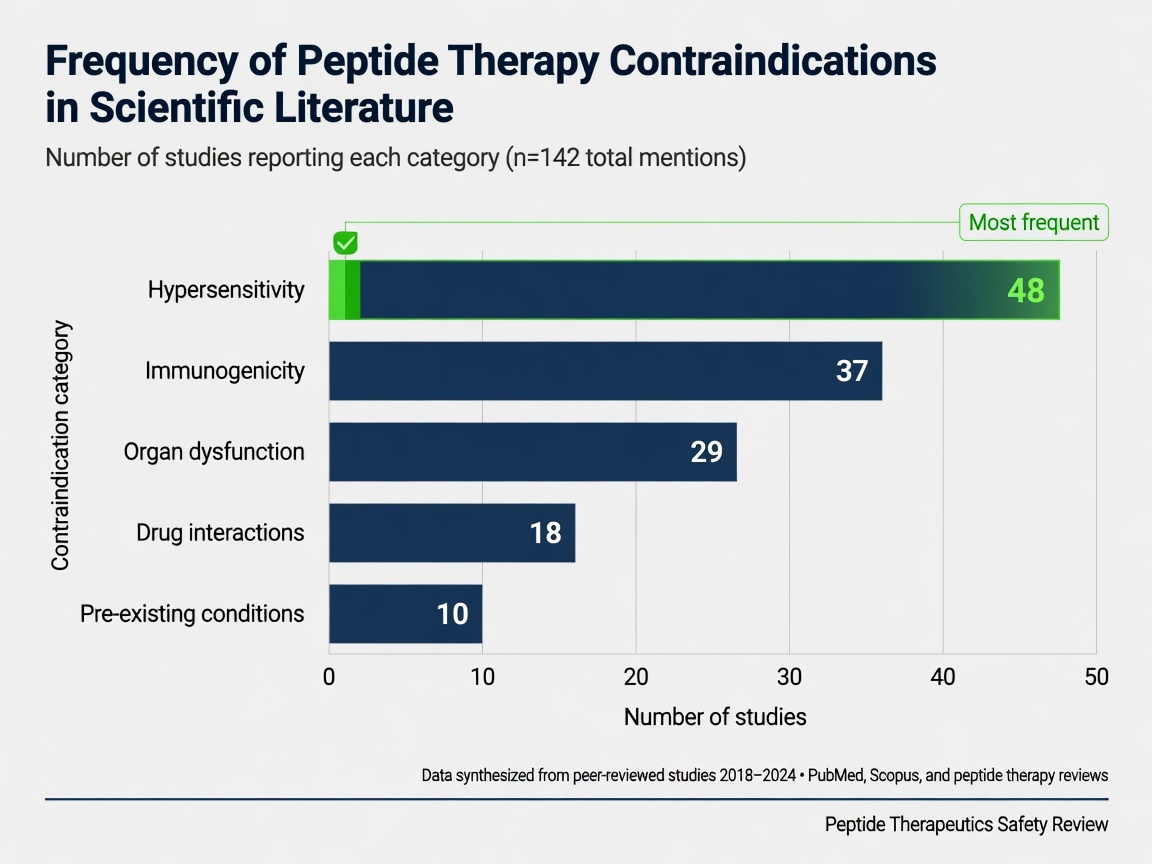
- The five categories most frequently examined in the literature include reproductive and developmental toxicity, proliferative signaling, organ impairment, immunogenicity, and drug–drug interactions.
- Safety pharmacology core batteries and toxicology assays generate the receptor binding and off-target data on which peptide therapy contraindications are based.
- Analytical verification — typically ≥98% purity by HPLC with mass spectrometry confirmation — directly affects the validity of safety findings.
- All compounds discussed on Peptide Headlines are research chemicals supplied for research use only; no human use is implied in any peptide therapy contraindications analysis.
!Peptide therapy contraindications five exclusion categories overview
What Are Peptide Therapy Contraindications in Research?
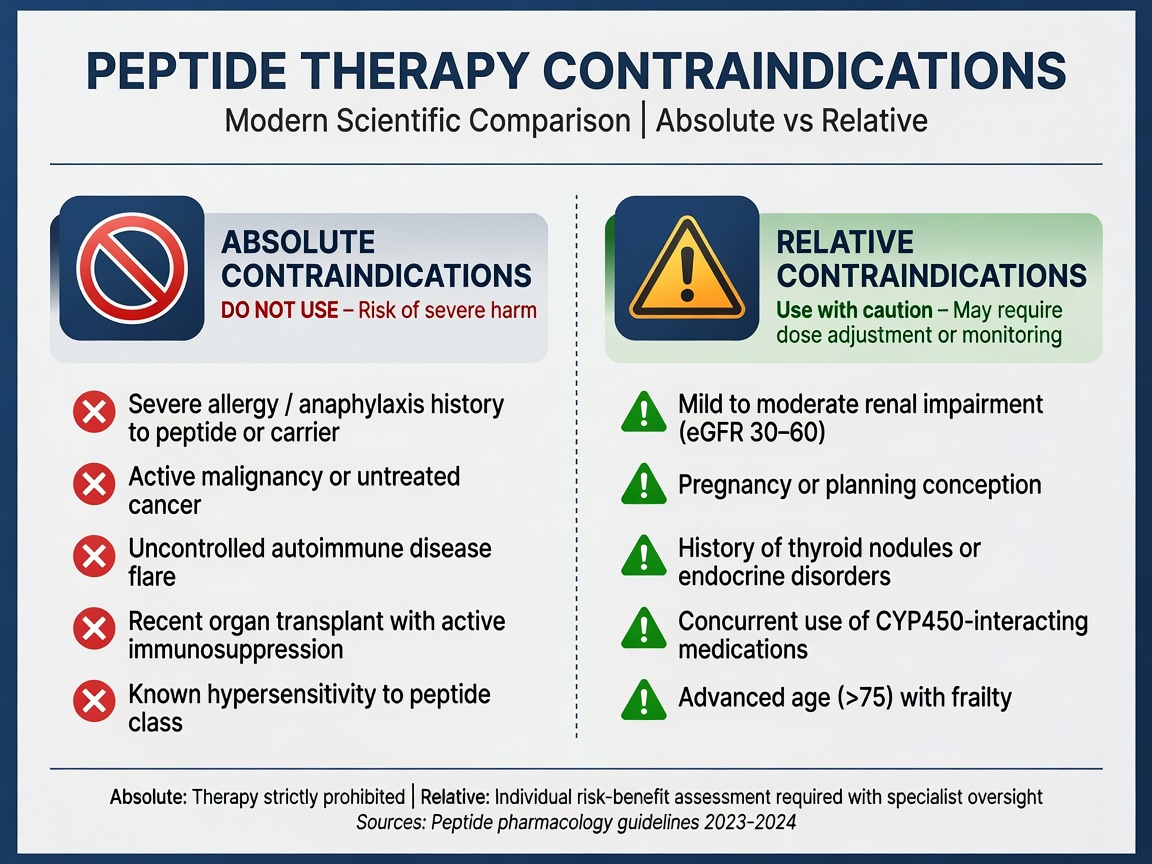
A contraindication is a specific factor — a physiological state, a coexisting condition, or a concurrent compound — under which exposure to a peptide is judged to carry unacceptable risk within a study. Pharmacology distinguishes two tiers: absolute and relative peptide therapy contraindications. An absolute contraindication categorically precludes inclusion; a relative contraindication requires the research team to weigh risk against the study objective and apply additional monitoring.
In the research literature, peptide therapy contraindications are operationalized as exclusion criteria: explicit, protocol-defined conditions under which a specimen, cell line, animal model, or trial cohort is removed from eligibility. Framing contraindications this way keeps them measurable and auditable, which is why exclusion criteria appear in virtually every registered peptide trial.
Researchers use exclusion criteria as quality controls on a study population. When a peptide therapy contraindication is written into a protocol, it specifies exactly which condition, biomarker range, or prior exposure disqualifies a subject from participation. This practice reduces heterogeneity and increases the internal validity of safety and efficacy findings. For foundational context on the signaling mechanisms that underlie these safety considerations, see How Peptides Work: A Plain-English Explainer.
Because peptide therapy contraindications are mechanism-driven, the same category can appear across different peptide classes. A growth-hormone–releasing peptide and a melanocortin analog may share an exclusion criterion related to proliferative signaling, even though their primary targets differ. Researchers therefore review contraindication categories alongside receptor binding profiles rather than in isolation.
How Are Peptide Therapy Contraindications Established in Research?
Contraindication data are generated through a staged preclinical pipeline long before any translational study is designed. The following four stages define how peptide therapy contraindications are systematically derived:
1. In vitro screening. Receptor binding panels map a peptide’s affinity across receptor families, flagging off-target activity. Cytotoxicity and viability assays in cell cultures establish concentration thresholds.
2. Safety pharmacology. Core batteries conducted under frameworks such as ICH S7A evaluate cardiovascular, central nervous system, and respiratory endpoints in animal models (in vivo).
3. Toxicology. Single- and repeat-dose studies in two species, genotoxicity screens, and immunogenicity assays define dose-limiting toxicity and organ-specific signals.
4. Translation to protocol. The aggregated findings are converted into the exclusion criteria written into study protocols and, later, into public trial registries.
Regulatory guidance documents — notably ICH M3(R2) — standardize this progression, which is why peptide therapy contraindications categories are broadly consistent across the peptide literature. Researchers can consult the FDA guidance for S7A safety pharmacology studies and the FDA M3(R2) nonclinical safety studies guidance for the full regulatory framework.
In vitro screening is the first gate. A peptide that shows high affinity for an unintended receptor family may trigger a peptide therapy contraindication even before animal studies begin. For example, if a peptide designed for a metabolic target also activates a proliferative receptor, the research team may add a malignancy-related exclusion criterion at the protocol stage. This early signal prevents downstream wasted resources and reduces animal use.
Safety pharmacology batteries focus on acute functional endpoints. ICH S7A recommends core evaluations of the cardiovascular, central nervous, and respiratory systems. Abnormal findings in these batteries often translate into relative peptide therapy contraindications, such as exclusion of animal models with pre-existing cardiac dysfunction. Researchers record these functional changes at multiple time points to distinguish transient effects from sustained ones.
Toxicology studies provide dose-response and time-course data. Repeat-dose studies in two species reveal organ-specific toxicity that may not appear in single-dose screens. Genotoxicity assays detect DNA damage potential, while immunogenicity assays measure anti-drug antibody formation. Together, these data define the threshold between a relative and an absolute contraindication. Each endpoint is selected based on the peptide’s mechanism and expected tissue distribution.
The translation stage turns raw findings into protocol language. Each exclusion criterion must be measurable, reproducible, and auditable. Researchers document whether a peptide therapy contraindication is absolute or relative, which monitoring applies, and how borderline cases are handled. This step is critical for reproducibility and regulatory review. Well-documented criteria also allow meta-analyses across studies, improving the overall safety knowledge base.
💡 Key Takeaway: How Are Peptide Therapy Contraindications Established in Research?
Which Contraindication Categories Appear Most Often in the Literature for Peptide Therapy Contraindications?
Five categories account for the majority of exclusion criteria observed in peptide research. The table below summarizes each category, why it is studied, and the representative models and assays used to generate data on peptide therapy contraindications.
| Contraindication category | Why it is studied | Representative models and assays |
|—|—|—|
| Reproductive and developmental toxicity | Peptides may alter developmental signaling or cross placental barriers | Embryofetal development studies in animal models (in vivo) |
| Proliferative signaling | Peptides acting on growth-factor pathways may promote unwanted cell proliferation | Receptor binding panels, cell proliferation assays, tumorigenicity screens |
| Organ impairment | Pre-existing hepatic, renal, or cardiac dysfunction may alter peptide clearance or amplify toxicity | Repeat-dose toxicology in two species, organ function biomarker panels |
| Immunogenicity | Anti-drug antibodies can neutralize activity or cause immune-mediated reactions | Immunogenicity assays, anti-drug antibody ELISAs, T-cell activation studies |
| Drug–drug interactions | Concurrent compounds may compete for metabolic enzymes or transporters | Cytochrome P450 inhibition/induction assays, transporter interaction studies |
!Peptide therapy contraindications literature table summary
These five categories are not mutually exclusive. A single peptide may carry exclusion criteria from multiple categories simultaneously. For example, a growth-factor analog might require exclusion of animal models with pre-existing tumors (proliferative signaling) and also exclusion of models with hepatic impairment (organ impairment). Researchers therefore present peptide therapy contraindications as a matrix rather than a single list.
The reproductive and developmental toxicity category is often the first to be flagged in peptide therapy contraindications research because developmental signaling pathways are highly conserved. Peptides that interact with Wnt, Hedgehog, or TGF-β pathways may alter embryofetal development even at low concentrations. Standard embryofetal development studies in two species are required before any translational work proceeds.
Proliferative signaling represents a critical peptide therapy contraindications category for peptides that target growth hormone, insulin-like growth factor, or other mitogenic pathways. In vitro receptor binding panels can detect off-target activation of receptor tyrosine kinases. If such activation is confirmed, researchers add exclusion criteria for cell lines or animal models with known proliferative lesions. This is particularly important for long-term repeat-dose studies.
Organ impairment is a practical peptide therapy contraindications category because many peptides are cleared by the liver or kidneys. Pre-existing organ dysfunction can alter pharmacokinetics, leading to unexpected accumulation or toxicity. Researchers use organ function biomarker panels — such as ALT, AST, BUN, and creatinine — to define exclusion thresholds in animal models before study initiation.
Immunogenicity is a peptide therapy contraindications category that is often underestimated in early research. Even short peptides can elicit anti-drug antibodies, especially when formulated with adjuvants or delivered repeatedly. Immunogenicity assays measure both binding and neutralizing antibodies. A positive neutralizing antibody response typically converts a relative contraindication into an absolute one for that study population.
Drug–drug interactions complete the five core peptide therapy contraindications categories. Peptides are not always metabolized by cytochrome P450 enzymes, but they can act as substrates or inhibitors of transporters such as OATP or P-glycoprotein. In vitro transporter interaction studies help researchers predict whether a concurrent compound will alter peptide exposure. These data are essential for protocols that include polypharmacy models.
How Do Absolute and Relative Peptide Therapy Contraindications Compare?
Pharmacology distinguishes two tiers of peptide therapy contraindications: absolute and relative. An absolute contraindication categorically precludes inclusion in a study population. A relative contraindication allows inclusion only if the research team adds monitoring, adjusts the protocol, or justifies the risk against the study objective.
Absolute peptide therapy contraindications are rare in early research but become more common as safety data accumulate. A documented anaphylactic response in a previous exposure, a confirmed genotoxic signal in a regulatory assay, or a severe organ toxicity finding in repeat-dose studies can all trigger an absolute exclusion. Once absolute, no protocol modification can override the exclusion.
Relative peptide therapy contraindications are far more common and more nuanced. A mild elevation in a liver enzyme, a borderline QTc prolongation in a cardiovascular safety battery, or a theoretical interaction with a concurrent research compound may each qualify as relative. The research team must document the rationale, the monitoring plan, and the stopping rules before including models with relative contraindications.
The distinction between absolute and relative peptide therapy contraindications is not static. New data can upgrade a relative contraindication to absolute or, less commonly, downgrade an absolute one. For example, if a follow-up study shows that a previously flagged organ toxicity signal was species-specific and not relevant to the target model, the exclusion criterion may be relaxed. This dynamic nature is why researchers must version-control their exclusion criteria.
A useful practice is to maintain a contraindication register that lists each peptide therapy contraindication, its tier, the supporting evidence, and the date of last review. This register becomes part of the study’s audit trail. When a protocol is amended, the register is updated, and the amendment is documented in the trial registry or internal quality system.
How Do Researchers Apply Exclusion Criteria in Study Design for Peptide Therapy Contraindications?
Exclusion criteria are applied at three points in a research workflow: study design, enrollment or sample selection, and data analysis. During study design, researchers translate each peptide therapy contraindication into a measurable, binary criterion. For example, “hepatic impairment” becomes “ALT > 3× upper limit of normal for the species.”
At enrollment or sample selection, each candidate model or specimen is screened against the full exclusion list. A single positive match for an absolute contraindication removes the candidate. A positive match for a relative contraindication triggers a review by the principal investigator or a safety committee. This screening step must be documented in the study’s case report form or electronic data capture system.
During data analysis, researchers must report how many candidates were excluded and for which peptide therapy contraindications. This reporting is required by most journals and registries. It prevents selective inclusion and allows readers to assess the generalizability of the findings. A common format is a CONSORT-style flow diagram, even for preclinical studies.
For in vitro research, exclusion criteria apply to cell lines, primary cultures, and reagents. A cell line with a known mutation in a receptor of interest may be excluded if that mutation would confound a peptide therapy contraindications endpoint. Similarly, a batch of serum with high endogenous peptide levels may be excluded from a binding assay. These exclusions are just as important as animal model exclusions.
Researchers should also pre-specify how borderline cases are handled. If a liver enzyme value is exactly at the exclusion threshold, is the candidate included or excluded? Pre-specifying this rule removes ambiguity and prevents post hoc decision-making. Many peptide therapy contraindications protocols include a gray zone with mandatory additional monitoring rather than a hard cutoff.
💡 Key Takeaway: How Do Researchers Apply Exclusion Criteria in Study Design for Peptide Therapy Contraindications?
Why Does Analytical Verification Matter for Peptide Therapy Contraindications Research?
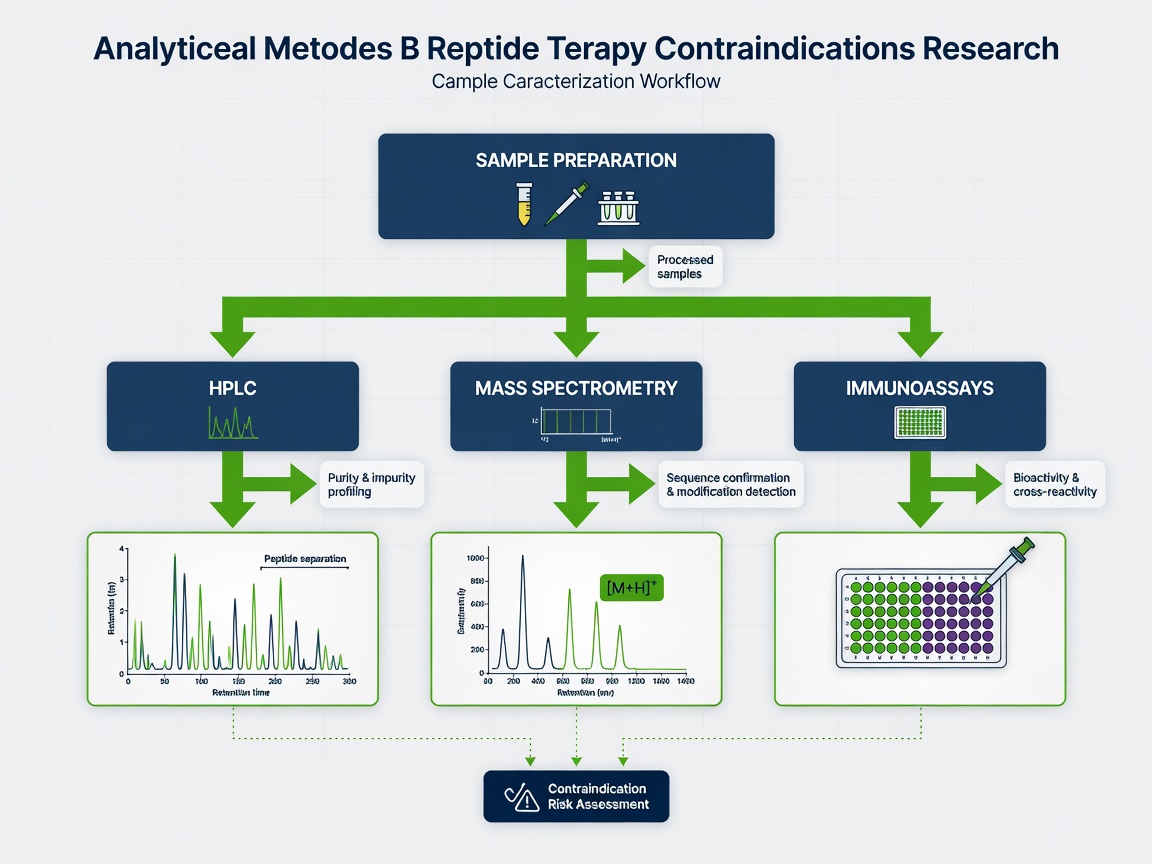
Analytical verification is the foundation of any peptide therapy contraindications dataset. If a research peptide is impure or misidentified, every downstream safety finding is questionable. The most common verification standard is ≥98% purity by high-performance liquid chromatography (HPLC) with mass spectrometry confirmation of the molecular weight.
Peptide therapy contraindications studies depend on accurate dosing. An impurity of even 2% can introduce a confounding pharmacological activity, especially if the impurity is a truncated or oxidized form of the peptide. Truncated peptides may retain receptor binding but lose signaling capacity, leading to false negative results. Oxidized peptides may aggregate and trigger spurious immunogenicity signals.
Mass spectrometry confirmation is not optional. HPLC purity alone cannot distinguish between two peptides with similar retention times. Mass spectrometry provides the exact mass-to-charge ratio and, with tandem MS, sequence confirmation. Without this confirmation, a peptide therapy contraindications study may be conducted with the wrong compound entirely.
Researchers should request a certificate of analysis (COA) for every peptide lot used in a contraindication study. The COA should list the HPLC purity, the mass spectrometry data, the residual solvent content, and the storage conditions. If a COA is unavailable, the research team should perform its own analytical verification before starting any experiment. This practice is now expected by peer reviewers and regulatory agencies.
Storage conditions also affect analytical integrity. Peptides are often lyophilized and should be stored at −20°C or −80°C, protected from light and moisture. Repeated freeze-thaw cycles can degrade a peptide and alter its impurity profile. A peptide therapy contraindications protocol should specify the maximum number of freeze-thaw cycles allowed and document each cycle in the study log.
What Analytical Methods Support Peptide Therapy Contraindications Research?
Several analytical methods support peptide therapy contraindications research, each addressing a different aspect of quality and identity. The three most common are HPLC, mass spectrometry, and amino acid analysis. HPLC quantifies purity and detects major impurities. Mass spectrometry confirms molecular weight and sequence. Amino acid analysis verifies composition and absolute quantity.
!Peptide therapy contraindications HPLC purity verification
HPLC is the workhorse of peptide therapy contraindications quality control. Reverse-phase HPLC with a C18 column separates peptides based on hydrophobicity. A purity of ≥98% means that the integrated peak area of the target peptide accounts for at least 98% of all detected peaks. However, HPLC cannot detect co-eluting impurities, which is why mass spectrometry is required.
Mass spectrometry can be performed using MALDI-TOF or ESI-MS. MALDI-TOF provides rapid molecular weight confirmation for peptides up to about 30 kDa. ESI-MS coupled to liquid chromatography (LC-MS) offers higher resolution and can detect sequence variants. For peptide therapy contraindications research, LC-MS/MS is the gold standard because it can confirm the amino acid sequence and identify post-translational modifications.
Amino acid analysis is less commonly used but valuable for absolute quantification. It involves hydrolyzing the peptide into its constituent amino acids and quantifying each by HPLC or GC. This method is independent of peptide folding or aggregation and provides a molar concentration. Researchers use amino acid analysis when a peptide therapy contraindications study requires precise dosing in cell culture or animal models.
Other supporting methods include circular dichroism for secondary structure, dynamic light scattering for aggregation, and endotoxin testing for bacterial contamination. Endotoxin testing is particularly important for in vivo peptide therapy contraindications studies because endotoxin can cause false positive inflammatory signals. A limit of <0.1 EU/mg is typical for research-grade peptides.
What Regulatory Frameworks Guide Peptide Therapy Contraindications Research?
Peptide therapy contraindications research operates within a framework of international guidelines and national regulations. The most relevant documents are ICH S7A (safety pharmacology), ICH M3(R2) (nonclinical safety studies), and ICH S6(R1) (biotechnology-derived pharmaceuticals). These guidelines standardize the endpoints and study designs that generate contraindication data.
!Peptide therapy contraindications ICH S7A safety pharmacology battery
ICH S7A defines the core battery of safety pharmacology studies: cardiovascular, central nervous system, and respiratory. These studies are designed to detect acute functional effects that could become peptide therapy contraindications. For example, a peptide that causes a sustained increase in heart rate in a telemetry study may be flagged for relative exclusion in models with pre-existing cardiac dysfunction.
ICH M3(R2) provides the timing and scope of nonclinical safety studies relative to clinical development. It specifies which toxicology studies are needed before first-in-human trials and which can be deferred. For peptide therapy contraindications, M3(R2) ensures that reproductive toxicity and genotoxicity data are available before long-term exposure studies begin.
ICH S6(R1) is specific to biotechnology-derived products, including many peptides. It addresses immunogenicity, species selection, and the use of surrogate models. Because peptides can be highly species-specific, S6(R1) guides researchers in choosing animal models that express the relevant receptor. A mismatch between peptide and model receptor can produce false negative peptide therapy contraindications data.
In the United States, the FDA provides additional guidance documents for peptide development. The FDA guidance for S7A safety pharmacology studies and the FDA M3(R2) nonclinical safety studies guidance are publicly available. Researchers should consult these documents when designing any peptide therapy contraindications study.
💡 Key Takeaway: What Regulatory Frameworks Guide Peptide Therapy Contraindications Research?
How Do Research Teams Document and Audit Peptide Therapy Contraindications?
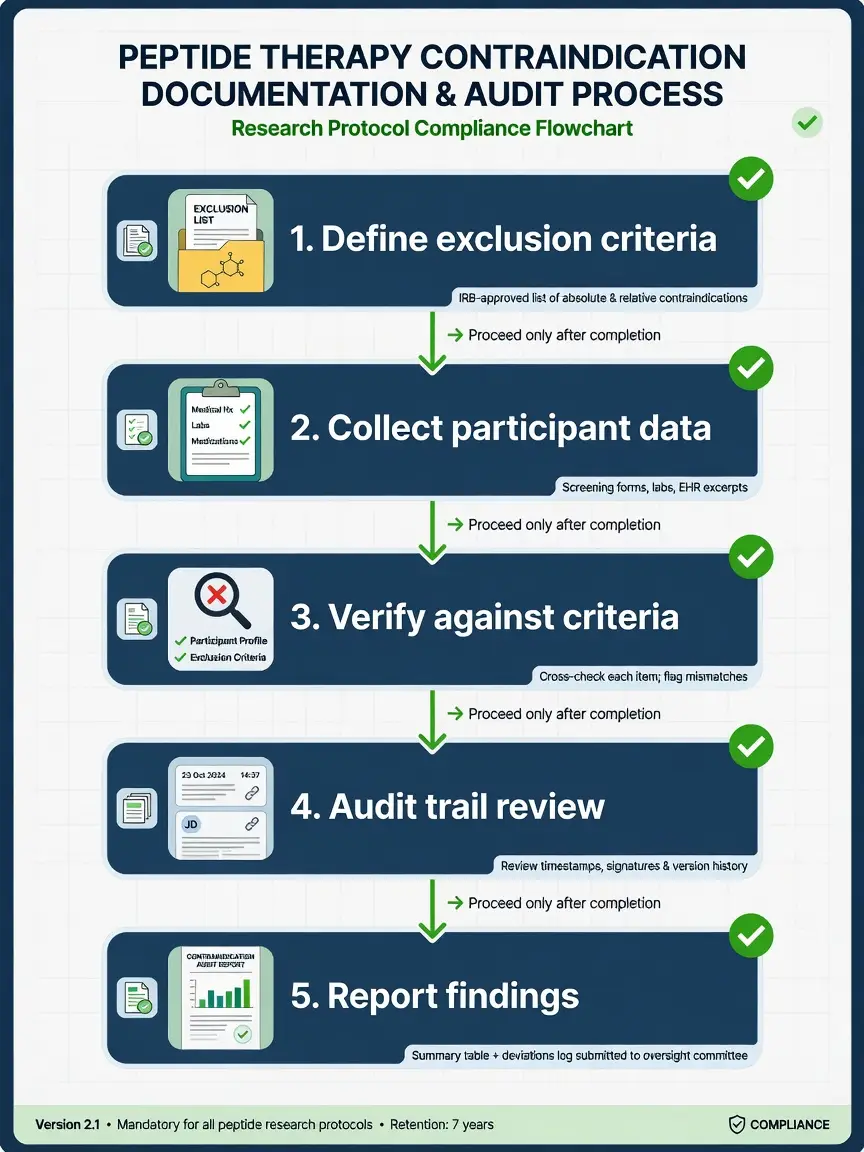
Documentation is a core requirement for peptide therapy contraindications research. Every exclusion criterion must be traceable to a source document, such as a toxicology report, a receptor binding panel, or a regulatory guidance. A well-documented criterion includes the evidence, the tier (absolute or relative), the threshold value, and the date of last review.
An audit trail should capture every change to a peptide therapy contraindications list. If a criterion is added, removed, or modified, the change must be dated, justified, and approved by the principal investigator. This practice is consistent with Good Laboratory Practice (GLP) and Good Clinical Practice (GCP) principles, even for preclinical research.
Many research teams maintain a contraindication register as a living document. The register lists each peptide therapy contraindication, its category, its evidence source, and its current status. The register is reviewed at predefined intervals — typically every six months or at major protocol milestones. This review ensures that new safety data are incorporated promptly.
Electronic data capture systems can automate parts of this documentation. For example, a screening form can automatically flag a candidate that meets an exclusion threshold. The system then records the time, the value, and the user who reviewed the flag. This automation reduces transcription errors and strengthens the audit trail for peptide therapy contraindications.
Peer reviewers and regulators increasingly expect to see this documentation. A study that reports exclusion criteria but cannot show the underlying evidence may be considered non-reproducible. Researchers should therefore treat peptide therapy contraindications documentation with the same rigor as primary endpoint data. For additional resources on research documentation, see the Peptide Blog: 7 Proven Research Resources for 2026.
Which Common Pitfalls Occur When Interpreting Peptide Therapy Contraindications Data?
Several pitfalls can distort the interpretation of peptide therapy contraindications data. The most common is species extrapolation. A peptide may show a contraindication in one animal species but not another because of receptor differences. Researchers must verify that the model expresses the relevant target before applying an exclusion criterion.
Another pitfall is conflating a biomarker change with a clinical endpoint. A transient increase in a liver enzyme may not constitute a true peptide therapy contraindication if it resolves without histopathological change. Researchers should pair biomarker data with histopathology or functional assays before finalizing an exclusion criterion.
Impurity-related artifacts are a third pitfall. If a peptide lot contains a co-eluting impurity that activates an off-target receptor, the resulting safety signal may be incorrectly attributed to the peptide itself. This is why analytical verification with mass spectrometry is mandatory before any peptide therapy contraindications study. A COA alone is not sufficient; the research team should independently confirm identity.
Overgeneralization across peptide classes is another common error. A contraindication documented for one growth-hormone–releasing peptide does not automatically apply to all peptides in that class. Each peptide has a unique receptor binding profile, half-life, and tissue distribution. Researchers should review peptides benefits and risks — 7 Proven Facts for 2026 for class-specific safety considerations.
Finally, researchers sometimes fail to update exclusion criteria as new data emerge. A peptide therapy contraindications list that is static for years may miss new immunogenicity or drug–drug interaction findings. Regular literature surveillance and internal data reviews are essential. For a deeper look at peptide mechanisms that inform these updates, see How Do Peptides Work? 7 Essential Mechanisms in 2026.
What Does Peptide Headlines Provide for Research Teams?
Peptide Headlines provides research chemicals for in vitro laboratory use only. All products are supplied with analytical documentation, including HPLC purity and mass spectrometry confirmation where applicable. This documentation supports the analytical verification requirements of peptide therapy contraindications research.
The platform does not provide medical advice, dosing recommendations, or human use guidance. Every product listing and educational article includes the research use only notice. This framing is essential because peptide therapy contraindications are research concepts, not clinical prescribing tools.
Research teams can use Peptide Headlines as a source of verified reference materials for receptor binding studies, toxicology assays, and analytical method development. The site also maintains a blog with research resources on peptide mechanisms, safety, and regulatory updates. For an overview of available resources, visit the Peptide Blog: 7 Proven Research Resources for 2026.
💡 Key Takeaway: What Does Peptide Headlines Provide for Research Teams?
FAQ
What exactly are peptide therapy contraindications in a research context?
Peptide therapy contraindications are protocol-defined exclusion criteria that remove a specimen, cell line, animal model, or trial cohort from eligibility based on preclinical safety evidence. They are categorized as absolute or relative and cover conditions such as reproductive toxicity, proliferative signaling, organ impairment, immunogenicity, and drug–drug interactions.
How are peptide therapy contraindications established?
They are established through a staged pipeline: in vitro receptor binding and cytotoxicity screening, ICH S7A safety pharmacology batteries, repeat-dose toxicology in two species, and translation into protocol exclusion criteria. Regulatory documents such as ICH M3(R2) standardize this process.
Why is analytical verification important for peptide therapy contraindications research?
Analytical verification — typically ≥98% purity by HPLC with mass spectrometry confirmation — ensures that the peptide used in a study is correctly identified and free of confounding impurities. Without this verification, safety signals may be artifacts of impurities or misidentification, invalidating the contraindication data.
What are the five main categories of peptide therapy contraindications?
The five main categories are reproductive and developmental toxicity, proliferative signaling, organ impairment, immunogenicity, and drug–drug interactions. Each category is studied using specific models and assays, such as embryofetal development studies, receptor binding panels, organ function biomarkers, anti-drug antibody assays, and transporter interaction studies.
Are peptide therapy contraindications the same across all peptide classes?
No. Peptide therapy contraindications are mechanism-driven and vary by receptor binding profile, tissue distribution, and metabolic pathway. A contraindication documented for one peptide does not automatically apply to another, even within the same class. Researchers must review receptor binding data and species-specific evidence before applying exclusion criteria.
⚠️ Research Use Only Notice: The products discussed on this site are sold strictly for in vitro laboratory research purposes only. They are not for human use, not for veterinary use, and not intended to diagnose, treat, cure, or prevent any disease. All information presented is for educational purposes in a research context. Must be 21+ to purchase.
Topics covered in this article:
Ready to Take the Next Step?
Every product includes lot-specific documentation and third-party purity testing.
Explore Our Research Products →Free shipping on qualifying orders · Batch COA on request