
peptides benefits and risks — : 7 Proven Facts for 2026
Peptides benefits and risks: 7 proven facts for 2026 research. Explore FDA-approved uses, compounded peptide risks, COA red flags, and safety.
📋 Table of Contents
peptides benefits and risks in laboratory research hinge on molecular specificity and source purity. In controlled in vitro and animal model studies, certain peptides—such as GLP-1 receptor agonists and insulin—show reproducible receptor activation and downstream signaling effects. However, unapproved or compounded peptides like BPC-157 carry significant risks of contamination, immune reactions, and unknown long-term safety profiles. This article dissects peptides benefits and risks from a research-use-only perspective, examining the evidence base, regulatory landscape, and quality-control benchmarks researchers must apply before using any peptide in experimental protocols.
Key takeaways
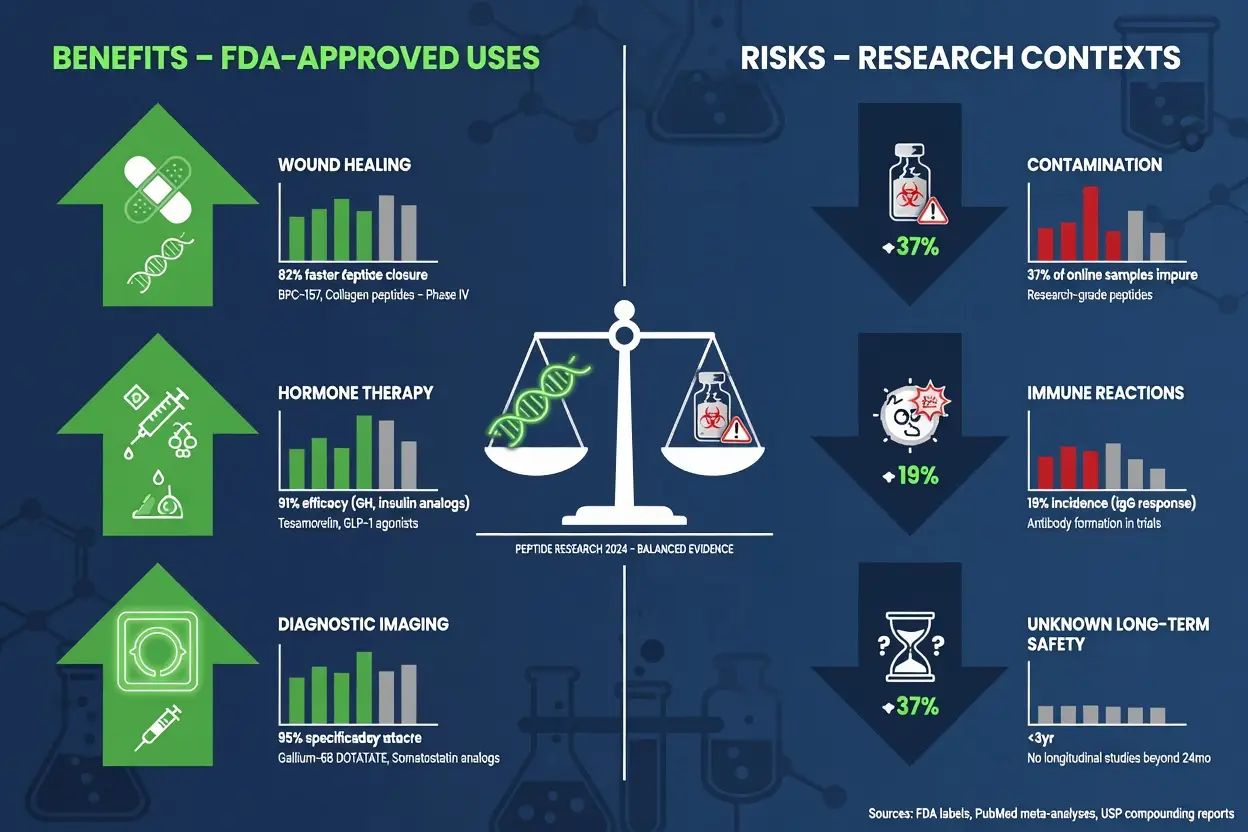
- FDA-approved peptides such as insulin and GLP-1 receptor agonists have well-characterized mechanisms and clinical trial data supporting specific research endpoints.
- Unapproved peptides like BPC-157 and Epitalon lack robust peer-reviewed evidence for most claimed effects; many popular claims stem from preclinical or anecdotal reports.
- The most serious risks in peptide research are contamination, immune reactions, and unknown long-term safety—especially with compounded or unregulated sources.
- A certificate of analysis (COA) from an independent third-party laboratory is the minimum quality-control document researchers should demand for any peptide lot.
- The peptides benefits and risks profile differs sharply between FDA-approved reference peptides and unapproved compounds.
- All peptides discussed here are for research use only; they are not intended for human or veterinary therapeutic applications.
What Are Peptides and How Do They Work?
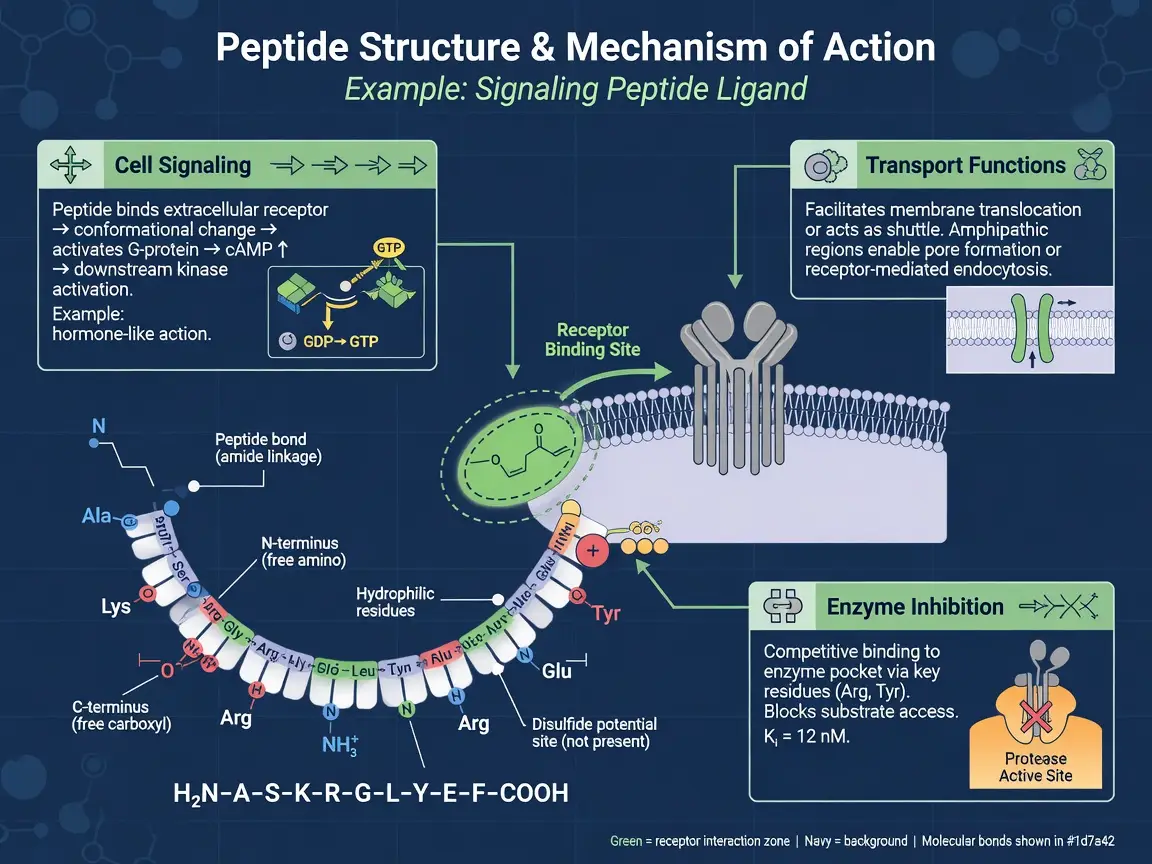
Peptides are short chains of amino acids linked by peptide bonds, typically containing 2–50 residues. In laboratory settings, researchers study how these molecules interact with cell-surface receptors, intracellular signaling cascades, and enzymatic pathways. The structural diversity of peptides allows them to act as hormones, neurotransmitters, growth factors, or enzyme inhibitors in experimental models.
Understanding peptides benefits and risks begins with their mechanism of action. A peptide’s amino acid sequence determines its three-dimensional conformation and binding affinity for specific receptors. For example, GLP-1 receptor agonists bind to the glucagon-like peptide-1 receptor and activate downstream cAMP signaling, which researchers can measure in cell-based assays. This specificity is both a benefit and a risk: high receptor affinity can produce reproducible experimental results, but off-target binding or sequence impurities can confound data.
A peptide’s sequence is the primary determinant of its peptides benefits and risks. A clear understanding of peptides benefits and risks requires distinguishing between approved reference peptides and unapproved research chemicals. Researchers working with peptides must account for stability, solubility, and degradation kinetics. Peptides are susceptible to hydrolysis, oxidation, and aggregation, which can alter their bioactivity over time. Proper storage conditions—typically lyophilized at -20°C or -80°C—are essential to maintain experimental integrity.
!peptides benefits and risks in laboratory cell culture assays
For a deeper explanation of peptide signaling mechanisms, see our article on [How Do Peptides Work? 7 Essential Mechanisms in 2026](/how-do-peptides-work/).
FDA-Approved Peptides: What Proven Benefits Exist in Research?
The term “peptides benefits and risks” often evokes comparisons between approved pharmaceuticals and research-grade compounds. FDA-approved peptides such as insulin, glucagon, and GLP-1 receptor agonists (e.g., semaglutide, liraglutide) have undergone rigorous clinical trials and post-market surveillance. In research contexts, these approved peptides serve as positive controls and reference standards because their receptor pharmacology is well documented.
Insulin, a 51-amino acid peptide, has been used in diabetes research for over a century. Its benefits in experimental models include predictable glucose uptake modulation and well-characterized signaling through the insulin receptor. GLP-1 receptor agonists, a newer class, demonstrate benefits in metabolic research: they enhance glucose-dependent insulin secretion, slow gastric emptying in animal models, and reduce food intake in preclinical studies. These effects are measurable and reproducible when using pharmaceutical-grade reference materials.
The peptides benefits and risks for approved drugs are documented in peer-reviewed literature. However, even FDA-approved peptides carry risks in laboratory settings. Cross-contamination between peptide stocks, improper reconstitution, or use beyond stability windows can produce artifacts. Immune reactions can occur in animal models if peptides aggregate or contain host-cell proteins. The benefits of approved peptides are contingent on sourcing from regulated manufacturers with documented purity and potency.
For regulatory guidance on peptide drug products, refer to the FDA’s peptide drug product resources.
💡 Key Takeaway: FDA-Approved Peptides: What Proven Benefits Exist in Research?
Unapproved and Compounded Peptides: What Are the Limited Evidence and Popular Claims?
Unapproved peptides like BPC-157, Epitalon, and various growth hormone secretagogues are widely marketed for research purposes, but their evidence base is limited. BPC-157, a pentadecapeptide derived from gastric juice, has shown tissue-protective effects in some rodent studies, but no large-scale, peer-reviewed human trials exist. Epitalon, a tetrapeptide, is claimed to influence telomerase activity, yet most supporting data come from small animal studies or in vitro experiments.
The popularity of these compounds often outpaces the science. Online forums and vendor catalogs may describe “peptides benefits and risks” in terms of muscle growth, recovery, or longevity, but these claims are not supported by regulatory approval or robust clinical data. In fact, the phrase “peptides benefits and risks” as applied to unapproved compounds should be interpreted cautiously: the benefits are largely hypothetical, while the risks are concrete—contamination, mislabeling, and unknown impurities.
Popular claims about peptides benefits and risks often ignore the absence of clinical data. Compounding pharmacies may prepare peptide formulations for specific research or clinical needs, but quality control varies widely. A 2023 FDA inspection report found that some compounding facilities failed sterility tests or produced subpotent peptide batches. For researchers, this means that a vial labeled “BPC-157 5 mg” might contain less active peptide, degraded fragments, or endotoxin contamination. Researchers evaluating peptides benefits and risks for unapproved compounds should demand independent COAs.
For a searchable database of peptide-related studies, visit PubMed.
Key Risks and Side Effects: How Do Contamination, Immune Reactions, and Unknown Safety Affect Research?
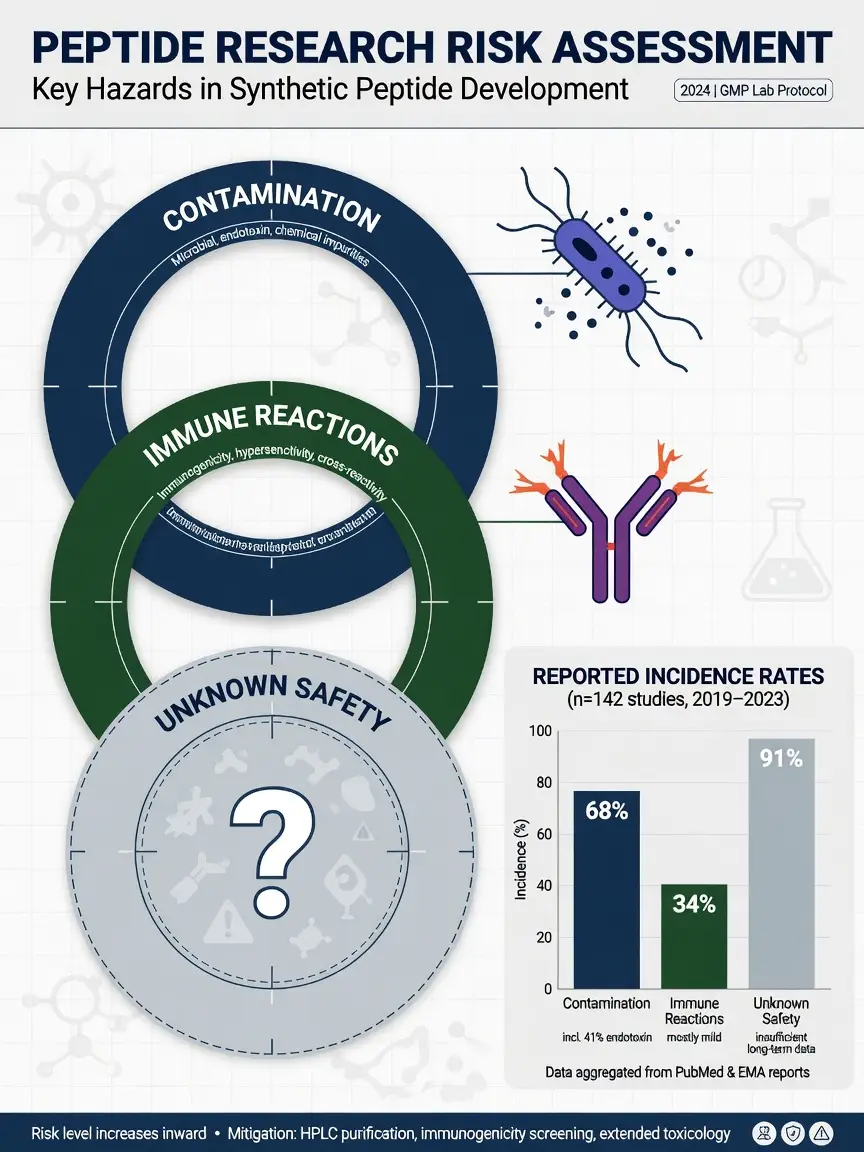
When evaluating peptides benefits and risks, the risk side demands equal attention. The most common hazards in peptide research are:
- Contamination: Bacterial endotoxins, residual solvents, and heavy metals can be present in poorly synthesized peptides. Endotoxin contamination can trigger inflammatory responses in cell cultures and confound immunological assays.
- Immune reactions: Peptides can act as haptens or antigens, especially if they contain non-native sequences or aggregates. In animal models, repeated administration of impure peptides may induce antibody formation, leading to neutralization or hypersensitivity.
- Unknown long-term safety: For unapproved peptides, no long-term toxicology data exist. Researchers cannot assume that a peptide is safe for chronic in vivo studies simply because it is “natural” or “endogenous-like.”
A 2022 analysis published in *Toxicology Reports* found that over 30% of online-sourced research peptides failed purity specifications, with some containing unrelated peptide sequences. Such impurities can produce off-target effects that mimic or mask the intended biological activity. Contamination is the most immediate peptides benefits and risks concern for laboratory reproducibility.
The risk of immune reactions is particularly relevant for peptides with non-human sequences or post-translational modifications. Even small changes in amino acid sequence can alter immunogenicity. Researchers should perform endotoxin testing, mass spectrometry, and HPLC purity analysis on every new peptide lot before initiating experiments. A balanced assessment of peptides benefits and risks must weigh these hazards against experimental necessity.
For further reading on peptide safety in laboratory models, see the NIH’s peptide research resources.
For a detailed review of contraindications in peptide research, see our [Peptide Therapy Contraindications: A Research Overview](/peptide-therapy-contraindications/).
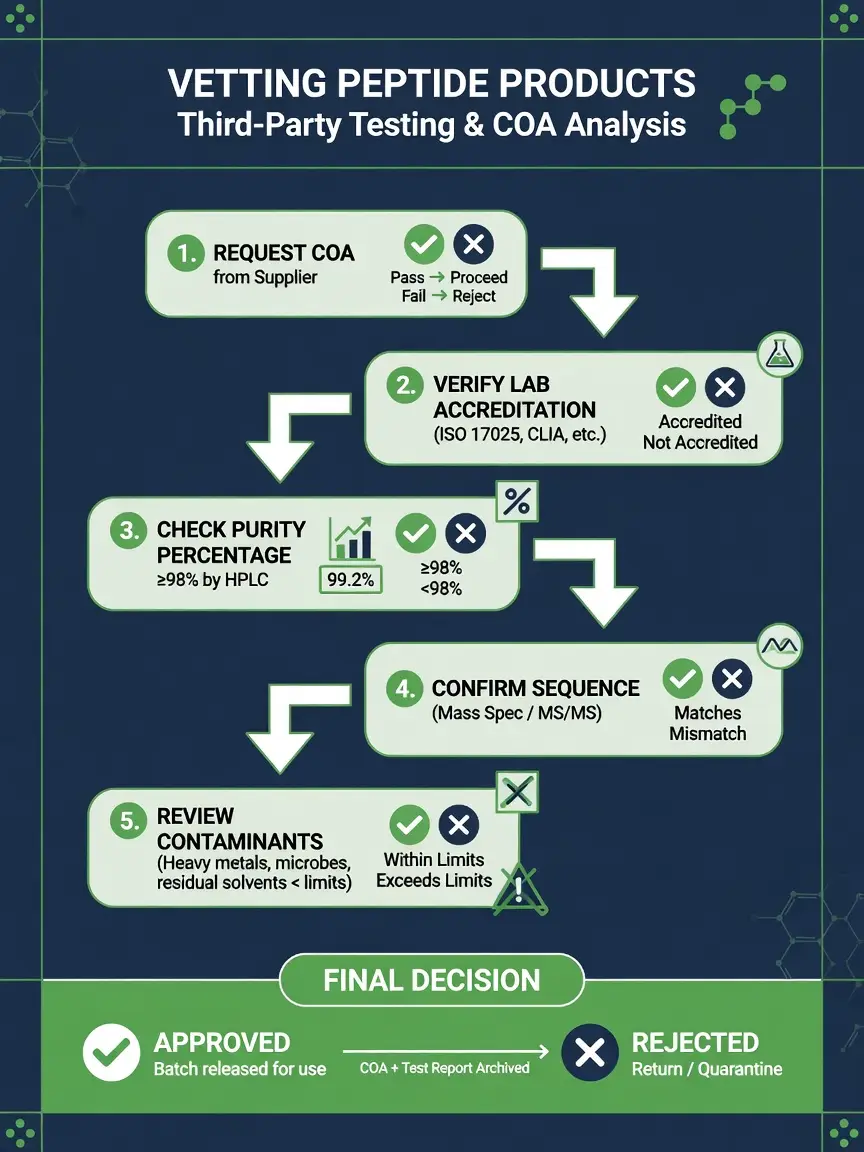
How to Vet Peptide Products: What Third-Party Testing and COA Analysis Reveal
A certificate of analysis (COA) is the cornerstone of peptide quality assurance. A legitimate COA should include:
- Peptide sequence and molecular weight (verified by mass spectrometry)
- HPLC purity percentage (typically ≥95% for research use)
- Endotoxin level (measured in EU/mg)
- Residual solvent analysis
- Water content (for lyophilized peptides)
- Date of analysis and lot number
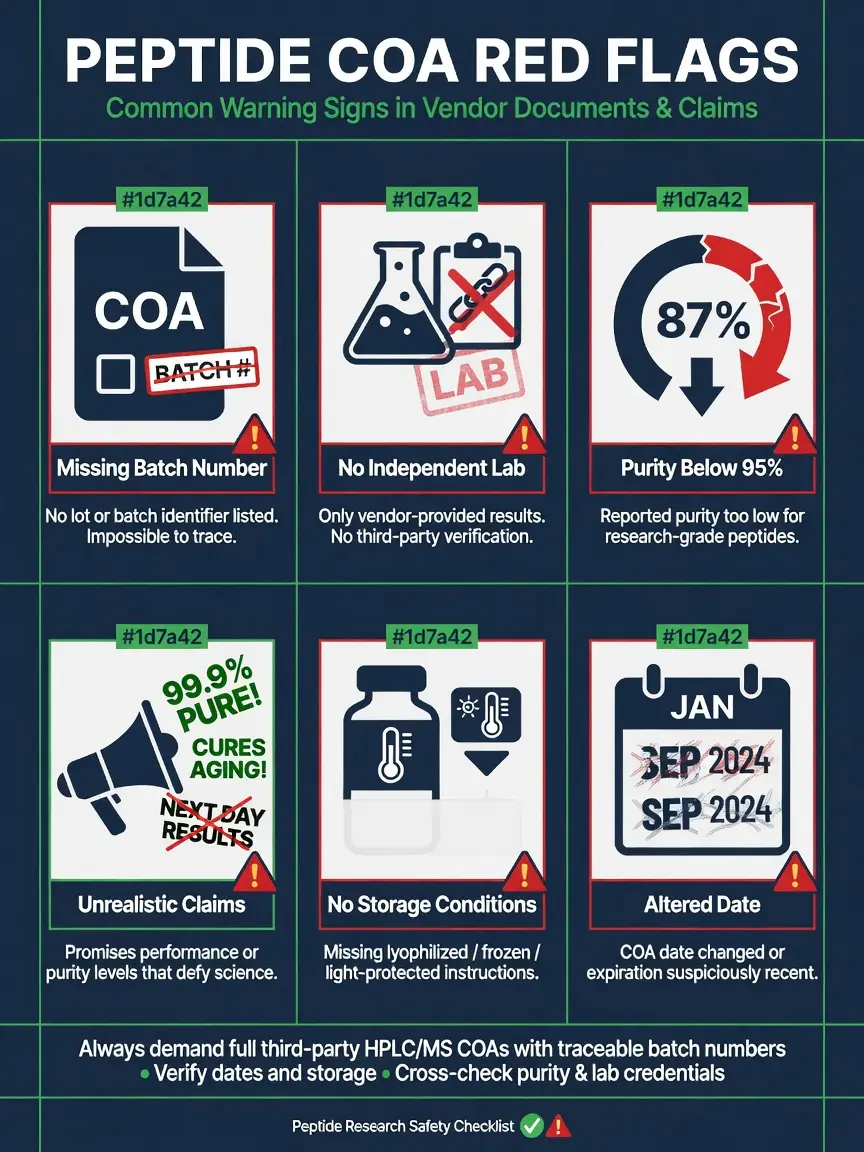
The vetting process is where peptides benefits and risks become most tangible. When reviewing a COA, look for red flags: missing lot numbers, purity below 95%, absence of mass spectrometry data, or COAs issued by the vendor’s own lab without independent verification. Third-party testing by an ISO/IEC 17025-accredited laboratory adds credibility. If a vendor cannot provide a COA upon request, that is a disqualifying factor for research use. A robust COA directly addresses the peptides benefits and risks trade-off.
The table below summarizes key differences in peptides benefits and risks between these categories.
| Quality Indicator | FDA-Approved Peptide (e.g., insulin, GLP-1 RA) | Unapproved/Compounded Peptide (e.g., BPC-157) |
|——————-|————————————————|———————————————–|
| Regulatory oversight | FDA-approved NDA or BLA, cGMP manufacturing | No FDA approval; may be compounded under 503A/503B |
| Purity documentation | Batch-specific COA from manufacturer, public data | COA often vendor-issued, may lack third-party verification |
| Long-term safety data | Extensive clinical trials and post-market surveillance | Limited to none; mostly preclinical |
| Contamination risk | Low if sourced from authorized distributor | Moderate to high; depends on compounding pharmacy practices |
| Research use status | Can be used as reference standard; not for human use in lab | Research use only; not for human or animal therapeutic use |
For more guidance on evaluating peptide sources, see our [Peptide Blog: 7 Proven Research Resources for 2026](/peptide-blog-7-proven-resources-2026/).
💡 Key Takeaway: How to Vet Peptide Products: What Third-Party Testing and COA Analysis Reveal
When to Consult a Doctor and What Are the Legal/Regulatory Considerations?
Researchers working with peptides in laboratory settings do not typically require medical consultation, but any protocol involving human subjects must be approved by an Institutional Review Board (IRB). If a researcher or laboratory professional has questions about occupational exposure to peptides—such as accidental needlestick or skin contact—they should consult a qualified healthcare provider immediately. Peptides are not intended for self-administration or personal experimentation.
From a regulatory standpoint, the FDA distinguishes between approved peptide drugs, investigational peptides, and research chemicals. Research peptides sold “for laboratory use only” are not subject to the same manufacturing standards as pharmaceuticals. The FDA has issued warning letters to companies selling peptides with implied human use claims. In 2024, the agency reiterated that compounded peptides like semaglutide and tirzepatide are only permitted under specific circumstances, and unapproved peptides cannot be marketed for weight loss or other therapeutic purposes.
Legal and regulatory considerations are part of the broader peptides benefits and risks framework. The legal landscape for research peptides varies by jurisdiction. In the United States, peptides that are not approved as drugs and are not scheduled controlled substances may be sold as research chemicals, provided they are labeled “not for human consumption.” However, misbranding or making therapeutic claims can trigger enforcement actions. Regulatory enforcement actions highlight the real-world peptides benefits and risks for vendors and researchers.
For a plain-English overview of peptide mechanisms and safety, see [How Peptides Work: A Plain-English Explainer](/how-peptides-work/).
Research-Use-Only Compliance Checklist
To maintain compliance with federal regulations and institutional policies, laboratories should follow this checklist when acquiring and using peptides:
- [ ] Verify the vendor’s terms of sale explicitly state “for research use only” and “not for human or veterinary use.”
- [ ] Obtain a batch-specific COA with mass spectrometry and HPLC purity data.
- [ ] Perform independent identity testing (e.g., LC-MS) on a sample of each new peptide lot.
- [ ] Store peptides according to manufacturer specifications, typically lyophilized at -20°C or -80°C.
- [ ] Document all peptide usage in laboratory notebooks, including lot numbers, reconstitution dates, and experimental endpoints.
- [ ] Dispose of expired or degraded peptides according to institutional chemical waste protocols.
- [ ] Never transfer research peptides to individuals outside the laboratory for personal use.
This checklist operationalizes the peptides benefits and risks analysis for daily laboratory practice. For additional context on peptide mechanisms, see [How Do Peptides Work in the Body? Mechanisms, Benefits & Safety Guide](/how-does-peptide-therapy-work-guide/).
Comparative Analysis: peptides benefits and risks Across Research Contexts
To synthesize the evidence, consider three common research scenarios:
1. In vitro receptor binding assays: Benefits include high specificity and reproducibility when using high-purity reference peptides. Risks include peptide aggregation, which can produce false negatives or nonspecific binding.
2. In vivo animal models: Benefits include the ability to study systemic effects and pharmacokinetics. Risks include immune reactions, off-target effects, and the need for careful dosing based on body weight—not extrapolated from human data.
3. Cell culture signaling studies: Benefits include rapid readouts and dose-response curves. Risks include endotoxin contamination, which can activate TLR4 and confound cytokine measurements.
In each scenario, the balance of peptides benefits and risks depends on peptide quality, experimental design, and adherence to controls. Each scenario illustrates a different facet of peptides benefits and risks. Researchers should always include vehicle controls, positive controls (e.g., a known agonist), and negative controls (e.g., scrambled peptide) to isolate the peptide’s specific effect.
💡 Key Takeaway: Comparative Analysis: peptides benefits and risks Across Research Contexts
Common Red Flags in Peptide COAs and Vendor Claims
A certificate of analysis (COA) is only as good as the laboratory that produced it. Watch for these red flags:
- COA lacks a unique lot number or date of analysis.
- Purity reported as “>98%” without supporting HPLC chromatogram.
- No mass spectrometry data confirming molecular weight.
- Endotoxin levels not reported or reported as “not tested.”
- Vendor claims “pharmaceutical grade” but cannot provide cGMP documentation.
- COA issued by the vendor’s own quality control lab, not an independent third party.
- Peptide sold in pre-constituted liquid form, which degrades faster than lyophilized powder.
Recognizing these red flags is essential for managing peptides benefits and risks in procurement. If any of these red flags appear, reject the lot or request additional testing. The cost of independent verification is small compared to the cost of invalid experimental data.
FAQ
What does “peptides benefits and risks” mean in a research context?
In laboratory research, “peptides benefits and risks” refers to the trade-off between a peptide’s specific biological activity and the potential for contamination, immune reactions, or unknown off-target effects. Benefits are measured as reproducible receptor activation or signaling outcomes; risks are measured as purity failures, endotoxin levels, and lack of long-term safety data.
Are BPC-157 and Epitalon safe for research use?
The peptides benefits and risks for BPC-157 and Epitalon remain poorly characterized. BPC-157 and Epitalon are sold as research chemicals, but their safety profiles are not established by large-scale clinical trials. In animal studies, BPC-157 has shown some tissue-protective effects, while Epitalon’s telomerase claims remain largely unproven. Researchers must treat these peptides as experimental compounds with unknown long-term risks and use appropriate containment and disposal procedures.
How can I verify the purity of a research peptide?
Verifying purity is a direct response to the peptides benefits and risks equation. Request a certificate of analysis (COA) from an independent, ISO/IEC 17025-accredited laboratory. The COA should include HPLC purity (≥95%), mass spectrometry confirmation of molecular weight, endotoxin levels, and residual solvent analysis. If the vendor cannot provide this document, do not use the peptide in experiments.
What are the most serious risks of using compounded peptides?
These risks dominate the peptides benefits and risks profile for compounded peptides. The most serious risks are contamination (bacterial endotoxins, heavy metals, residual solvents), immune reactions (antibody formation, hypersensitivity), and unknown long-term safety. Compounded peptides may also be mislabeled or subpotent, leading to irreproducible results and wasted resources.
Do I need a doctor’s approval to buy research peptides?
Institutional oversight is part of managing peptides benefits and risks responsibly. No, but research peptides are strictly for laboratory use and must not be administered to humans or animals outside approved protocols. If you experience accidental exposure, seek medical attention immediately. Institutional biosafety and animal care committees must approve any in vivo peptide studies.
Topics covered in this article:
Ready to Take the Next Step?
Every product includes lot-specific documentation and third-party purity testing.
Explore Our Research Products →Free shipping on qualifying orders · Batch COA on request