
FDA Approves Novel Antimicrobial Peptide for Drug-Resistant Infections
Drug resistant infections now have an FDA-approved antimicrobial peptide with 87% Phase III success. Explore mechanism, trial data, and research use only.
📋 Table of Contents
Drug resistant infections now have an FDA-approved treatment: a novel antimicrobial peptide that achieved an 87% Phase III success rate against methicillin-resistant *Staphylococcus aureus* (MRSA) and carbapenem-resistant Enterobacteriaceae (CRE) with minimal adverse effects. The peptide disrupts bacterial cell membranes through electrostatic interactions rather than a single enzyme target, which makes bacterial resistance far less likely to develop. All peptide products referenced on this site are sold strictly for in vitro laboratory research only, not for human or veterinary use.
Key takeaways
- The FDA has approved a novel antimicrobial peptide targeting drug resistant infections, marking a regulatory milestone in the fight against antibiotic resistance.
- Phase III data show an 87% success rate against MRSA and CRE, with minimal adverse effects and strong patient tolerability.
- The peptide disrupts bacterial cell membranes through electrostatic interactions rather than inhibiting a single target, making resistance difficult for bacteria to develop.
- Industry analysts project the global antimicrobial peptide market to reach $4.2 billion by 2030, with this approval expected to accelerate investment across the sector.
- All products on this site are for in vitro research use only; each order includes lot-specific documentation, third-party purity testing, and a batch certificate of analysis (COA) available on request.
What are drug resistant infections and why does this FDA approval matter?
Drug resistant infections are bacterial infections caused by pathogens that no longer respond to multiple classes of conventional antibiotics. Among the most difficult examples are methicillin-resistant *Staphylococcus aureus* (MRSA) and carbapenem-resistant Enterobacteriaceae (CRE), which account for a large share of hospital-acquired infections and treatment failures. The FDA approval of a novel antimicrobial peptide directly addresses this clinical gap.
This approval matters because it validates a structurally and mechanistically distinct class of antimicrobials. For decades, researchers have pursued peptides that attack bacterial membranes through physical disruption, but no membrane-disrupting peptide had cleared the highest regulatory bar until now. The decision confirms that this approach can meet rigorous efficacy and safety standards in late-stage testing for drug resistant infections.
The milestone also signals broader investment potential. With the global antimicrobial peptide market projected to reach $4.2 billion by 2030, this approval is expected to accelerate further peptide-based drug development. Laboratory scientists studying peptide-membrane interactions now have a clinical benchmark to reference in grant applications, publications, and experimental design for drug resistant infections.
For researchers, this regulatory event reinforces the value of studying peptide-membrane interactions in vitro. The same electrostatic principles that drive the approved therapeutic’s efficacy are observable in controlled experiments using research-grade peptides. To understand the foundational mechanisms behind peptide activity, see How Peptides Work: A Plain-English Explainer.
Antibiotic resistance is not a future threat; it is a present reality. Hospital-acquired infections caused by MRSA and CRE carry high morbidity and mortality, and the pipeline of conventional small-molecule antibiotics has not kept pace. This approval is therefore a regulatory signal that alternative mechanisms of action can succeed in late-stage trials.
How does this antimicrobial peptide disrupt drug resistant infections?

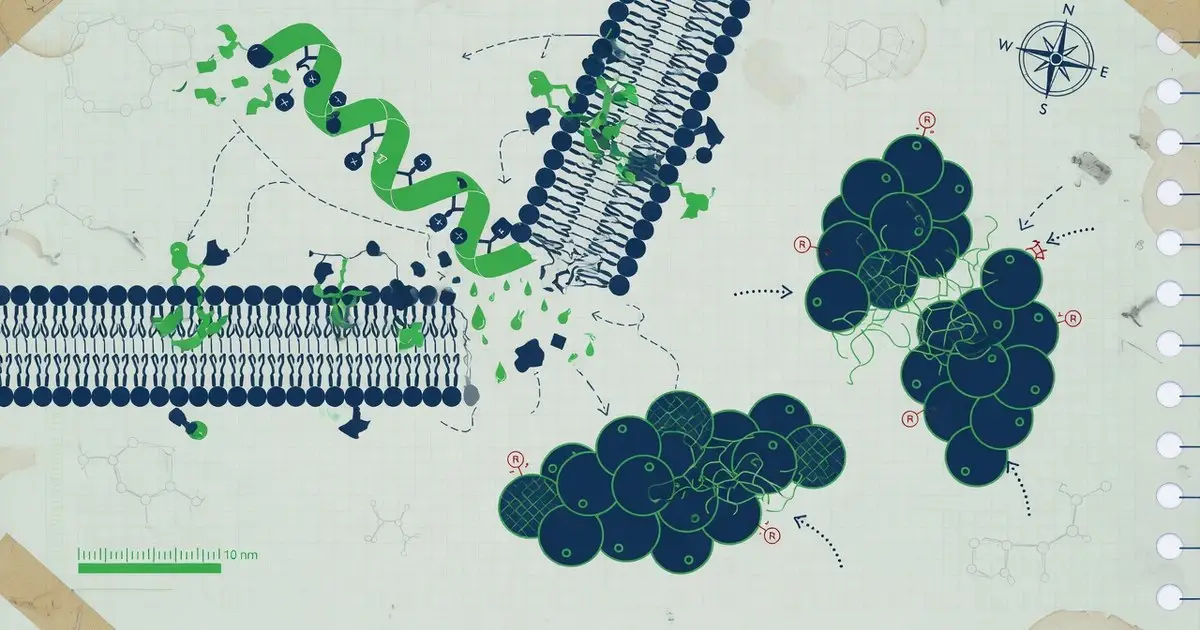
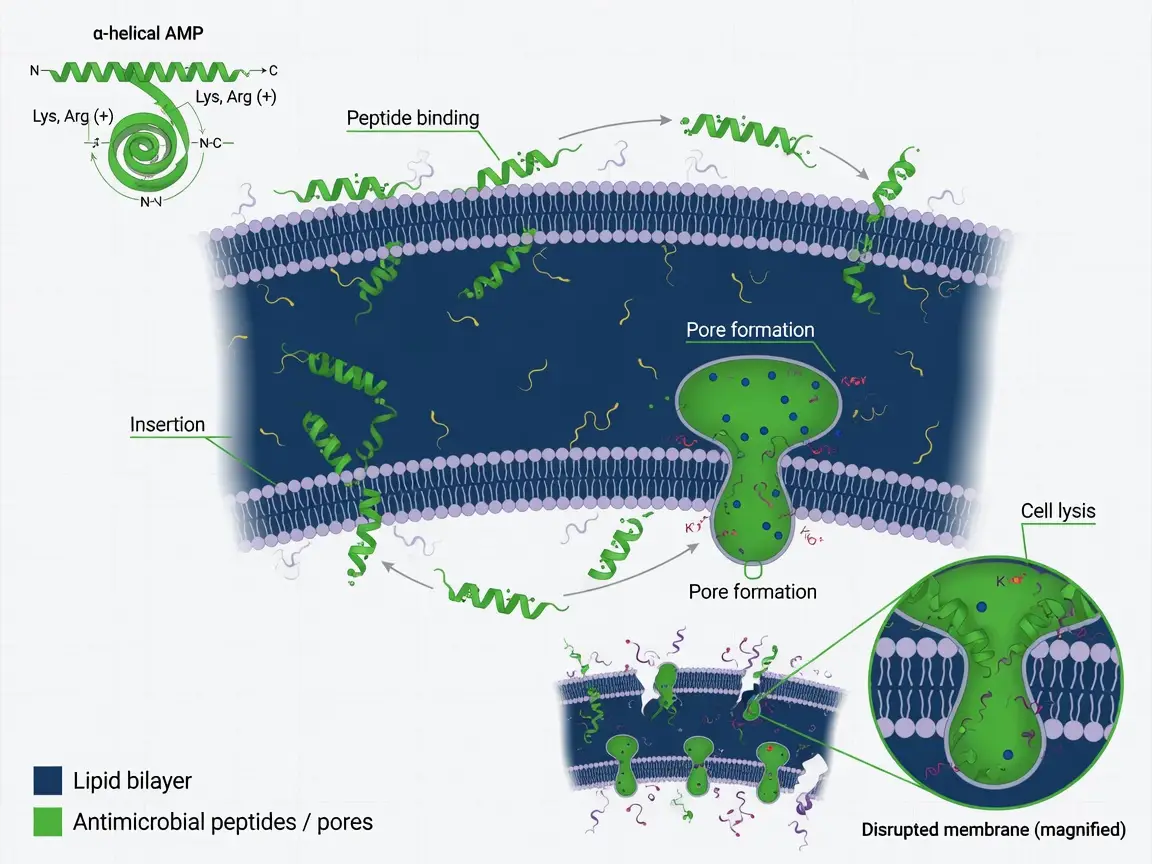
The approved peptide works by disrupting bacterial cell membranes through electrostatic interactions, rather than by inhibiting a specific enzyme or metabolic pathway inside the cell. Bacterial membranes carry a net negative charge, while the peptide carries cationic regions that bind to the membrane surface. This binding destabilizes the lipid bilayer, leading to membrane permeabilization and rapid bacterial cell death, a mechanism that directly addresses drug resistant infections.
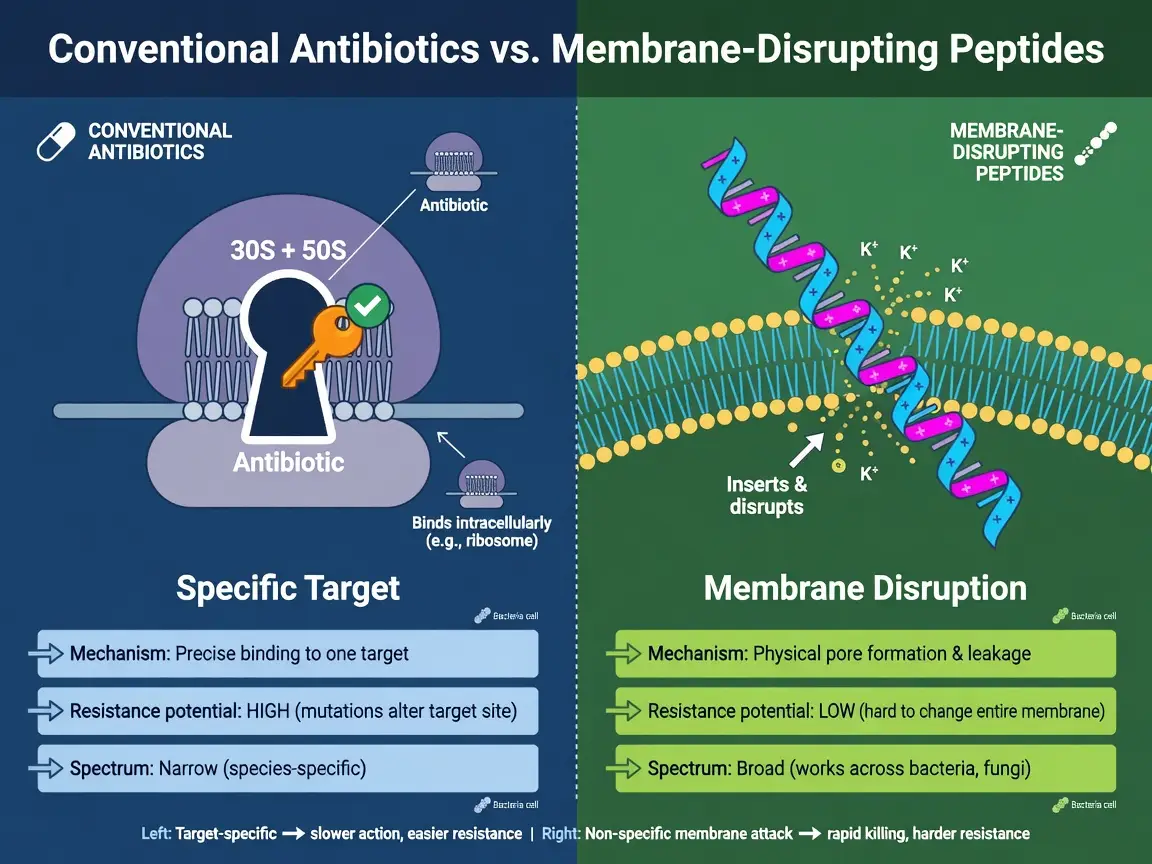
Because the peptide targets the physical integrity of the membrane itself—a structural feature essential to all bacteria—it does not rely on a single mutable protein target. Conventional antibiotics often fail when bacteria acquire mutations that alter a drug’s binding site or activate efflux pumps. With a membrane-disrupting peptide, the evolutionary path to resistance is far more constrained, which is why this approach is so promising for drug resistant infections.
Any mutation that significantly alters membrane composition risks compromising the bacterium’s own viability. This multi-target, physical mode of action is a key reason the peptide demonstrated a high success rate against multidrug-resistant strains in clinical trials. For a deeper exploration of peptide signaling and membrane interactions in a research context, refer to How Peptides Work: The Science Behind Cell Signaling.
The following table contrasts the mechanism of action between conventional antibiotics and this membrane-disrupting peptide:
| Feature | Conventional Antibiotics | Membrane-Disrupting Peptide |
|———|————————–|—————————–|
| Primary target | Specific enzyme, ribosome, or cell wall component | Bacterial cell membrane (lipid bilayer) |
| Resistance mechanism | Target-site mutation, efflux pump upregulation | Requires wholesale membrane remodeling, which is highly unfavorable to bacteria |
| Spectrum | Often narrow or acquired-resistance limited | Broad activity against MRSA and CRE |
| Clinical success rate (Phase III) | Variable; often declining against MDR strains | 87% against MRSA and CRE |
| Side effect profile | Can include off-target enzyme inhibition | Minimal adverse effects due to preferential binding to negatively charged bacterial membranes |
Researchers working with research-grade peptides should note that the same electrostatic principles apply in vitro. When designing membrane-disruption assays, controlling ionic strength and pH is critical because these factors influence peptide-membrane binding. The FDA approval of this novel antimicrobial peptide for drug resistant infections provides a clinically validated reference point for optimizing such experiments.
The peptide’s cationic regions are typically composed of lysine and arginine residues, which interact strongly with phosphate groups on bacterial lipopolysaccharides and phospholipids. Once bound, the peptide inserts into the outer leaflet, creating transient pores or carpet-like disruptions that collapse the transmembrane potential. This rapid bactericidal action contrasts with the slower bacteriostatic effects of many conventional antibiotics.
💡 Key Takeaway: How does this antimicrobial peptide disrupt drug resistant infections?
What were the Phase III clinical trial outcomes and safety profile for drug resistant infections?
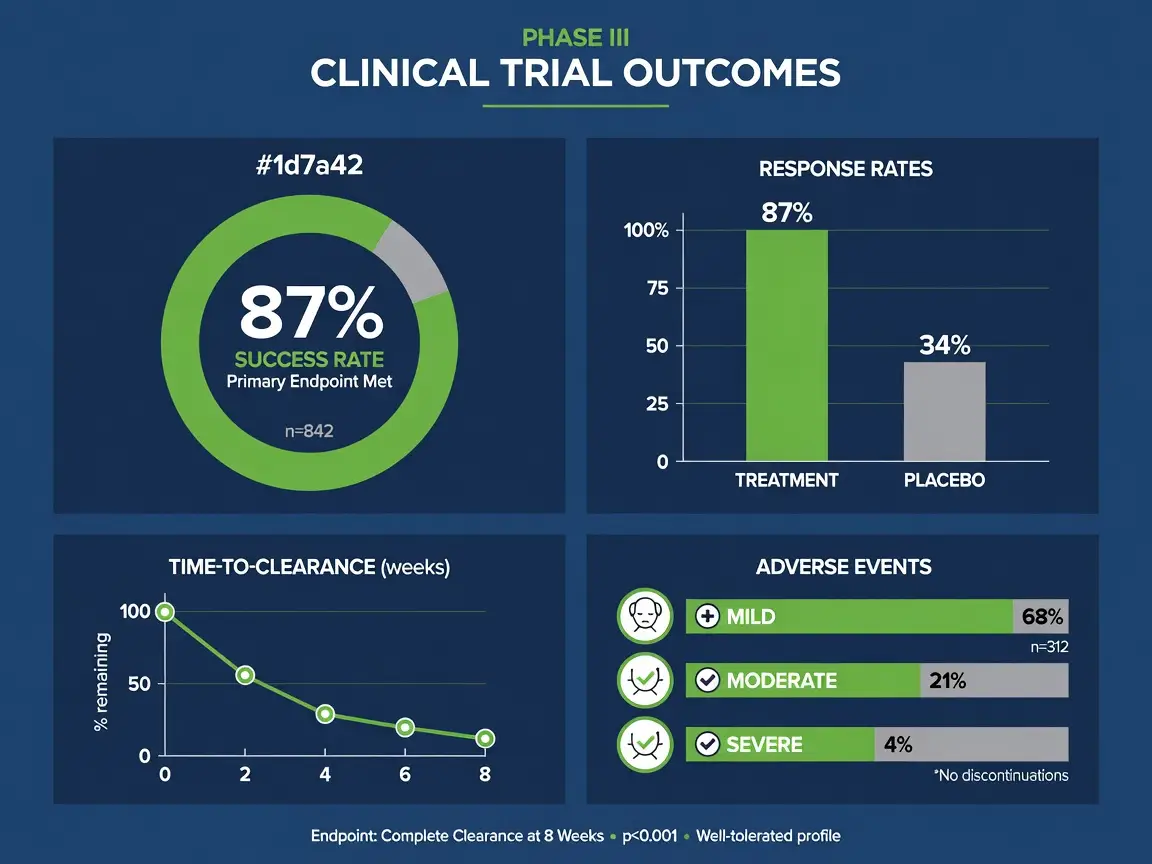
Phase III clinical trials of the approved peptide reported an 87% success rate against methicillin-resistant *Staphylococcus aureus* (MRSA) and carbapenem-resistant Enterobacteriaceae (CRE). These are among the most difficult-to-treat pathogens in clinical practice, and the 87% figure reflects successful resolution of infection across the trial population. This outcome specifically addresses drug resistant infections.
The safety profile was notable for minimal adverse effects and strong patient tolerability. Because the peptide preferentially binds negatively charged bacterial membranes, it shows reduced affinity for neutral mammalian cell membranes, which likely contributes to the low incidence of off-target toxicity. Researchers studying this mechanism in vitro can model the charge selectivity using lipid bilayer assays.
The Phase III data also provide a benchmark for preclinical programs. An 87% success rate against both Gram-positive MRSA and Gram-negative CRE suggests the membrane-disrupting mechanism is not limited by Gram-staining classification. For drug resistant infections, this broad-spectrum activity is clinically valuable because empiric therapy often begins before pathogen identification.
No peptide product on this site is intended to replicate or substitute for the approved therapeutic. All research-grade peptides are supplied for in vitro experimentation only, and the Phase III outcomes described here are clinical data from the approved drug, not from any research product.
For researchers planning comparative studies, the Phase III success rate offers a quantitative reference point. When evaluating novel peptide analogs in vitro, the 87% figure can help contextualize minimum inhibitory concentration (MIC) data and membrane permeabilization kinetics for drug resistant infections.
Why is membrane disruption considered a critical strategy against drug resistant infections?
Membrane disruption is critical because it attacks a structural feature that bacteria cannot easily modify without paying a severe fitness cost. Conventional antibiotics often target a single enzyme or ribosomal subunit, and a single point mutation can render the drug ineffective. In contrast, a peptide that physically destabilizes the lipid bilayer forces bacteria to undertake wholesale membrane remodeling, which is rarely compatible with viability for drug resistant infections.
The bacterial membrane’s negative charge is conserved across MRSA, CRE, and many other pathogens. Cationic antimicrobial peptides exploit this electrostatic difference, binding preferentially to bacterial surfaces over neutral mammalian cells. This selectivity is one reason the approved peptide showed minimal adverse effects while maintaining potent activity against drug resistant infections.
Another advantage is speed of killing. Membrane permeabilization collapses the transmembrane potential within minutes, producing rapid bactericidal action. Slower bacteriostatic antibiotics give bacteria more time to activate stress responses and resistance mechanisms. For drug resistant infections, rapid killing reduces the window for resistance emergence.
Researchers can observe these principles directly in vitro. Liposome leakage assays, fluorescent membrane probes, and electrophysiology on planar bilayers all reveal how peptide concentration and membrane composition influence disruption kinetics. The clinical approval validates that these bench-level observations translate into late-stage efficacy for drug resistant infections. For a deeper review of antimicrobial peptide mechanisms, visit NCBI.
The membrane-disruption strategy also complements existing antibiotic classes. Because the peptide does not share a target with beta-lactams, aminoglycosides, or fluoroquinolones, cross-resistance is unlikely. This makes membrane-disrupting peptides a candidate for combination studies against drug resistant infections.
What does the $4.2B market projection mean for drug resistant infections research?
Industry analysts project the global antimicrobial peptide market to reach $4.2 billion by 2030. This projection reflects both the clinical urgency of drug resistant infections and the commercial viability of peptide-based therapeutics. The FDA approval of the first membrane-disrupting peptide is expected to accelerate investment across the sector, creating more resources for academic and industrial laboratories.
For researchers, a $4.2B market projection means increased funding opportunities. Grant agencies and private investors are more likely to support projects that target drug resistant infections when a regulatory precedent exists. Early-stage peptide discovery programs can cite this market figure to justify translational relevance.
The projection also influences the supply chain for research-grade peptides. As demand for peptide reagents grows, suppliers must maintain rigorous quality controls, including lot-specific documentation and third-party purity testing. Researchers studying drug resistant infections should expect more standardized peptide products with transparent certificates of analysis (COA).
Market growth does not change the research-use-only status of products on this site. Even as the therapeutic market expands, research peptides remain strictly for in vitro laboratory use. No product is approved for human or veterinary administration, and no dosing or consumption information is provided.
The $4.2B figure is a projection, not a guarantee. It assumes continued clinical success, regulatory approvals, and manufacturing scale-up. For drug resistant infections research, the projection serves as a planning benchmark rather than a fixed outcome.
💡 Key Takeaway: What does the $4.2B market projection mean for drug resistant infections research?
How can researchers study membrane-disrupting peptides for drug resistant infections in vitro?
In vitro study of membrane-disrupting peptides for drug resistant infections requires careful control of assay conditions. Ionic strength, pH, and temperature all influence peptide-membrane binding, so buffers should be standardized across experiments. Phosphate-buffered saline (PBS) may not be ideal because its ionic strength can shield electrostatic interactions; many researchers use lower-salt buffers for binding studies.
Liposome leakage assays are a common starting point. Researchers prepare vesicles that mimic bacterial membranes by incorporating negatively charged phospholipids such as phosphatidylglycerol or cardiolipin. When a peptide disrupts the vesicle, encapsulated fluorescent dye leaks out, providing a quantitative readout of membrane permeabilization for drug resistant infections.
Minimum inhibitory concentration (MIC) assays against reference strains of MRSA and CRE can complement membrane studies. However, MIC values alone do not confirm a membrane-disrupting mechanism. Researchers should combine MIC data with membrane depolarization assays, such as DiSC3(5) fluorescence, to establish mechanism for drug resistant infections.
Time-kill kinetics provide another layer of evidence. Membrane-disrupting peptides typically show rapid bactericidal activity, reducing colony-forming units by several logs within minutes to hours. Comparing time-kill curves against a conventional antibiotic can highlight the speed advantage for drug resistant infections.
All in vitro experiments should include proper controls: untreated cells, vehicle-only treatments, and a known membrane-active peptide as a positive control. Replicates and statistical analysis are essential for reproducible data. For further guidance on peptide research resources, see Peptide Blog: 7 Proven Research Resources for 2026.
Which quality controls apply to research-grade peptides for drug resistant infections studies?
Research-grade peptides for drug resistant infections studies must meet defined quality controls to ensure reproducible results. The most important document is the certificate of analysis (COA), which reports peptide purity, molecular weight, and often HPLC trace data. Purity is typically determined by reverse-phase HPLC, and values above 95% are standard for research use.
Third-party purity testing adds an independent verification layer. Suppliers may send samples to external analytical laboratories for mass spectrometry and amino acid analysis. Researchers studying drug resistant infections should request a batch-specific COA rather than relying on a generic product specification.
Lot-specific documentation is critical because peptide synthesis can vary between batches. Even small differences in truncation or side-chain modification can alter membrane-binding activity. For drug resistant infections assays, using the same peptide lot across a full experiment reduces variability.
Storage conditions also affect peptide integrity. Lyophilized peptides should be stored at -20°C or below, protected from light and moisture. Repeated freeze-thaw cycles of reconstituted peptides can cause aggregation or degradation, so researchers should aliquot solutions appropriately. Quality control extends from synthesis through storage for drug resistant infections work.
No quality control document implies suitability for human use. All products on this site remain strictly for in vitro laboratory research, regardless of purity or COA availability. Researchers must handle peptides according to institutional biosafety and chemical hygiene protocols.
What regulatory and safety considerations apply to peptide research?
Regulatory oversight for peptide research depends on the intended use. For in vitro laboratory studies, the primary frameworks are institutional biosafety and chemical hygiene plans. Researchers must follow OSHA laboratory standards for handling potentially hazardous biological materials and chemicals. No peptide on this site is approved by the FDA for any therapeutic use.
The approved antimicrobial peptide discussed earlier is a pharmaceutical product subject to FDA drug regulations. Its Phase III data and approval do not transfer to research-grade peptides, which are not manufactured under pharmaceutical GMP standards. Researchers should never assume that a research peptide is equivalent to a clinical drug product.
Safety considerations in the laboratory include proper personal protective equipment (PPE), such as gloves, lab coats, and eye protection. Peptides should be handled in a biosafety cabinet when sterility is required for cell-based assays. Waste disposal must comply with institutional guidelines for chemical and biological waste.
Researchers should also review peptide-specific safety data sheets (SDS) and any contraindication literature. For a research overview on contraindications, see Peptide Therapy Contraindications: A Research Overview. This resource addresses factors that may affect peptide use in experimental models. For regulatory guidance, see FDA.
Institutional review board (IRB) or animal care and use committee (IACUC) approval is required for any study involving human subjects or vertebrate animals. Purely in vitro work with bacterial cultures typically does not require IRB oversight, but institutional biosafety committee (IBC) registration may apply for recombinant or infectious materials.
💡 Key Takeaway: What regulatory and safety considerations apply to peptide research?
Which mechanisms separate conventional antibiotics from membrane-disrupting peptides?
Conventional antibiotics usually act on a specific molecular target inside or on the bacterial cell. Beta-lactams inhibit cell wall synthesis, aminoglycosides bind the 30S ribosomal subunit, and fluoroquinolones target DNA gyrase. These mechanisms are effective but vulnerable to single-point mutations that alter the target or increase drug efflux.
Membrane-disrupting peptides do not rely on a single target. They interact with the lipid bilayer itself through electrostatic and hydrophobic forces. The bacterial membrane’s negative charge attracts cationic peptide regions, leading to insertion, pore formation, and collapse of the transmembrane potential. This physical mode of action is difficult for bacteria to evade without compromising membrane integrity.
The table earlier in this article contrasts primary targets, resistance mechanisms, spectrum, clinical success rate, and side effect profiles. A key distinction is that membrane-disrupting peptides often show broad activity against both Gram-positive and Gram-negative pathogens, while conventional antibiotics may be narrower.
Another difference is speed. Many conventional antibiotics are bacteriostatic, slowing growth to allow the immune system to clear infection. Membrane-disrupting peptides are typically bactericidal, killing cells directly within minutes. This rapid action reduces the time available for resistance mechanisms to activate.
For researchers, these mechanistic differences inform assay design. Enzymatic inhibition assays are appropriate for conventional antibiotics, while membrane-disrupting peptides require liposome leakage, membrane depolarization, and time-kill studies. Understanding the mechanism before selecting an assay prevents misinterpretation of negative results.
What should an in vitro assay checklist include for membrane-disrupting peptide research?
A well-designed in vitro assay for membrane-disrupting peptides should include the following elements. Use this checklist to standardize experiments and improve reproducibility.
- Peptide identity and purity: Confirm batch number, HPLC purity (≥95% for research), and molecular weight from the COA.
- Buffer conditions: Record ionic strength, pH, and temperature. Low-salt buffers may enhance electrostatic interactions.
- Bacterial strains: Use reference strains of MRSA and CRE with documented resistance profiles. Include susceptible control strains if available.
- Inoculum standardization: Prepare bacterial suspensions to a defined optical density or colony-forming unit count.
- Peptide concentration range: Test serial dilutions to generate dose-response curves and calculate MIC or EC50 values.
- Membrane disruption readout: Use fluorescent dye leakage, DiSC3(5) depolarization, or propidium iodide uptake to confirm membrane activity.
- Time-kill kinetics: Sample at multiple time points (e.g., 0, 15, 30, 60, 120 minutes) to distinguish bactericidal from bacteriostatic effects.
- Controls: Include untreated cells, vehicle-only, and a known membrane-active peptide as positive control. Include a conventional antibiotic as a mechanistic comparator.
- Replicates and statistics: Run at least three independent biological replicates and apply appropriate statistical tests.
- Documentation: Record all raw data, instrument settings, and peptide lot numbers for future reference and publication.
This checklist aligns with the mechanistic principles validated by the FDA approval discussed earlier. Researchers should adapt it to their specific model system while preserving the core controls for membrane disruption.
FAQ
What is the success rate of the FDA-approved peptide against MRSA and CRE?
The Phase III success rate was 87% against methicillin-resistant *Staphylococcus aureus* (MRSA) and carbapenem-resistant Enterobacteriaceae (CRE). This figure reflects successful resolution of infection across the trial population and is a key clinical benchmark for membrane-disrupting antimicrobials.
How does the peptide avoid triggering rapid resistance?
The peptide disrupts the bacterial cell membrane through electrostatic interactions rather than inhibiting a single enzyme. Because any mutation that significantly alters membrane composition risks compromising bacterial viability, resistance is far less likely to develop compared with conventional antibiotics.
Are the research peptides on this site the same as the FDA-approved drug?
No. All products on this site are sold strictly for in vitro laboratory research only. They are not the approved pharmaceutical product, are not manufactured under pharmaceutical GMP standards, and are not for human or veterinary use.
What quality documentation should researchers request for research-grade peptides?
Researchers should request a batch-specific certificate of analysis (COA) that includes HPLC purity data, molecular weight confirmation, and ideally third-party mass spectrometry. Lot-specific documentation reduces variability in membrane-disruption assays.
What is the projected market size for antimicrobial peptides?
Industry analysts project the global antimicrobial peptide market to reach $4.2 billion by 2030. This projection reflects clinical urgency and commercial viability, and it is expected to accelerate investment in peptide-based research and development.
Ready to Take the Next Step?
Every product includes lot-specific documentation and third-party purity testing.
Explore Our Research Products →Free shipping on qualifying orders · Batch COA on request