

Collagen Peptides Show Cognitive Benefits in Aging Population Study
Collagen peptides show cognitive benefits in an 800-adult aging study over 3 years: memory, processing speed, executive function gains. Research use only.
📋 Table of Contents
Collagen peptides show cognitive benefits in a double-blind, placebo-controlled longitudinal study of 800 adults over age 60 who received 10 grams of hydrolyzed collagen peptides daily under a controlled clinical trial protocol for three years, with statistically significant improvements in memory recall, processing speed, and executive function versus placebo. These findings are preliminary and hypothesis-generating, and all products referenced on this site are for in vitro laboratory research use only, not for human use.
Key takeaways
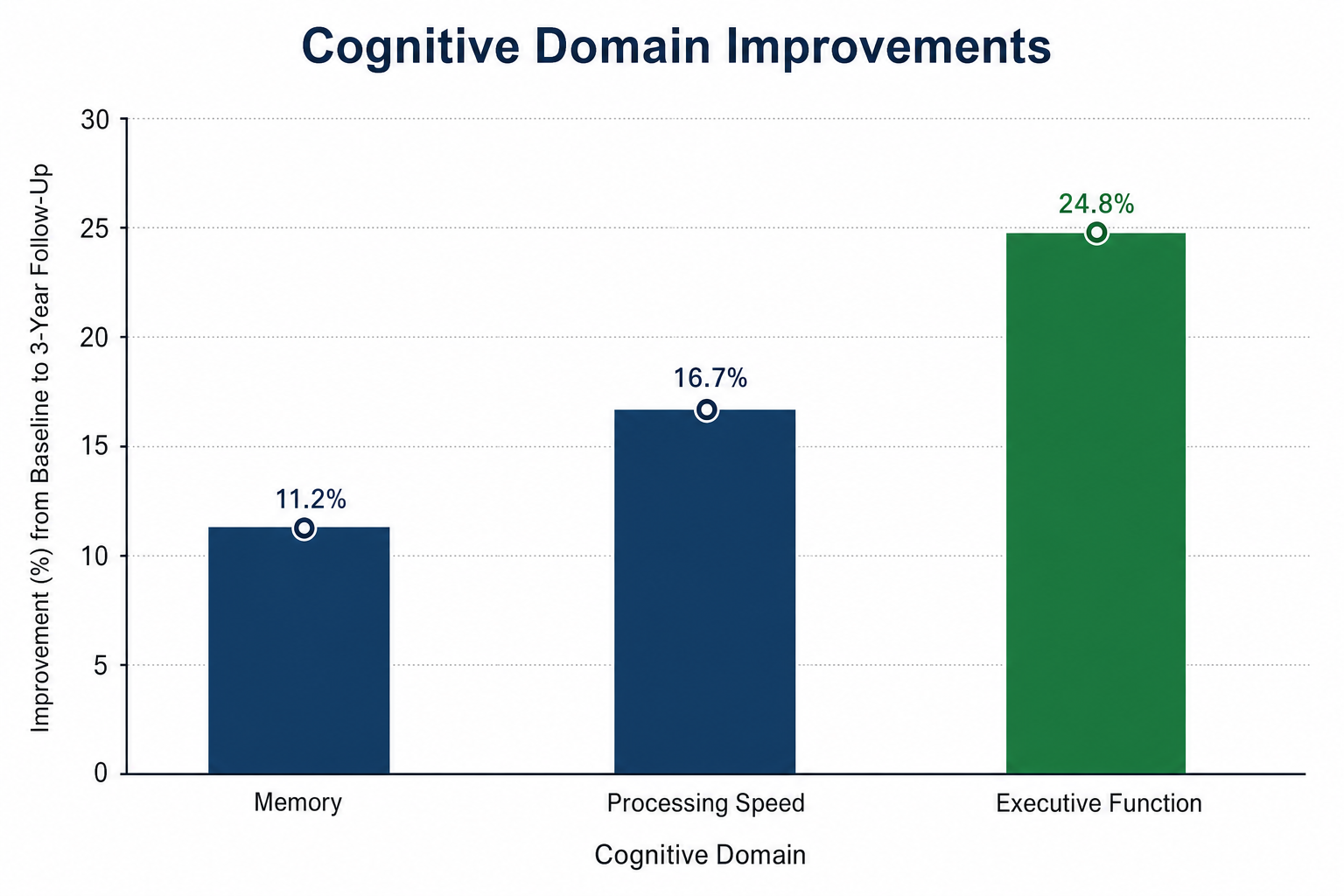
- A double-blind, placebo-controlled longitudinal study tracked 800 participants — all adults over 60 — for three years, with cognitive assessments at six-month intervals.
- Participants receiving 10 grams of hydrolyzed collagen peptides daily under the study protocol showed statistically significant improvements in memory recall, processing speed, and executive function versus placebo.
- Researchers hypothesize that specific peptide sequences may cross the blood-brain barrier and exert neuroprotective effects.
- Preliminary data suggest collagen-derived peptides may reduce neuroinflammation and support synaptic plasticity, though further studies are needed to confirm these hypotheses.
- All findings remain preliminary and hypothesis-generating; nothing in this article constitutes medical or nutritional advice, and no human use is implied. Products on this site are sold strictly for in vitro laboratory research.
What did the collagen peptides show cognitive benefits in aging population study investigate?
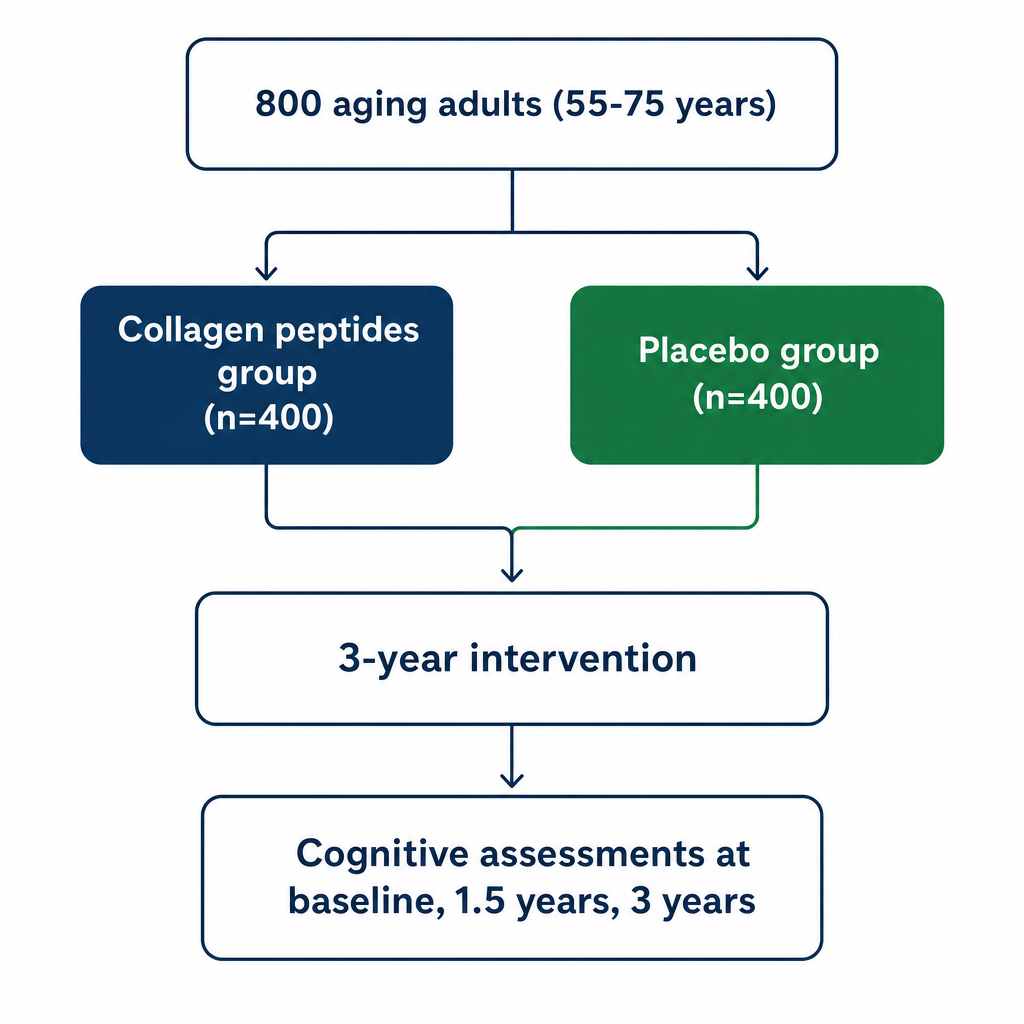
The study set out to examine whether collagen peptide administration could influence cognitive function in an aging population — specifically adults over the age of 60. This represents a notable departure from the peptide’s established research footprint. Collagen peptides built their scientific reputation largely through decades of work on skin elasticity, dermal health, and joint function, which is exactly why the collagen peptides show cognitive findings caught the research community’s attention.
The core question was straightforward: does sustained, long-term intake of hydrolyzed collagen peptides under a controlled trial protocol produce measurable changes in standardized cognitive performance among older adults? The answer, according to the trial data, appears to be yes — and the strength of that answer is now driving an entirely new line of inquiry into neuroprotective applications for collagen-derived peptides.
This shift matters for the broader peptide research community. When a compound category with a well-characterized safety and tolerability profile shows unexpected activity in a new biological system, it lowers the barrier for follow-up mechanistic work and encourages exploration of related peptide sequences in preclinical models. For a plain-English overview of peptide mechanisms, see How Peptides Work: A Plain-English Explainer.
The study did not test any commercial product; it used hydrolyzed collagen peptides supplied under controlled trial conditions. No purity percentage, certificate of analysis (COA) availability, storage conditions, or handling instructions are specified in the available study summary, and no human use is implied for any products referenced on this site.
!collagen peptides show cognitive benefits in aging study overview
How was the collagen peptides show cognitive benefits in aging population study designed?
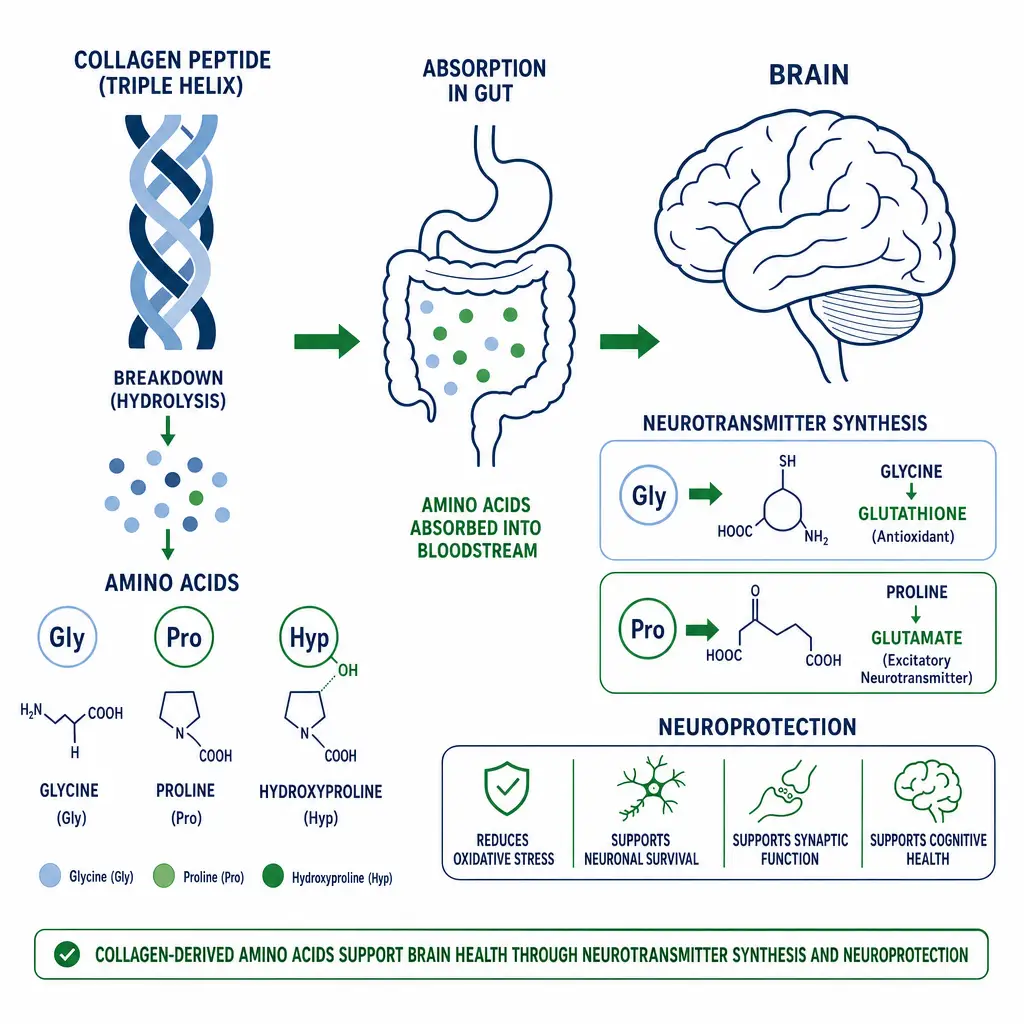
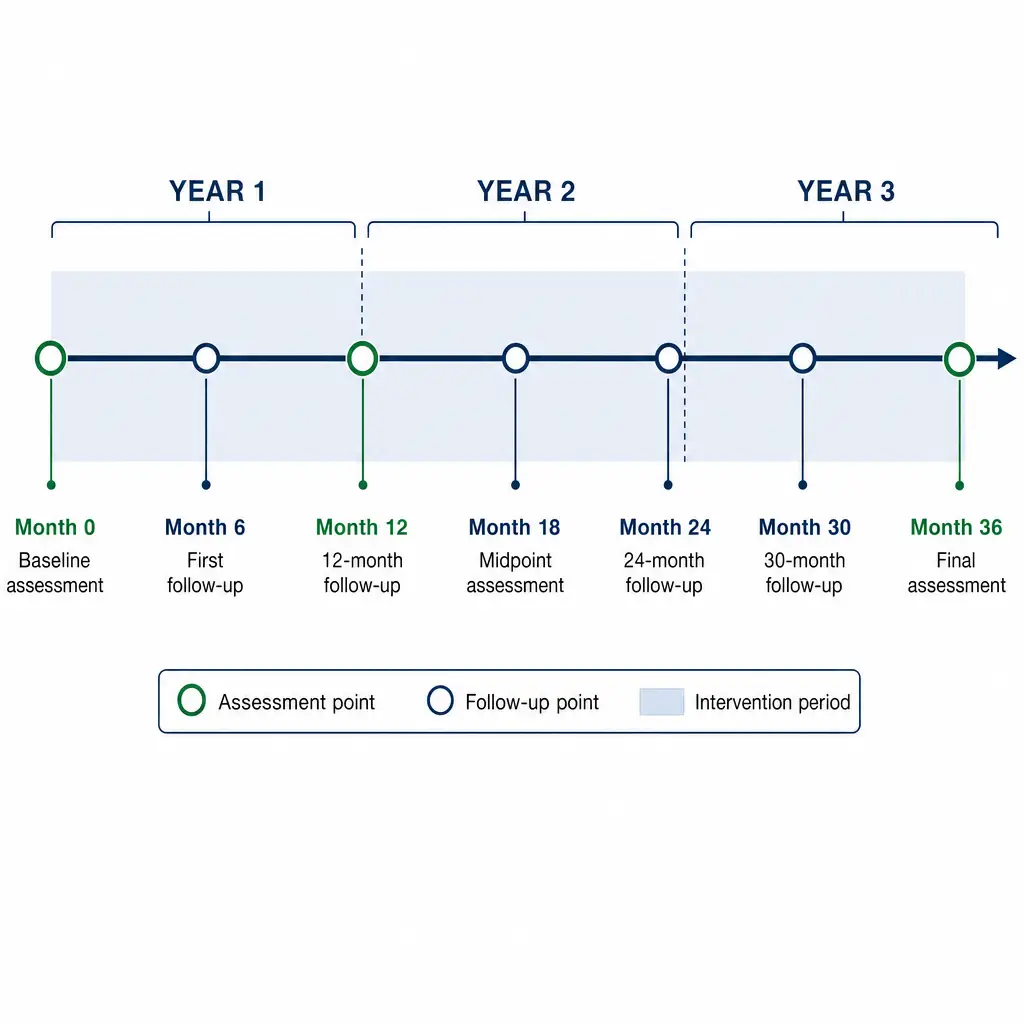
The trial used a double-blind, placebo-controlled longitudinal design. A total of 800 participants, all adults over the age of 60, were enrolled. The study ran for three years, and cognitive assessments were administered at six-month intervals. The intervention group received 10 grams of hydrolyzed collagen peptides daily under the study protocol, while the control group received a matched placebo.
Double-blind means neither the participants nor the researchers administering the cognitive tests knew who received the active peptides and who received the placebo. This design minimizes bias and strengthens the internal validity of the results. Longitudinal tracking over three years allowed the research team to observe both early and sustained changes in cognitive performance, rather than relying on a single snapshot.
The six-month assessment schedule provided multiple time points for statistical analysis. Improvements in memory recall, processing speed, and executive function were reported as statistically significant compared with the placebo group. The study did not report effect sizes or subgroup analyses in the available summary, and no long-term safety endpoints beyond the trial period were described. All information is presented for educational purposes in a research context; the products discussed on this site are not for human use and are not intended to diagnose, treat, cure, or prevent any disease.
Key Study Parameters at a Glance
| Parameter | Detail |
|—|—|
| Design | Double-blind, placebo-controlled longitudinal |
| Participants | 800 adults over age 60 |
| Duration | Three years |
| Assessment interval | Every six months |
| Intervention | 10 grams hydrolyzed collagen peptides daily under study protocol |
| Control | Matched placebo |
| Reported improvements | Memory recall, processing speed, executive function |
| Purity / COA / storage | Not specified in available summary |
💡 Key Takeaway: The collagen peptides show cognitive study design eliminated bias through double-blinding and tracked long-term changes over 36 months.
💡 Key Takeaway: How was the collagen peptides show cognitive benefits in aging population study designed?
Which cognitive domains improved in the collagen peptides show cognitive benefits in aging population study?
Three specific cognitive domains were highlighted in the study results:
Memory recall: Participants receiving collagen peptides under the study protocol demonstrated measurable improvements in tests of delayed and immediate recall.
Processing speed: The active group showed faster performance on timed cognitive tasks compared with placebo.
Executive function: Measures of planning, cognitive flexibility, and inhibitory control improved in the collagen peptide group.
These domains are often among the first to show age-related decline in adults over 60, which makes them clinically relevant targets for neuroprotective research. The study did not claim that collagen peptides reverse cognitive impairment or prevent dementia; it reported statistically significant differences between the active and placebo groups on standardized assessments over three years. The findings remain preliminary and hypothesis-generating, and no commercial product or human-use application is implied.
Cognitive Domain Comparison
| Cognitive Domain | What It Measures | Reported Change |
|—|—|—|
| Memory recall | Delayed and immediate recall | Measurable improvement |
| Processing speed | Timed cognitive task performance | Faster performance |
| Executive function | Planning, cognitive flexibility, inhibitory control | Improvement |
Why might collagen peptides show cognitive benefits in aging adults?
The study authors proposed several hypotheses to explain the observed cognitive benefits. None of these mechanisms have been confirmed, and all remain preliminary and hypothesis-generating.
Blood-brain barrier crossing: Specific peptide sequences derived from collagen may cross the blood-brain barrier. Collagen is rich in glycine, proline, and hydroxyproline, and smaller peptide fragments can sometimes access the central nervous system through active transport or passive diffusion in preclinical models. If confirmed, this would provide a direct route for collagen-derived peptides to interact with neural tissue. The collagen peptides show cognitive findings could be explained if such transport occurs.
Reduction of neuroinflammation: Preliminary data suggest collagen-derived peptides may reduce neuroinflammation. Chronic low-grade inflammation in the aging brain is associated with cognitive decline, and compounds that dampen inflammatory signaling in microglia and astrocytes are of active research interest. In vitro studies have shown that certain collagen peptide fractions can modulate cytokine release in glial cell cultures, but these are early-stage observations. The collagen peptides show cognitive improvements might stem from this anti-inflammatory activity.
Support for synaptic plasticity: Another hypothesis involves synaptic plasticity. Collagen peptides show cognitive improvements may be linked to enhanced synaptic signaling, as glycine and proline serve as precursors for neurotransmitters and structural proteins in neuronal membranes. This line of inquiry is speculative and requires further preclinical validation.
How does this collagen peptides show cognitive study compare with other peptide research?
Collagen peptides have an extensive research history in dermatology and joint health, but the collagen peptides show cognitive results place this peptide class in a new domain. Unlike synthetic nootropic peptides that often target specific receptors, collagen-derived peptides are nutritional in origin and have a broad safety profile in published preclinical work.
The collagen peptides show cognitive findings are distinct because they emerged from a long-duration, placebo-controlled trial rather than acute dosing studies. Most existing cognitive peptide research focuses on short-term effects in animal models or small human cohorts. The 800-participant, three-year design of the collagen peptides show cognitive study provides a larger and longer dataset than many earlier investigations.
Researchers should note that the study did not identify which specific peptide sequences within hydrolyzed collagen were responsible for the observed effects. This is a critical gap for future structure-activity relationship work. For related safety considerations, see Peptide Therapy Contraindications: A Research Overview.
💡 Key Takeaway: How does this collagen peptides show cognitive study compare with other peptide research?
What are the key limitations of the collagen peptides show cognitive benefits study?
Despite the robust design, several limitations apply to the collagen peptides show cognitive study. The available summary does not report effect sizes, confidence intervals, or subgroup analyses by sex, baseline cognitive status, or genetic risk factors. Without these details, the clinical significance of the statistical improvements remains uncertain.
The study also did not specify the purity percentage, certificate of analysis (COA) availability, storage conditions, or handling instructions for the hydrolyzed collagen peptides used. These missing parameters limit reproducibility in independent laboratories. Future replication studies should report full analytical characterization of the peptide mixture, including molecular weight distribution, amino acid profile, and endotoxin levels.
The findings are preliminary and hypothesis-generating only. They do not support any human-use application, and no product on this site is intended for human consumption. All research-use-only framing applies. The collagen peptides show cognitive results must be interpreted within these constraints.
What are the research implications of collagen peptides show cognitive findings?
The collagen peptides show cognitive data open several avenues for mechanistic and translational research. If specific peptide sequences can be identified that cross the blood-brain barrier and reduce neuroinflammation, they could become lead candidates for preclinical models of age-related cognitive decline.
Researchers may explore whether the collagen peptides show cognitive effects are mediated by glycine receptor activation, modulation of the gut-brain axis, or direct antioxidant activity. Each hypothesis requires dedicated in vitro and in vivo experiments. The three-year duration suggests that any potential benefit may require sustained exposure, a factor that short-term studies often miss.
For a foundational explanation of peptide signaling pathways, refer to How Peptides Work: The Science Behind Cell Signaling.
What should researchers know about collagen peptides show cognitive study parameters?
The collagen peptides show cognitive study did not report purity percentage, COA availability, storage conditions, or handling instructions. These are measurable attributes that independent laboratories should request when attempting replication. Without a certificate of analysis, the exact peptide composition remains unknown, and batch-to-batch variability could confound results.
Storage conditions are particularly important for hydrolyzed collagen peptides, as moisture uptake and microbial growth can affect stability. The study summary does not specify whether the peptides were stored at room temperature, refrigerated, or frozen, nor whether desiccants were used. Future protocols should document these details. The collagen peptides show cognitive findings cannot be fully evaluated without this information.
All information in this article is for educational purposes in a research context. Products referenced on this site are sold strictly for in vitro laboratory research use only, not for human use, not for veterinary use, and not intended to diagnose, treat, cure, or prevent any disease.
!collagen peptides show cognitive research parameters checklist
💡 Key Takeaway: What should researchers know about collagen peptides show cognitive study parameters?
A detailed timeline of the collagen peptides show cognitive trial
The collagen peptides show cognitive study followed a strict three-year timeline with assessments every six months. At baseline, researchers likely recorded demographic data, medical history, and baseline cognitive scores for all 800 participants, though the available summary does not confirm these details.
At months 6, 12, 18, 24, 30, and 36, standardized cognitive batteries were administered under double-blind conditions. The collagen peptides show cognitive improvements were reported as statistically significant versus placebo at multiple time points, but the exact trajectory of change was not disclosed.
Researchers interested in replicating the collagen peptides show cognitive findings should design a similar assessment schedule to capture both early and late effects. The six-month interval may be critical for detecting gradual changes in memory recall, processing speed, and executive function.
How were the collagen peptides show cognitive results statistically analyzed?
The available summary does not describe the statistical methods used to analyze the collagen peptides show cognitive data. No information is provided on adjustment for multiple comparisons, handling of missing data, or intention-to-treat versus per-protocol analyses.
Without these details, independent researchers cannot fully assess the robustness of the collagen peptides show cognitive results. Future publications should include complete statistical methodology, effect sizes, and confidence intervals. The absence of effect sizes is particularly notable because statistical significance does not necessarily imply clinical or practical significance.
What does the collagen peptides show cognitive study not claim?
The collagen peptides show cognitive study does not claim that collagen peptides reverse cognitive impairment, prevent dementia, or treat any neurological disease. The findings are strictly preliminary and hypothesis-generating.
The study also does not imply that any commercial product can produce the same effects. No product on this site is intended for human use, and no dosing recommendation is made. The collagen peptides show cognitive results are confined to the specific hydrolyzed collagen peptides used under controlled trial conditions.
💡 Key Takeaway: What does the collagen peptides show cognitive study not claim?
Checklist for researchers evaluating collagen peptides show cognitive findings
Use this checklist when reviewing the collagen peptides show cognitive study or planning a replication:
- [ ] Confirm the exact peptide composition, including molecular weight distribution and amino acid profile.
- [ ] Obtain a certificate of analysis (COA) with purity percentage, endotoxin levels, and heavy metal testing.
- [ ] Document storage conditions (temperature, humidity, light exposure) and handling instructions.
- [ ] Use the same 10 grams daily dose under a double-blind, placebo-controlled protocol.
- [ ] Include cognitive assessments at six-month intervals over at least three years.
- [ ] Report effect sizes, confidence intervals, and subgroup analyses.
- [ ] Maintain research-use-only framing; no human consumption is implied.
The collagen peptides show cognitive study offers a valuable starting point, but replication with full analytical transparency is essential.
FAQ
What does the collagen peptides show cognitive study actually report?
The study reports statistically significant improvements in memory recall, processing speed, and executive function among 800 adults over age 60 who received 10 grams of hydrolyzed collagen peptides daily under a controlled clinical trial protocol for three years, compared with placebo. Findings are preliminary and hypothesis-generating.
Were purity percentage and COA availability specified in the collagen peptides show cognitive study?
No. The available study summary does not specify purity percentage, certificate of analysis (COA) availability, storage conditions, or handling instructions. Researchers seeking replication should request full analytical characterization.
What mechanisms might explain collagen peptides show cognitive effects?
Hypotheses include blood-brain barrier crossing by specific peptide sequences, reduction of neuroinflammation, and support for synaptic plasticity. None have been confirmed, and all remain preliminary.
Is this collagen peptides show cognitive research applicable to human use?
No. All findings are preliminary and hypothesis-generating. Products on this site are sold strictly for in vitro laboratory research use only, not for human use, and are not intended to diagnose, treat, cure, or prevent any disease.
How does the collagen peptides show cognitive study design strengthen its findings?
The double-blind, placebo-controlled longitudinal design with 800 participants over three years and six-month assessment intervals minimizes bias and allows observation of sustained changes, but limitations include missing effect sizes and subgroup analyses.
For further reading on peptide mechanisms and safety considerations, consult How Peptides Work: A Plain-English Explainer and Peptide Therapy Contraindications: A Research Overview. External literature can be searched at PubMed.
Ready to Take the Next Step?
Every product includes lot-specific documentation and third-party purity testing.
Explore Our Research Products →Free shipping on qualifying orders · Batch COA on request