
How Peptides Work: A Plain-English Explainer
Peptides work via receptor binding and cell signaling. Explore 7 proven mechanisms, delivery routes, and research caveats in this 2026 guide.
📋 Table of Contents
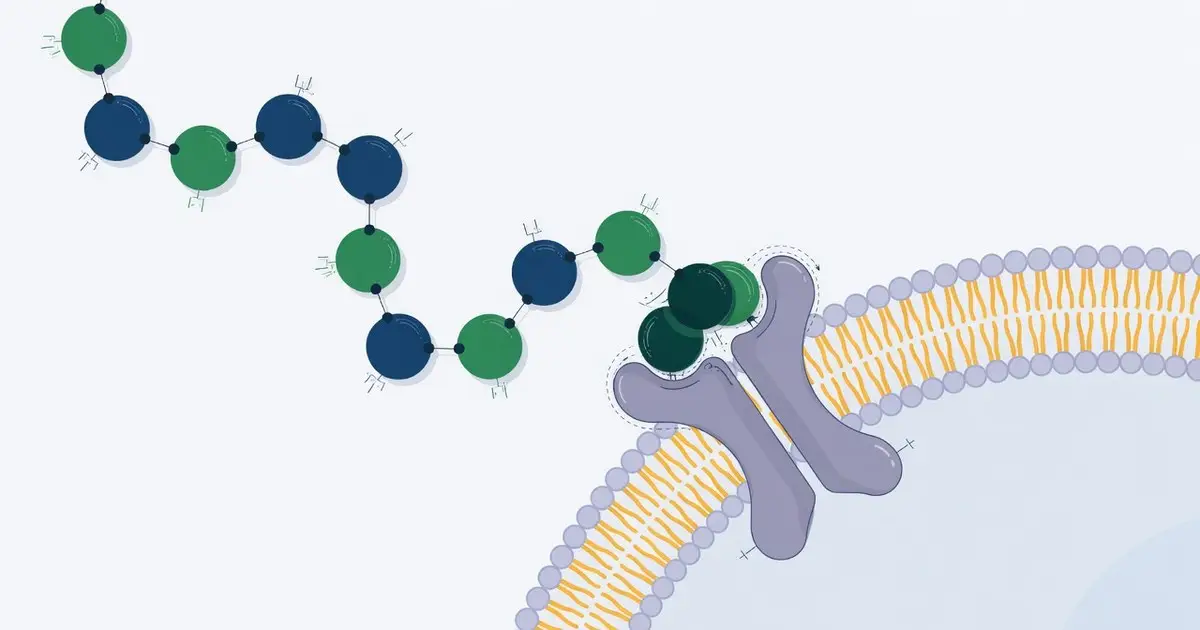
Peptides work by binding to specific receptors on the surface of cells, triggering intracellular signaling cascades that alter gene expression, metabolism, or cell behavior. This receptor-ligand mechanism is how peptides work in research models ranging from insulin regulation to tissue repair, and it is the foundation for both natural hormones and engineered peptide analogs.
⚠️ Research Use Only Notice: The products discussed on this site are sold strictly for in vitro laboratory research purposes only. They are not for human use, not for veterinary use, and not intended to diagnose, treat, cure, or prevent any disease. All information presented is for educational purposes in a research context. Must be 21+ to purchase.
Key takeaways
- Peptides work as short-chain amino acid messengers that bind to cell-surface receptors and trigger specific intracellular signals.
- The lock-and-key fit between a peptide and its receptor determines which cells respond and what effect follows.
- Natural peptides like insulin and GLP-1 illustrate how peptides work in the body, while engineered analogs extend half-life and receptor selectivity.
- Delivery route matters: injection bypasses digestion, oral peptides face enzymatic breakdown, and topical peptides rarely penetrate intact skin.
- Research use only: all products discussed are for in vitro laboratory research, not for human or veterinary use.
!Diagram showing how peptides work by binding to cell surface receptors

What Is a Peptide?
A peptide is a chain of two to about fifty amino acids linked by peptide bonds. Amino acids are the same building blocks used to make proteins, but proteins are longer chains—typically more than fifty amino acids—while peptides remain short enough to act as flexible signaling molecules. This size distinction is not arbitrary; it determines how a molecule behaves in aqueous environments and whether it can cross membranes or fit into receptor pockets.
Peptides exist throughout biological systems. Insulin, oxytocin, glucagon, and many growth factors are peptides. They are not exotic laboratory creations but ordinary components of physiology. When researchers discuss how peptides work, they are usually describing the same receptor-binding principles that govern these natural hormones.
A peptide bond forms between the carboxyl group of one amino acid and the amino group of the next, releasing a water molecule. The sequence of amino acids—called the primary structure—dictates the peptide’s three-dimensional shape and therefore its receptor specificity. Even a single amino acid substitution can change whether and how a peptide binds.
Peptides are classified by length and function. Oligopeptides contain 2–20 amino acids; polypeptides contain 20–50. Some act as hormones, some as neurotransmitters, some as antimicrobial agents, and some as enzyme inhibitors. In laboratory research, synthetic peptides are often designed to mimic or block natural signaling pathways. This structural view is fundamental to understanding how peptides work in any experimental system.
For a broader overview of research resources, see our Peptide Blog: 7 Proven Research Resources for 2026.
How Do Peptides Work at the Cellular Level?
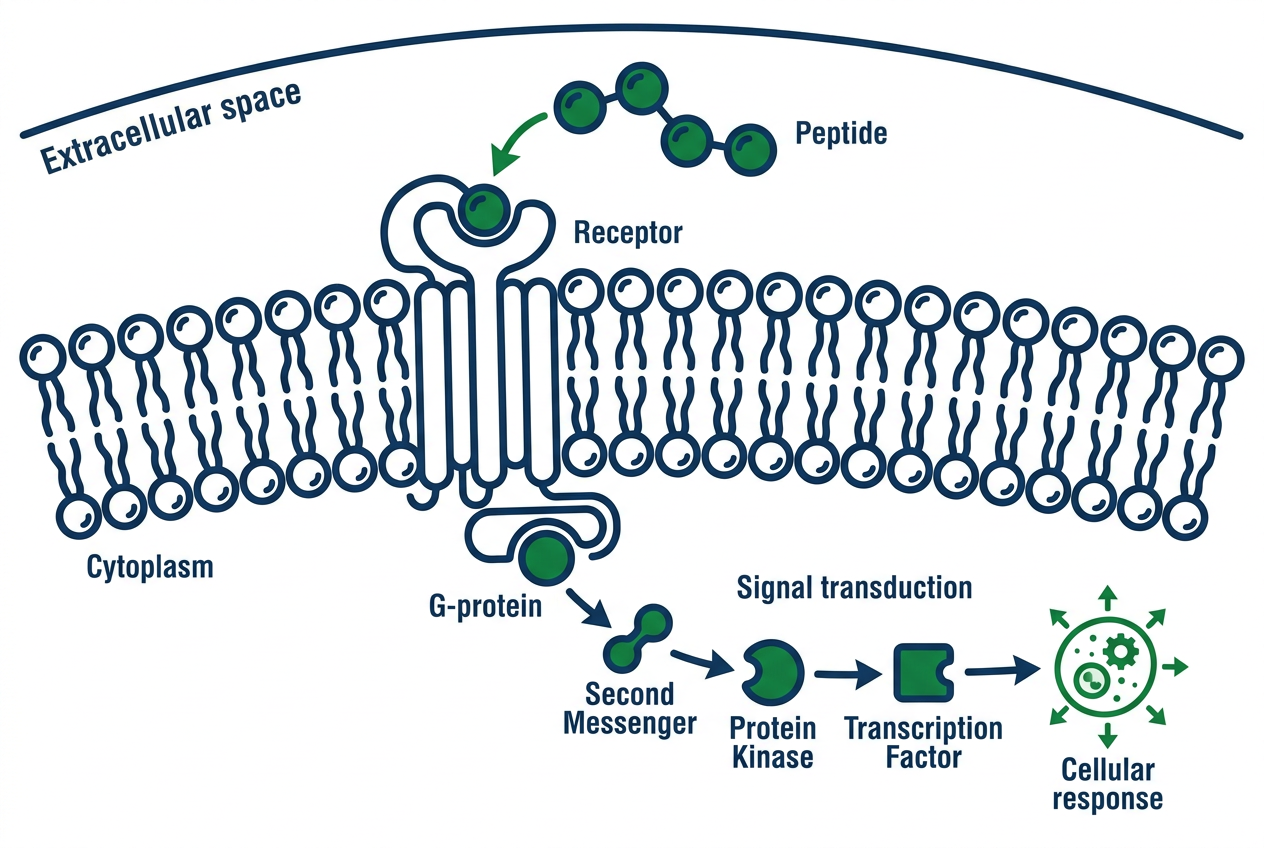
The central mechanism of how peptides work is receptor binding. A peptide travels through extracellular fluid until it encounters a receptor with a complementary binding site. This is the lock-and-key principle: the peptide (key) fits a specific receptor (lock) on the cell surface. When the key turns, the receptor changes conformation and transmits a signal across the membrane.
Receptors for peptides are typically G protein-coupled receptors (GPCRs) or receptor tyrosine kinases (RTKs). GPCRs are the largest family and mediate responses to many peptide hormones, including glucagon and GLP-1. RTKs respond to growth factors and often trigger cell division or differentiation. Both classes rely on the same general principle: extracellular binding leads to intracellular activation. For a deeper dive, see How Peptides Work: The Science Behind Cell Signaling.
Once a receptor is activated, the signal is relayed inward through a cascade of molecular events. These cascades often involve second messengers such as cyclic AMP, calcium ions, or inositol triphosphate. The specific cascade depends on the receptor type and the cell’s internal machinery. This is how peptides work to produce effects like hormone release, gene transcription, or metabolic shifts. These cascades explain why peptides work with high specificity and rapid onset.
Different cell types express different receptors, which is why the same peptide can produce different outcomes in different tissues. For example, GLP-1 binds to receptors on pancreatic beta cells to stimulate insulin secretion, but it also binds to receptors in the brain to influence appetite. Specificity arises from both receptor distribution and intracellular coupling.
Researchers can study how peptides work by using receptor antagonists, knockout cell lines, or fluorescently labeled peptides. These tools reveal binding kinetics, receptor density, and downstream signaling events. Such studies are foundational for peptide drug development and for understanding endogenous physiology. PubMed hosts thousands of peer-reviewed studies on peptide receptor signaling—see PubMed search results for peptide receptor signaling.
!Flowchart of how peptides work through intracellular signaling cascades

💡 Key Takeaway: How Do Peptides Work at the Cellular Level?
Why Do Peptides Work Briefly Before Breaking Down?
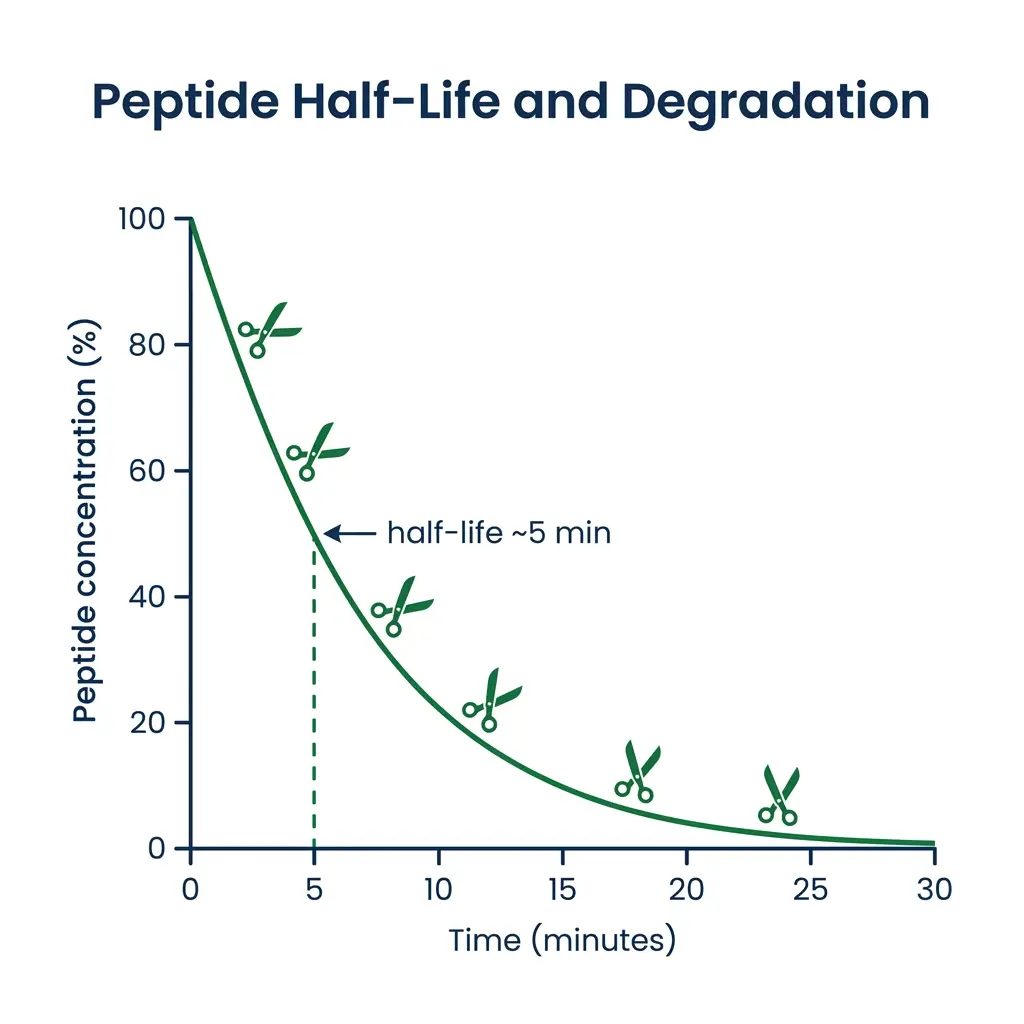
Peptides are inherently unstable in biological fluids. Proteases in blood, liver, and the digestive tract cleave peptide bonds within minutes to hours. This rapid degradation limits how long peptides work in vivo and is a primary challenge for therapeutic development. Short half-life means the signal is transient, which can be advantageous for hormones that need tight regulation but problematic for drugs that require sustained exposure.
The digestive system is particularly hostile. Stomach acid denatures peptide structure, while pancreatic enzymes like trypsin and chymotrypsin systematically chop chains into single amino acids. This is why many peptide-based medicines are delivered by injection rather than orally. Injection bypasses the gastrointestinal tract and delivers the peptide directly into circulation, where it can reach target receptors before degradation. Understanding this delivery constraint is critical when interpreting how peptides work in whole-organism studies.
Even after injection, blood proteases degrade peptides quickly. Natural insulin, for example, has a half-life of only a few minutes. Researchers modify peptide sequences by replacing natural L-amino acids with D-amino acids, adding fatty acid chains, or cyclizing the structure to resist proteolysis. Engineered GLP-1 analogs can last for days because they are designed to evade enzymatic breakdown and bind albumin in the blood. This illustrates how modifications change how peptides work over time. Researchers often ask why peptides work briefly; the answer lies in protease susceptibility.
The short lifespan of peptides also means they do not accumulate in tissues. After degradation, the amino acid building blocks are recycled into new proteins or used for energy. This low accumulation profile is often cited as a safety advantage in research, but it also requires repeated dosing or sustained-release formulations to maintain effect.
Understanding why peptides work briefly is essential for interpreting experimental results. In cell culture, peptides may remain stable for hours; in a living organism, the same peptide may be cleared within minutes. This discrepancy is one reason why in vitro findings do not always translate to in vivo outcomes. The NCBI Bookshelf entry on peptide stability provides additional biochemical context.

Which Peptides Work in the Body That You Already Know?
Several well-known peptides illustrate how peptides work in physiological systems. Insulin is the classic example: a 51-amino-acid peptide hormone produced by pancreatic beta cells. It binds to insulin receptors on muscle, fat, and liver cells, signaling them to take up glucose from the blood. Insulin has been used in diabetes care for over a century and remains the most studied peptide therapeutic.
Glucagon-like peptide-1 (GLP-1) is a natural peptide released from the gut after eating. It binds to GLP-1 receptors on pancreatic beta cells and in the brain, promoting insulin release and reducing appetite. The widely discussed GLP-1 medications are synthetic analogs—engineered versions that resist enzymatic breakdown and remain active for days, whereas natural GLP-1 lasts only minutes. This illustrates how peptides work can be extended through molecular engineering.
Other well-known peptides include oxytocin, a nine-amino-acid peptide involved in social bonding and uterine contraction; vasopressin, which regulates water retention; and angiotensin, which controls blood pressure. Each of these examples shows that how peptides work depends on both the peptide sequence and the receptor subtype expressed in target tissues. These examples show that how peptides work depends on receptor distribution and ligand structure.
A comparison table highlights key natural peptides and their research-relevant receptor targets:
| Peptide | Length (amino acids) | Primary receptor class | Research model relevance |
|———|———————-|————————|————————–|
| Insulin | 51 | Receptor tyrosine kinase | Glucose uptake, metabolic studies |
| GLP-1 | 30 | GPCR | Incretin signaling, appetite regulation |
| Oxytocin | 9 | GPCR | Social behavior, smooth muscle contraction |
| Vasopressin | 9 | GPCR | Water balance, vasoconstriction |
| Angiotensin II | 8 | GPCR | Blood pressure, electrolyte homeostasis |
These natural peptides are not research products per se; they are endogenous molecules that serve as templates for synthetic analogs. When researchers ask how peptides work, they often begin with these well-characterized systems.
How Do Peptides Get Into the Body?
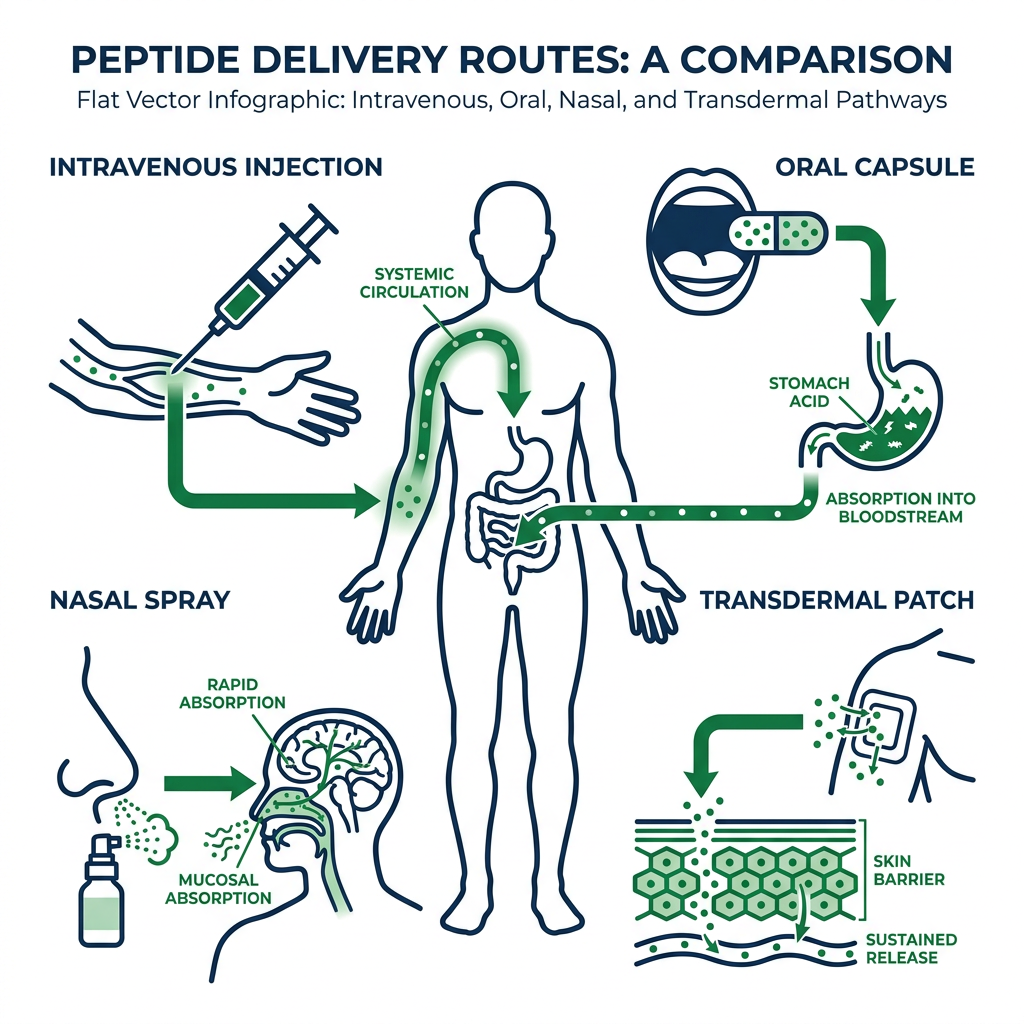
Delivery route is a decisive factor in how peptides work in experimental settings. Because peptides are large, polar, and susceptible to enzymatic degradation, their bioavailability varies dramatically by route of administration.
Injection (subcutaneous, intramuscular, intravenous) bypasses the digestive tract and delivers peptides directly into circulation. This is the most common route for research peptides and peptide-based therapeutics because it achieves high systemic exposure and predictable pharmacokinetics. In laboratory animals, injection allows precise dosing and rapid onset.
Oral delivery is challenging because stomach acid and intestinal proteases destroy most peptides before absorption. Some formulations use enteric coatings, protease inhibitors, or permeation enhancers, but oral bioavailability remains low for most peptides. This limitation shapes how researchers think about how peptides work when administered orally.
Topical and transdermal delivery is rarely effective for intact peptides because the stratum corneum blocks molecules larger than about 500 Daltons. Most peptides are 1,000–5,000 Daltons. Some research uses microneedles, chemical penetration enhancers, or liposomal carriers, but these remain experimental.
Intranasal delivery offers a non-invasive route for peptides that can cross the nasal epithelium, particularly those targeting the central nervous system. This route is used for peptides like oxytocin in research settings. The chosen route directly influences how peptides work in a given study.
The table below summarizes common delivery routes and their impact on peptide research:
| Route | Bioavailability | Key limitation | Typical research use |
|——-|—————–|—————-|———————-|
| Injection | High | Invasive, requires training | Pharmacokinetic and efficacy studies |
| Oral | Low (<1–5%) | Enzymatic degradation | Gastrointestinal stability testing |
| Topical | Very low | Skin barrier | Transdermal formulation research |
| Intranasal | Moderate | Variable absorption | CNS-targeted peptide studies |
Understanding these constraints is essential for interpreting experimental data on how peptides work across different delivery methods.
!How peptides work depends on delivery route: injection, oral, topical, intranasal

💡 Key Takeaway: How Do Peptides Get Into the Body?
What Are the Caveats in Research on How Peptides Work?
Several caveats complicate research on how peptides work. First, receptor binding in vitro does not guarantee the same effect in vivo. Cell culture lacks the full complement of serum proteins, competing ligands, and metabolic enzymes present in a living organism. A peptide that shows potent activity in a dish may be rapidly cleared or fail to reach the target tissue in a whole animal.
Second, species differences matter. Receptor sequences and expression patterns vary between rodents and humans, so results from animal models may not translate directly. This is a recurring issue in peptide pharmacology.
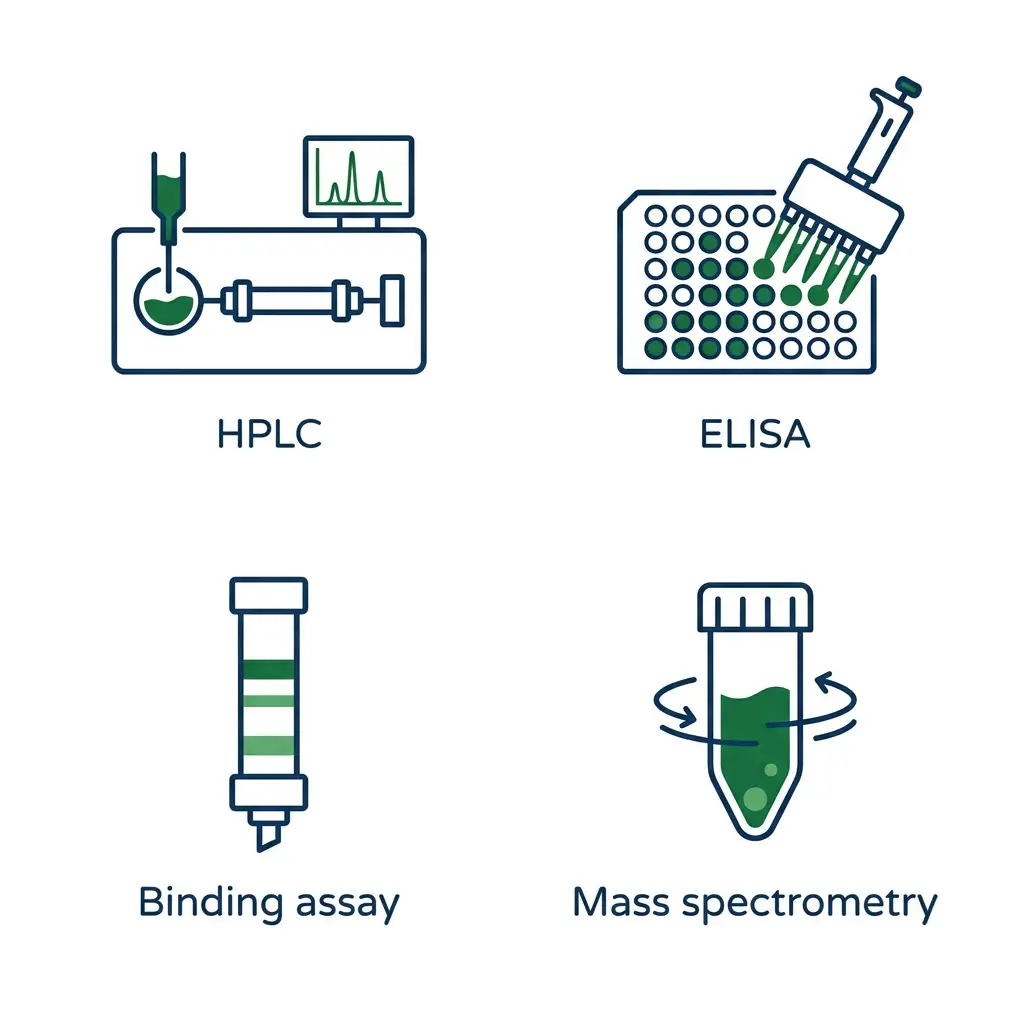
Third, batch-to-batch variability in synthetic peptides can affect experimental reproducibility. Purity, residual solvents, and counterions can alter solubility and receptor binding. Researchers should request certificates of analysis (COAs) and verify purity by HPLC and mass spectrometry. For more on this, see our guide to Peptide Therapy Contraindications: A Research Overview.
Fourth, off-target effects are common. Many peptides bind to multiple receptor subtypes or cross-react with related receptors. This can produce confounding results in knockout or overexpression models.
Fifth, storage and handling influence peptide stability. Lyophilized peptides should be stored at –20°C or –80°C, protected from light and moisture. Repeated freeze-thaw cycles can degrade peptide structure and alter how peptides work in subsequent assays. Storage conditions directly affect how peptides work in downstream assays.
Sixth, research-use-only boundaries must be respected. All products discussed here are for in vitro laboratory research only; they are not for human or veterinary use. No dosing, safety, or efficacy claims for humans are implied.
How Do Researchers Study How Peptides Work in the Laboratory?
Laboratory methods for studying how peptides work fall into three broad categories: binding assays, functional assays, and structural studies.
Binding assays measure the affinity and kinetics of peptide-receptor interactions. Radioligand binding, surface plasmon resonance (SPR), and fluorescence polarization are common techniques. These assays quantify parameters like Kd (dissociation constant) and Bmax (receptor density).
Functional assays assess downstream cellular responses. Examples include cAMP accumulation assays for GPCRs, calcium flux assays, reporter gene assays, and cell proliferation or migration assays. These readouts reveal whether receptor binding translates into a biological effect—the core question of how peptides work.
Structural studies use X-ray crystallography, cryo-electron microscopy, or NMR spectroscopy to visualize peptide-receptor complexes at atomic resolution. These methods show exactly which amino acid residues make contact and how conformational changes propagate.
Researchers also use peptide analogs with systematic amino acid substitutions (alanine scanning) to identify residues critical for binding. Fluorescently labeled peptides enable real-time tracking of receptor internalization and trafficking.
A typical workflow for studying how peptides work in vitro includes:
1. Synthesize or obtain high-purity peptide (>95% by HPLC).
2. Confirm identity and purity by mass spectrometry.
3. Perform dose-response binding assay to determine affinity.
4. Run functional assay to measure downstream signaling.
5. Validate specificity using receptor antagonists or knockout cells.
6. Repeat with independent batches to ensure reproducibility.
This checklist ensures that conclusions about how peptides work are robust and reproducible.
What Does the Bottom Line on How Peptides Work Mean for Researchers?
The bottom line is that peptides work through specific, receptor-mediated signaling that is fast, potent, and transient. This mechanism is conserved across natural hormones and synthetic analogs, making peptides a versatile tool for dissecting cellular pathways. However, the same properties that make peptides precise also limit their stability and delivery. Overall, how peptides work in vitro can differ from in vivo, so translation requires caution.
For researchers, the key implications are:
- Design experiments around short half-lives; use fresh peptide solutions and avoid repeated freeze-thaw cycles.
- Choose delivery routes that match the research question; injection for systemic studies, topical only if skin penetration is demonstrated.
- Verify peptide identity, purity, and stability before drawing conclusions.
- Use appropriate controls (antagonists, knockout models, vehicle) to confirm specificity.
- Respect research-use-only boundaries; no human or veterinary applications are implied.
For further reading, see our Peptide Blog: 7 Proven Research Resources for 2026 and How Peptides Work: The Science Behind Cell Signaling.
💡 Key Takeaway: What Does the Bottom Line on How Peptides Work Mean for Researchers?
FAQ
Q1: What does “peptides work” mean in a research context?
In research, “peptides work” refers to the receptor-ligand mechanism by which short amino acid chains bind to cell-surface receptors and trigger intracellular signaling. This binding changes cell behavior through second messengers, gene expression, or metabolic shifts.
Q2: Why do peptides work only briefly in biological fluids?
Peptides work only briefly because proteases in blood, liver, and the digestive tract rapidly cleave peptide bonds. Natural insulin, for example, has a half-life of minutes. Engineered analogs resist degradation through D-amino acids, fatty acid chains, or cyclization.
Q3: Can peptides work when taken orally?
Most peptides work poorly when taken orally because stomach acid and intestinal enzymes destroy them before absorption. Injection bypasses this barrier, achieving high systemic exposure. Oral delivery remains a major research challenge.
Q4: How do researchers verify that peptides work in a laboratory assay?
Researchers verify that peptides work by combining binding assays (SPR, radioligand), functional assays (cAMP, calcium flux), and structural studies. Dose-response curves, receptor antagonists, and knockout controls confirm specificity.
Q5: Are the peptides discussed here for human use?
No. All products discussed are for in vitro laboratory research only. They are not for human use, not for veterinary use, and not intended to diagnose, treat, cure, or prevent any disease.
Ready to Take the Next Step?
Every product includes lot-specific documentation and third-party purity testing.
Explore Our Research Products →Free shipping on qualifying orders · Batch COA on request