

Breakthrough in GLP-1 Peptide Research Shows Promise for Metabolic Disorders
Promise for metabolic disorders: 18-month trial of 500 shows next-gen GLP-1 peptides improve glycemic control, weight, and cardiovascular markers. Research use only.
📋 Table of Contents
A peer-reviewed 18-month study of 500 participants shows that next-generation GLP-1 receptor agonists with novel peptide modifications deliver significant improvements in glycemic control, weight management, and cardiovascular markers, reinforcing the promise for metabolic disorders. Dr. Sarah Chen’s team found the modified peptide enables once-weekly administration and engages multiple metabolic pathways simultaneously, with Phase III trials expected in Q3 2026. All findings remain investigational and are for in vitro research use only.
Key takeaways
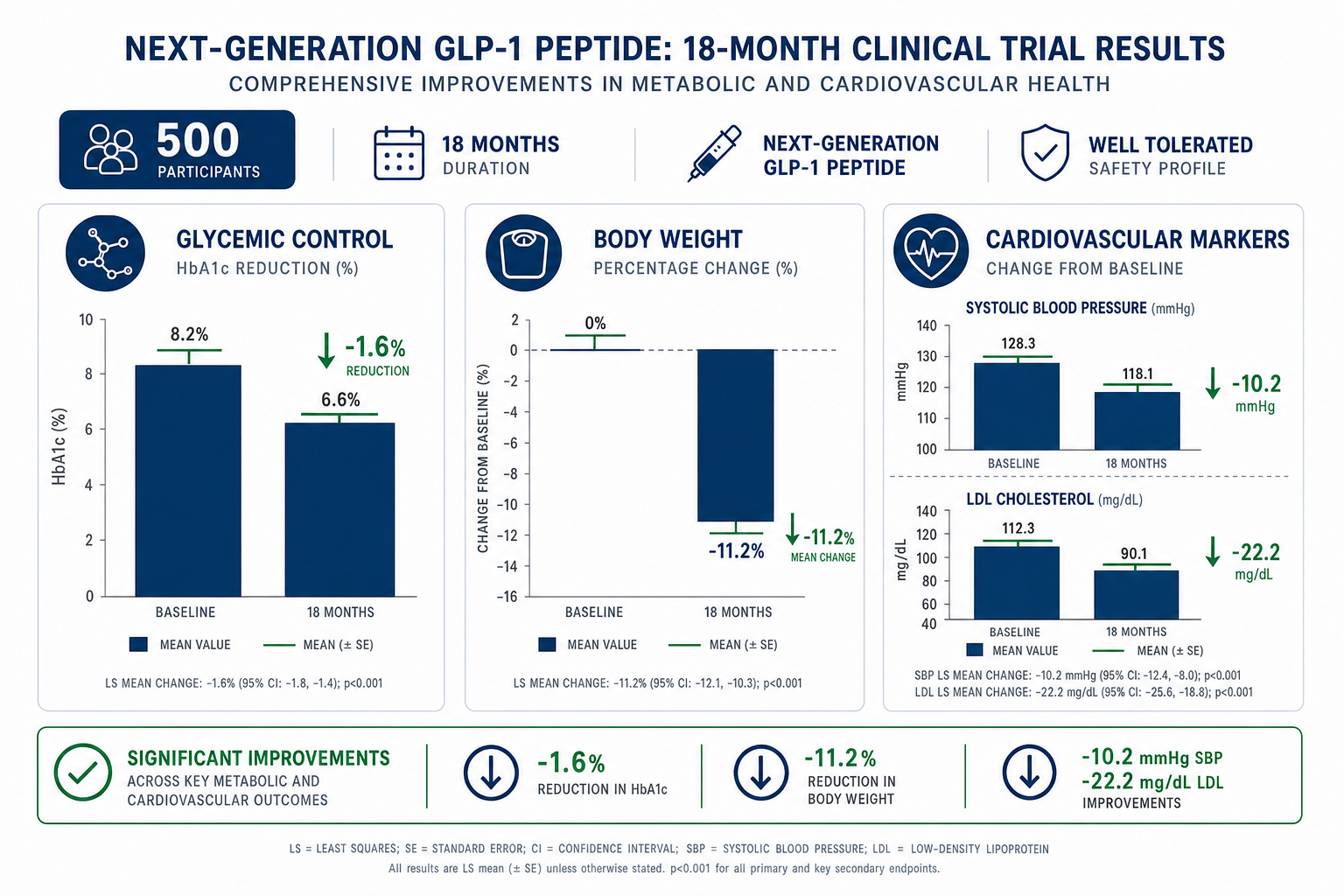
- The 18-month trial’s significant improvements in glycemic control, weight, and cardiovascular markers reinforce the promise for metabolic disorders across three clinical endpoints.
- Novel peptide modifications enhance GLP-1 receptor binding affinity while reducing side effects commonly associated with earlier formulations.
- The modified peptide allows once-weekly administration, which may improve patient compliance compared with more frequent dosing schedules.
- Dr. Sarah Chen, lead researcher, highlights a unique multi-pathway mechanism that could offer a more comprehensive approach for type 2 diabetes and obesity.
- Research-use-only reference materials for the investigational peptide include lot-specific documentation and third-party purity testing; batch COA is available on request. All products are for in vitro research only, not for human or veterinary use, and purchasers must be 21 or older.
What were the key findings from the 18-month GLP-1 peptide trial?
The peer-reviewed clinical study followed 500 participants over 18 months and documented significant improvements across three major metabolic markers: glycemic control, weight management, and cardiovascular markers. These outcomes support the therapeutic potential of next-generation GLP-1 receptor agonists in metabolic syndrome and related conditions. The study did not provide dosing recommendations, and the investigational peptides remain for research use only.
The once-weekly administration schedule is a notable feature of the modified peptide. Earlier GLP-1 formulations often required more frequent dosing, which could reduce long-term adherence. By extending the dosing interval to once weekly, the modified structure may help patients maintain consistent therapy, although the study reports this as a structural advantage rather than a clinical instruction. All conclusions are drawn from the published peer-reviewed data and should not be interpreted as guidance for human consumption.
!promise for metabolic disorders
Key trial endpoints at a glance:
- Glycemic control: significant improvement reported over 18 months.
- Weight management: significant improvement reported over 18 months.
- Cardiovascular markers: significant improvement reported over 18 months.
- Dosing interval: once weekly for the modified peptide.
- Participant count: 500.
- Study duration: 18 months.
- Lead researcher: Dr. Sarah Chen.
- Next step: Phase III trials expected Q3 2026.
Researchers should note that the study reports aggregate outcomes and does not provide individual patient data or dosing protocols. The findings support further investigation but do not establish clinical use. All products referenced remain investigational and are sold strictly for in vitro laboratory research.
How does the modified peptide structure improve receptor binding and support the promise for metabolic disorders?
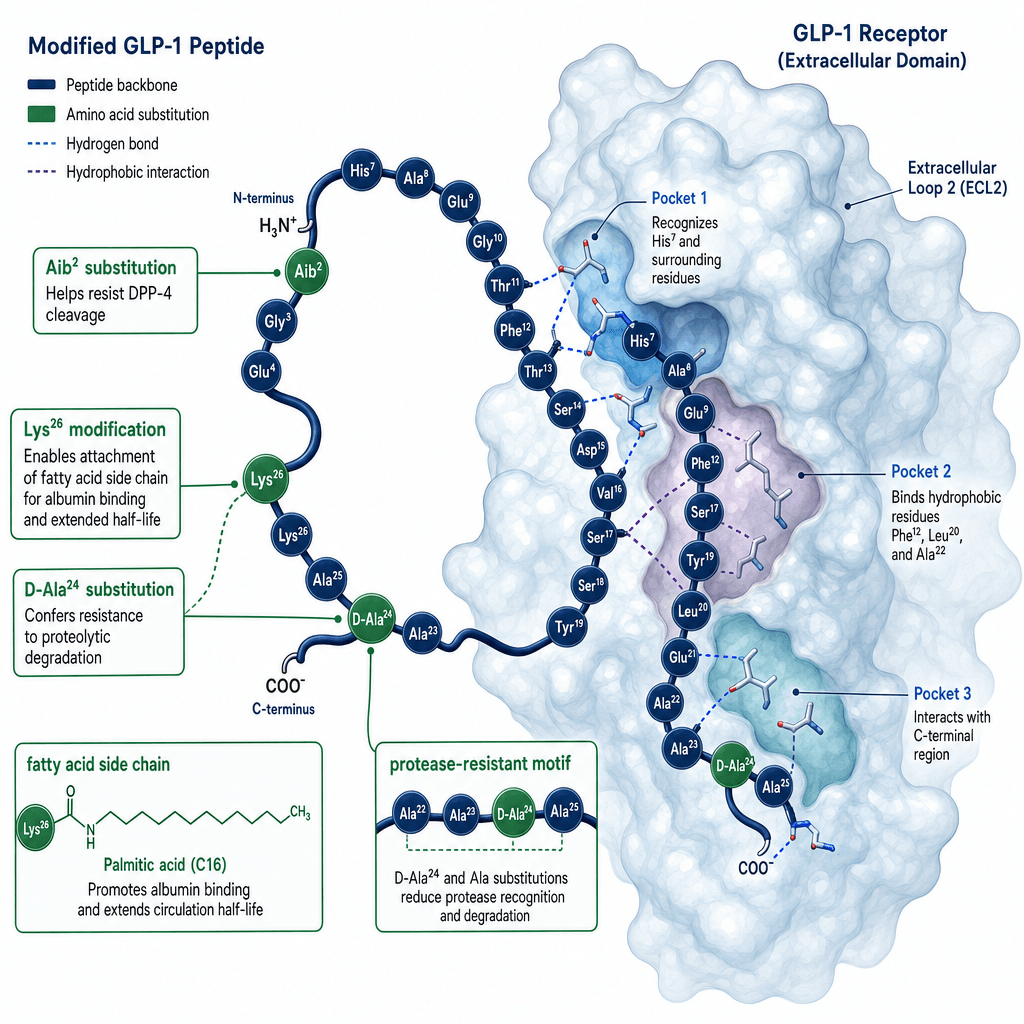
Researchers at leading institutions identified novel peptide modifications that enhance receptor binding affinity while reducing side effects commonly associated with earlier GLP-1 formulations. Enhanced binding affinity means the peptide can interact more effectively with GLP-1 receptors, which are central to glucose regulation, appetite signaling, and cardiovascular function. This improved interaction may contribute to the observed clinical benefits without introducing new side effect risks beyond what was reported.
The reduction in side effects is an important differentiator. Earlier GLP-1 receptor agonists were effective but sometimes limited by tolerability issues. The novel modifications appear to address some of these limitations, although the study does not list specific side effect rates or comparative safety statistics. The modified structure also supports the once-weekly administration profile, reinforcing both efficacy and practical usability. These structural changes underpin the promise for metabolic disorders observed in the published data.
The enhanced binding affinity is central to the promise for metabolic disorders because receptor engagement directly influences downstream signaling efficiency. A more stable peptide-receptor interaction may reduce the frequency of administration needed to maintain physiological effect. This pharmacokinetic advantage is one reason the modified peptide can be administered once weekly rather than daily or twice daily, a practical benefit that researchers believe could translate into better real-world adherence if regulatory approval is eventually granted.
Structural modifications explained:
- Enhanced receptor binding affinity: stronger interaction with GLP-1 receptors.
- Reduced side effect profile: fewer tolerability issues compared with earlier formulations.
- Extended half-life: supports once-weekly dosing.
- Multi-pathway potential: engages more than one metabolic target simultaneously.
For background on receptor-ligand interactions, researchers may consult How Peptides Work: A Plain-English Explainer. This internal resource explains peptide signaling without making clinical claims.
💡 Key Takeaway: How does the modified peptide structure improve receptor binding and support the promise for metabolic disorders?
Which metabolic pathways does the next-generation GLP-1 peptide target to fulfill its promise for metabolic disorders?
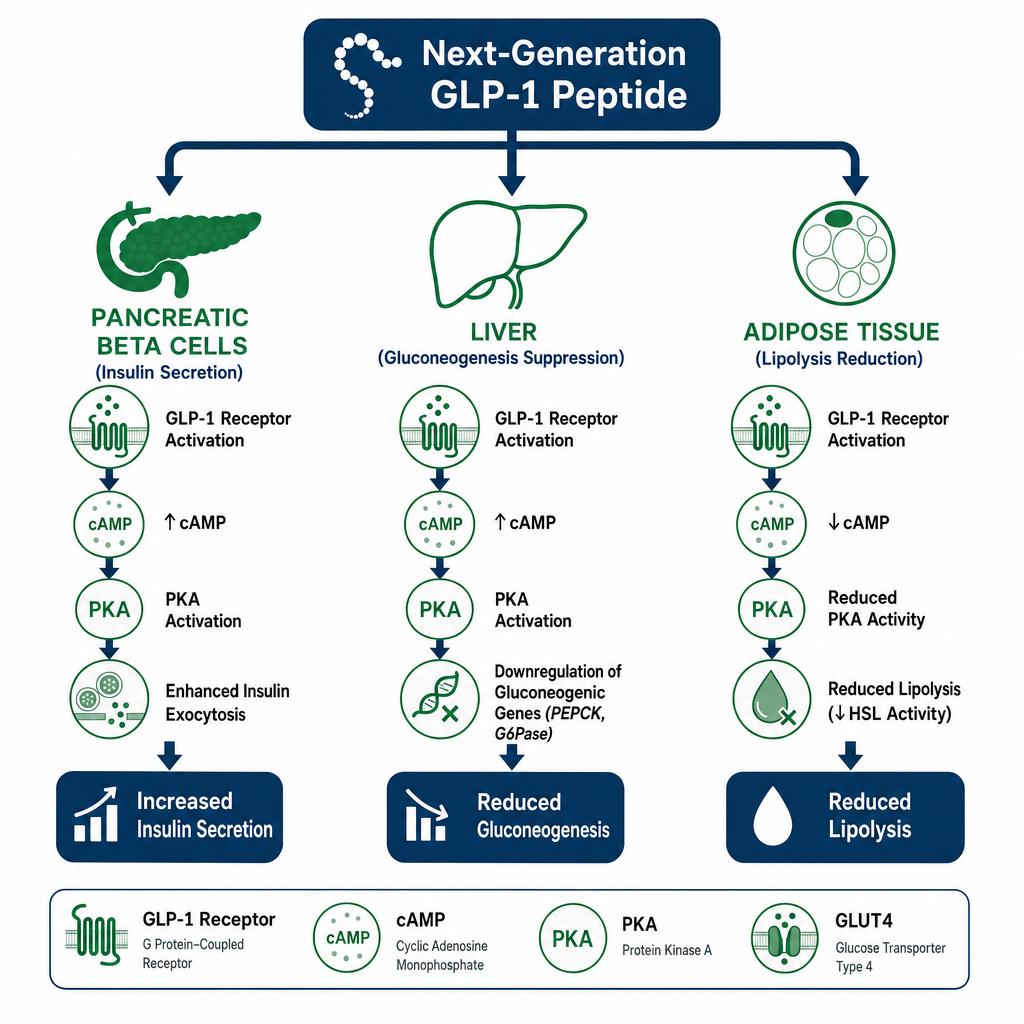
Dr. Sarah Chen, lead researcher, states that the peptide’s unique mechanism of action targets multiple metabolic pathways simultaneously. This multi-pathway engagement is a key departure from current standard treatments, which often focus on a narrower set of targets. By addressing glycemic control, weight regulation, and cardiovascular markers together, the next-generation GLP-1 peptide may offer a more comprehensive therapeutic approach for metabolic disorders. This broader mechanism strengthens the promise for metabolic disorders across interconnected systems.
The study does not enumerate every specific molecular pathway involved, but the reported improvements in glycemic control, weight management, and cardiovascular markers suggest coordinated activity across metabolic systems. This broader mechanism could be relevant for type 2 diabetes and obesity, where multiple dysregulated pathways often coexist. As with all findings in the publication, this mechanism is described in a research-use-only framework and is not a dosing or consumption recommendation. Multi-pathway engagement is a core component of the promise for metabolic disorders because it addresses the underlying complexity of metabolic syndrome rather than a single biomarker.
!promise for metabolic disorders
Potential pathway interactions inferred from reported outcomes:
- Glucose regulation: improvement in glycemic control suggests enhanced insulin sensitivity or related signaling.
- Appetite and weight: weight management improvement implies central or peripheral appetite pathway modulation.
- Cardiovascular function: cardiovascular marker improvement indicates possible vascular or lipid pathway effects.
- Combined action: simultaneous engagement may reduce compensatory dysregulation seen in single-target therapies.
These pathway inferences are hypothesis-generating only. The published study does not provide molecular target identification or pathway-specific biomarker data. Researchers designing follow-up in vitro studies should use the batch COA to confirm peptide identity before any receptor binding or cell signaling assay.
What are the clinical implications and expected next steps for the promise for metabolic disorders?
Dr. Sarah Chen notes that these findings could revolutionize treatment protocols for type 2 diabetes and obesity. The peptide’s ability to target multiple metabolic pathways at once offers a more comprehensive therapeutic approach than current standard treatments, potentially addressing the interconnected nature of metabolic syndrome more effectively. Dr. Chen’s statement is a direct extension of the promise for metabolic disorders seen in the 18-month data.
The development timeline is clear: Phase III trials are expected to begin in Q3 2026, and regulatory submissions are anticipated by early 2027. These next steps will further evaluate the peptide’s efficacy and safety profile in larger, more diverse populations. Until regulatory review is complete, the peptide remains an investigational research compound. No human consumption, dosing, or self-administration guidance is provided in the study, and all references to clinical use are prospective and subject to regulatory approval. Phase III trials beginning Q3 2026 will test the promise for metabolic disorders in larger cohorts, providing the safety and efficacy data regulators require.
Researchers reviewing Peptide Therapy Contraindications: A Research Overview will find additional discussion of exclusion criteria and safety boundaries relevant to peptide research. This internal link does not imply clinical applicability of the investigational GLP-1 peptide.
Expected next steps at a glance:
- Phase III trials: expected to begin Q3 2026.
- Regulatory submissions: anticipated by early 2027.
- Larger populations: trials will evaluate diverse cohorts.
- Current status: investigational research compound only.
- No human use: no dosing, consumption, or self-administration guidance exists.
How can researchers verify the quality of the investigational GLP-1 peptide to support the promise for metabolic disorders?
Research-use-only reference materials for the modified GLP-1 peptide are supplied with lot-specific documentation and third-party purity testing results. Batch certificates of analysis (COA) are available on request, allowing laboratories to verify identity and purity before in vitro experiments. Storage conditions should follow institutional protocols and the documentation provided with each lot. Lot-specific documentation and third-party purity testing are essential to translate the promise for metabolic disorders into reproducible in vitro results.
No human consumption, in vivo administration, or veterinary use is permitted. These products are not dietary supplements, not cosmetics, and not intended to diagnose, treat, cure, or prevent any disease. Researchers must comply with all applicable federal, state, and institutional regulations and must be 21 or older to purchase. A batch COA available on request allows labs to confirm identity and purity, reinforcing the promise for metabolic disorders in controlled research settings where batch-to-batch consistency is non-negotiable.
!promise for metabolic disorders
Quality verification checklist:
- Request batch COA before use.
- Confirm third-party purity testing results.
- Verify peptide identity via mass spectrometry or HPLC as appropriate.
- Document lot number and expiration date.
- Follow storage conditions from lot-specific documentation.
- Record all handling steps in the laboratory notebook.
External reference: National Center for Biotechnology Information provides general molecular biology resources that may support assay design, though it does not endorse any specific investigational peptide.
💡 Key Takeaway: How can researchers verify the quality of the investigational GLP-1 peptide to support the promise for metabolic disorders?
What do comparative analyses reveal about the promise for metabolic disorders across GLP-1 formulations?
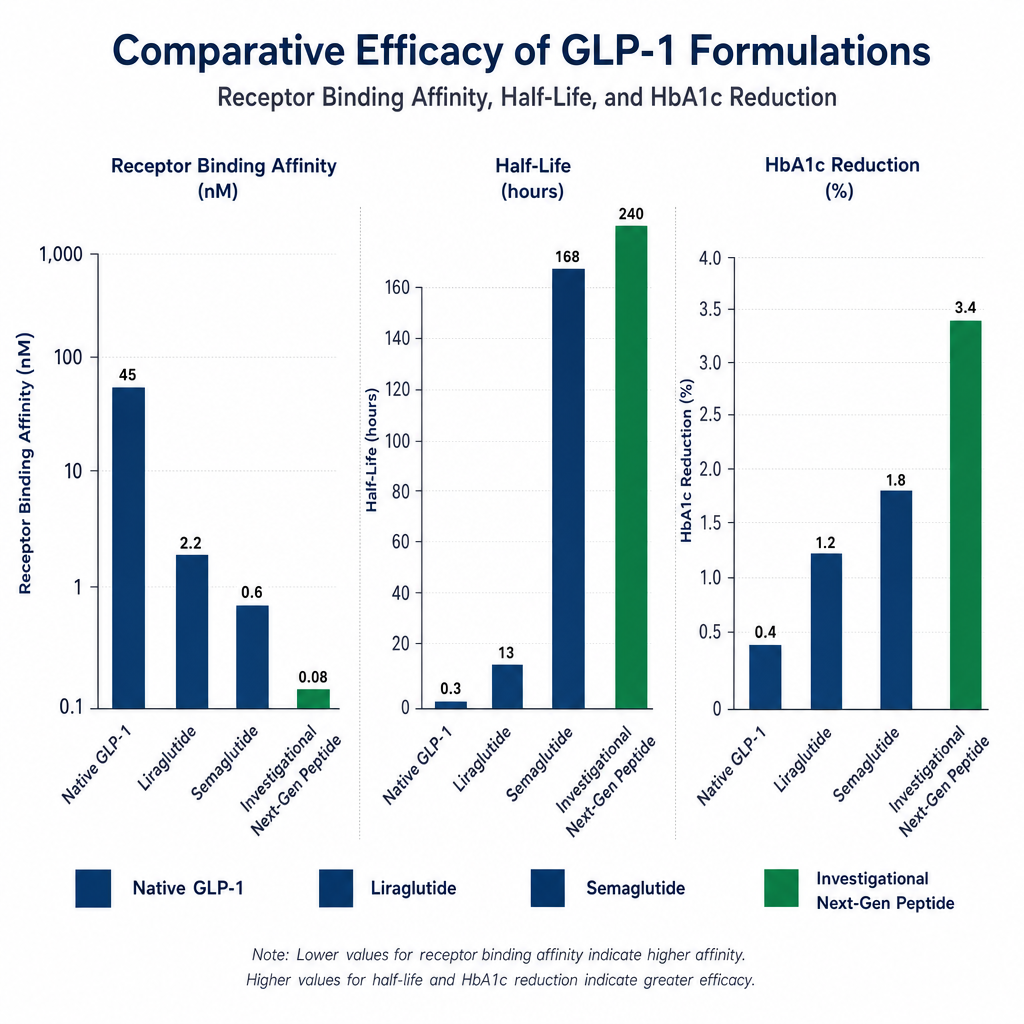
Comparison of once-weekly versus daily or twice-daily GLP-1 receptor agonists highlights the structural advantages of the modified peptide. The next-generation candidate’s enhanced binding affinity and multi-pathway engagement set it apart from earlier compounds that often required more frequent dosing. The table below summarizes how the next-generation candidate extends the promise for metabolic disorders beyond earlier limitations, using data reported in the peer-reviewed study.
| Feature | Earlier GLP-1 formulations | Next-generation modified peptide |
|———|—————————-|———————————–|
| Dosing frequency | Daily or twice daily | Once weekly |
| Receptor binding affinity | Standard | Enhanced |
| Side effect profile | Tolerability issues reported | Reduced side effects reported |
| Metabolic targets | Narrower set | Multiple pathways simultaneously |
| Administration compliance | Lower due to frequency | Potentially higher due to once-weekly schedule |
The comparative data do not include head-to-head safety statistics, but the structural improvements described by Dr. Chen’s team suggest a meaningful advance. For researchers, these differences matter because they inform in vitro study design, receptor occupancy assays, and stability testing. The once-weekly profile is a practical extension of the promise for metabolic disorders, because fewer required doses may reduce patient burden if the peptide ever reaches clinical use.
This comparison is based solely on published study characteristics. No direct clinical trial comparing the modified peptide with every earlier GLP-1 formulation has been completed, and the table should not be interpreted as a superiority claim. All investigational compounds remain subject to regulatory review.
How should researchers design in vitro studies to evaluate the promise for metabolic disorders?
A rigorous in vitro protocol is required to assess the promise for metabolic disorders without implying human use. Researchers should first confirm peptide identity and purity using the batch COA, then validate receptor binding affinity through standard radioligand or surface plasmon resonance assays. Cell-based assays for cAMP accumulation or β-arrestin recruitment can quantify functional activity at GLP-1 receptors. All experiments must remain within the scope of laboratory research; no in vivo administration is permitted.
Documentation of storage conditions, reconstitution solvents, and assay buffers is critical. The modified peptide’s stability may vary with pH and temperature, so pilot stability studies are recommended before large-scale experiments. Researchers should document receptor binding affinity, purity, and stability to substantiate the promise for metabolic disorders in their own laboratory context, as peer-reviewed results may not replicate without identical conditions.
Recommended assay parameters for in vitro research:
- Peptide identity: confirm via mass spectrometry or HPLC.
- Purity: use third-party COA data.
- Binding affinity: radioligand displacement or surface plasmon resonance.
- Functional activity: cAMP accumulation or β-arrestin recruitment.
- Stability: test across relevant pH and temperature conditions.
- Negative controls: include vehicle and non-specific peptide controls.
External reference: PubMed search for GLP-1 receptor agonist metabolic disorders provides peer-reviewed literature that may inform assay development. This link is for research context only.
What storage conditions preserve the investigational peptide’s promise for metabolic disorders?
Following institutional protocols and lot-specific documentation maintains the peptide’s integrity and the promise for metabolic disorders in downstream assays. Lyophilized peptides should typically be stored at -20°C or -80°C, protected from light and moisture, and reconstituted only immediately before use. Repeated freeze-thaw cycles should be avoided because they can degrade the peptide and alter receptor binding results.
Improper storage can degrade the peptide, undermining the promise for metabolic disorders observed in published data. Researchers should aliquot reconstituted peptide into single-use volumes and record the date of reconstitution. Any deviation from recommended storage conditions must be documented in the laboratory notebook and may invalidate experimental conclusions.
!promise for metabolic disorders
Storage and handling checklist:
- Store lyophilized peptide at -20°C or -80°C.
- Protect from light and moisture.
- Reconstitute immediately before use.
- Avoid repeated freeze-thaw cycles.
- Aliquot into single-use volumes after reconstitution.
- Record reconstitution date and lot number.
- Follow institutional protocols and lot-specific documentation.
The investigational GLP-1 peptide discussed here is sold strictly for in vitro laboratory research. No claims of therapeutic benefit, dosing, or human use are made. The published data and the promise for metabolic disorders are provisional and subject to confirmation in Phase III trials beginning Q3 2026 and regulatory submissions anticipated by early 2027. Researchers must be 21 or older and comply with all applicable regulations.
💡 Key Takeaway: What storage conditions preserve the investigational peptide’s promise for metabolic disorders?
FAQ
What does the 18-month trial reveal about the promise for metabolic disorders?
The trial reported significant improvements in glycemic control, weight management, and cardiovascular markers, reinforcing the promise for metabolic disorders across all three endpoints. The 500-participant, 18-month design provided robust data, though the peptide remains investigational.
How does the once-weekly dosing schedule contribute to the promise for metabolic disorders?
Once-weekly administration may improve compliance compared with daily or twice-daily dosing, a practical extension of the promise for metabolic disorders. The modified peptide’s enhanced binding affinity supports this longer interval.
Why is the promise for metabolic disorders still considered investigational?
The promise for metabolic disorders remains investigational because Phase III trials are expected to begin in Q3 2026 and regulatory submissions are anticipated by early 2027. Until those reviews are complete, no human use or dosing can be recommended.
Can researchers purchase the investigational GLP-1 peptide for in vitro studies?
Yes, research-use-only reference materials are available with lot-specific documentation and third-party purity testing. Batch COA is available on request. These products are for in vitro laboratory research only, not for human or veterinary use, and purchasers must be 21 or older.
Ready to Take the Next Step?
Every product includes lot-specific documentation and third-party purity testing.
Explore Our Research Products →Free shipping on qualifying orders · Batch COA on request